Skip to content
Search
Menu

We earn a commission if you book through this link. You pay the same price.

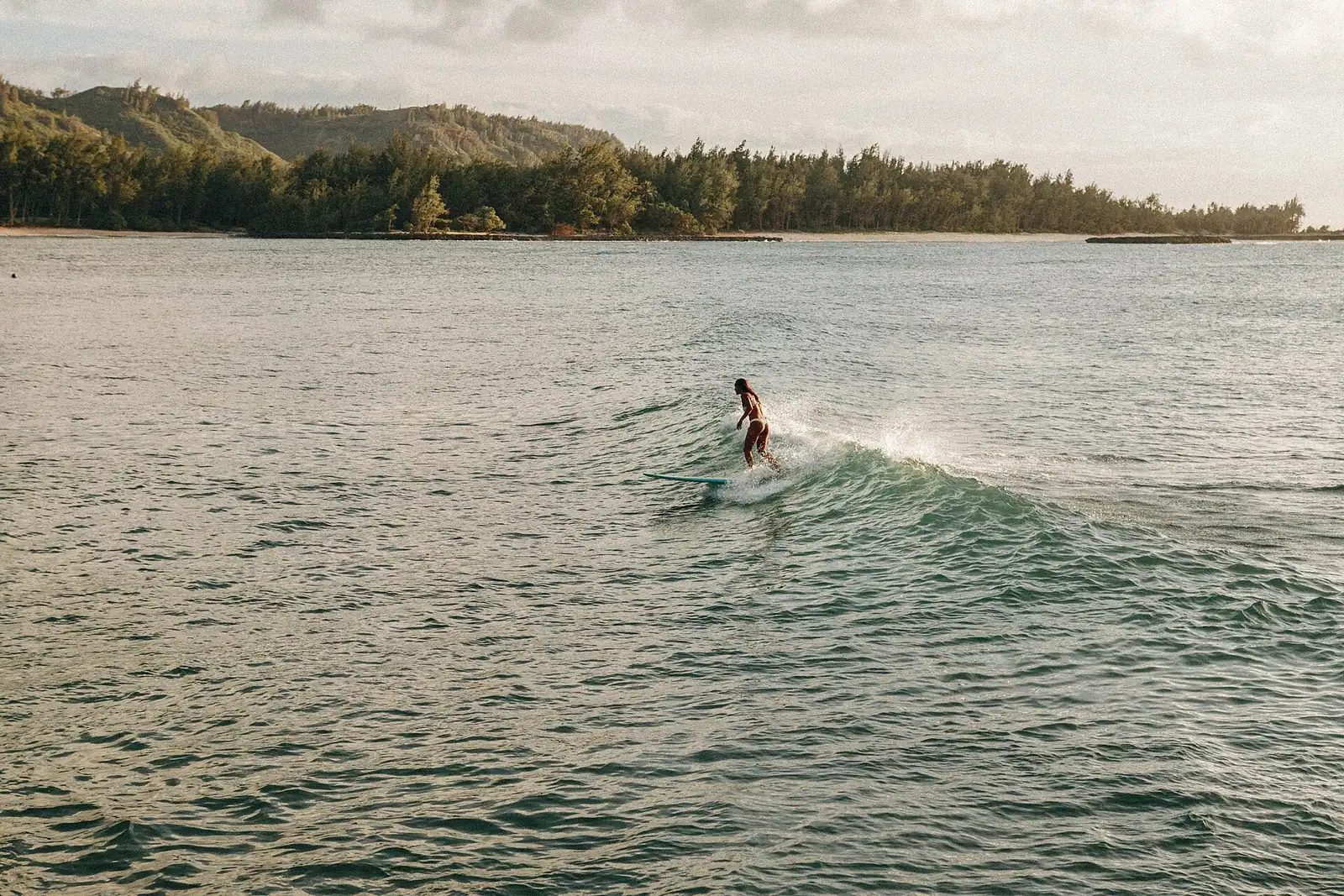
A low limestone shoreline bench with tide pools and windblown spray at an exposed point
Epicurrence epicurrence

Trail

Kahuku Point

Last updated

The northernmost tip of Oʻahu, an hour's walk from the only resort on this coast and almost always empty.

Kahuku Point is the top of the island. Stand on the limestone bench at the end of it and the coast runs away southwest towards Sunset and Waimea on one side and southeast towards Lāʻie and Kualoa on the other, and there is nothing north of you until the Aleutians. Oʻahu has four corners and this is the one almost nobody visits, largely because you cannot drive to it.

You get there on foot, from Turtle Bay — the only large resort on the North Shore — along a shoreline trail that starts at Kuilima Cove, runs the length of Kaihalulu Beach and out along the low rock to the point. It is roughly a mile and a half each way, flat, on sand and limestone bench, and it takes about forty minutes at a walking pace. What makes it feel longer is the wind. This corner of the island catches the northeast trades unobstructed and it blows here almost every day of the year, hard enough to lean into.

The ground is the interest. This is not a swimming beach; it is a limestone bench cut by tide pools and studded with the pitted, sharp rock that geologists call karren and everyone else calls ankle-breaking. At low tide the pools hold ʻopae, small fish, urchins and limu. Honu graze the limu along the bench and haul out on the sand. Hawaiian monk seals — one of the rarest seals in the world, with a population in the low thousands — haul out on Kaihalulu with enough regularity that volunteers turn up to rope them off. Wedge-tailed shearwaters burrow in the naupaka behind the beach.

A large block of this shoreline was protected from development by a conservation agreement in the 2010s, which is why you are walking past dunes and ironwood rather than through a second resort. It is the best argument on this coast for why those agreements matter.

Getting there and parking

On foot from Turtle Bay. There is no road to the point and no parking any closer.

Turtle Bay Resort is on Kamehameha Highway between Kahuku and Sunset Beach. Hawaiʻi law requires public shoreline access and public parking at coastal resorts, and Turtle Bay provides a signed public beach-access lot near the entrance. Use that lot, not the guest parking, and follow the signed path to the shoreline.

From Kuilima Cove, walk east round the headland onto Kaihalulu Beach and continue along the sand and limestone bench. Roughly a mile and a half each way, about forty minutes at a walking pace. Flat throughout.

From Haleʻiwa — about thirty minutes east on Kamehameha Highway. From Lāʻie — about fifteen minutes north. From Waikīkī — an hour and a quarter by either route.

TheBus route 60 stops at Turtle Bay, which makes this a rare North Shore walk you can reach without a car.

Wear shoes you can walk on sharp rock in. Carry water. Start early, before the trades build and while the light is still on the bench.

The walk, start to finish

Start at the public access. Turtle Bay is required under Hawaiʻi law to provide public shoreline access and public parking, and it does: a signed public lot near the resort entrance. This is a legal right of access, not a favour. Park there, not in the hotel's guest parking, and walk down to Kuilima Cove.

Kuilima Cove is the sheltered, reef-protected swimming bay in front of the hotel and the only genuinely calm swimming on this stretch. Worth a swim on the way back rather than on the way out.

Round the point of the cove and you are onto Kaihalulu Beach, a long, coarse, exposed curve of sand with ironwood behind it. This is the bulk of the walk. It is rarely crowded and in winter it takes serious surf.

The last section is limestone bench and low dune. A rough path runs behind the rock; the bench itself is walkable at low tide and unwise when a swell is running.

The point is unmarked. There is no sign, no plaque and no viewing platform. You will know it because the coast turns.

Timing. Forty minutes each way at a walk, plus time at the point. Allow an hour and a half to two and a half hours. Go early: the wind builds through the day and there is no shade beyond the ironwood belt.

Alternative approach: the loop can be extended west past the point towards Kawela Bay, a shaded, banyan-backed bay that is one of the prettiest on the coast.
Seals, turtles and the distances that apply

This is one of the better stretches of Oʻahu for encountering protected marine wildlife on foot, and the rules differ by species — a detail most visitors get wrong.

Hawaiian monk seals — ʻīlio holo i ka uaua, "the dog that runs in rough water" — haul out on Kaihalulu to rest. There are only a few thousand of these animals alive. NOAA guidance is to stay at least 50 feet away, and further if the animal reacts. A seal that lifts its head, yawns repeatedly or shifts position has noticed you. Mothers with pups need considerably more room and the beach around them is usually roped. Do not approach for a photograph, do not get between a seal and the water, and keep dogs away entirely.

Honu, green sea turtles, graze limu along the limestone bench and rest on the sand. Federal guidance here is 10 feet — a different and shorter distance than for seals. Volunteers rope off resting turtles on this coast, as they do at Laniākea further west. Do not touch, do not pour water on them, do not stand over them.

ʻUaʻu kani, wedge-tailed shearwaters, burrow in the sand behind the beach among the naupaka. Stay on the sand and the worn path; the burrows collapse underfoot.

Tide pools hold urchins with spines that break off in skin and small fish that live in inches of water. Look, do not collect. Taking anything living from a tide pool here is prohibited.

If a volunteer has roped something off, the rope is the answer. Do not negotiate with it.

Wind, surf and sharp rock

The wind. Kahuku Point is the windiest walkable shoreline on this corner of the island, and it is not occasional — the northeast trades hit it unobstructed most days of the year. Hats go. Loose bags go. Sand blows along the beach at ankle height and stings. Sunglasses are for grit as much as glare.

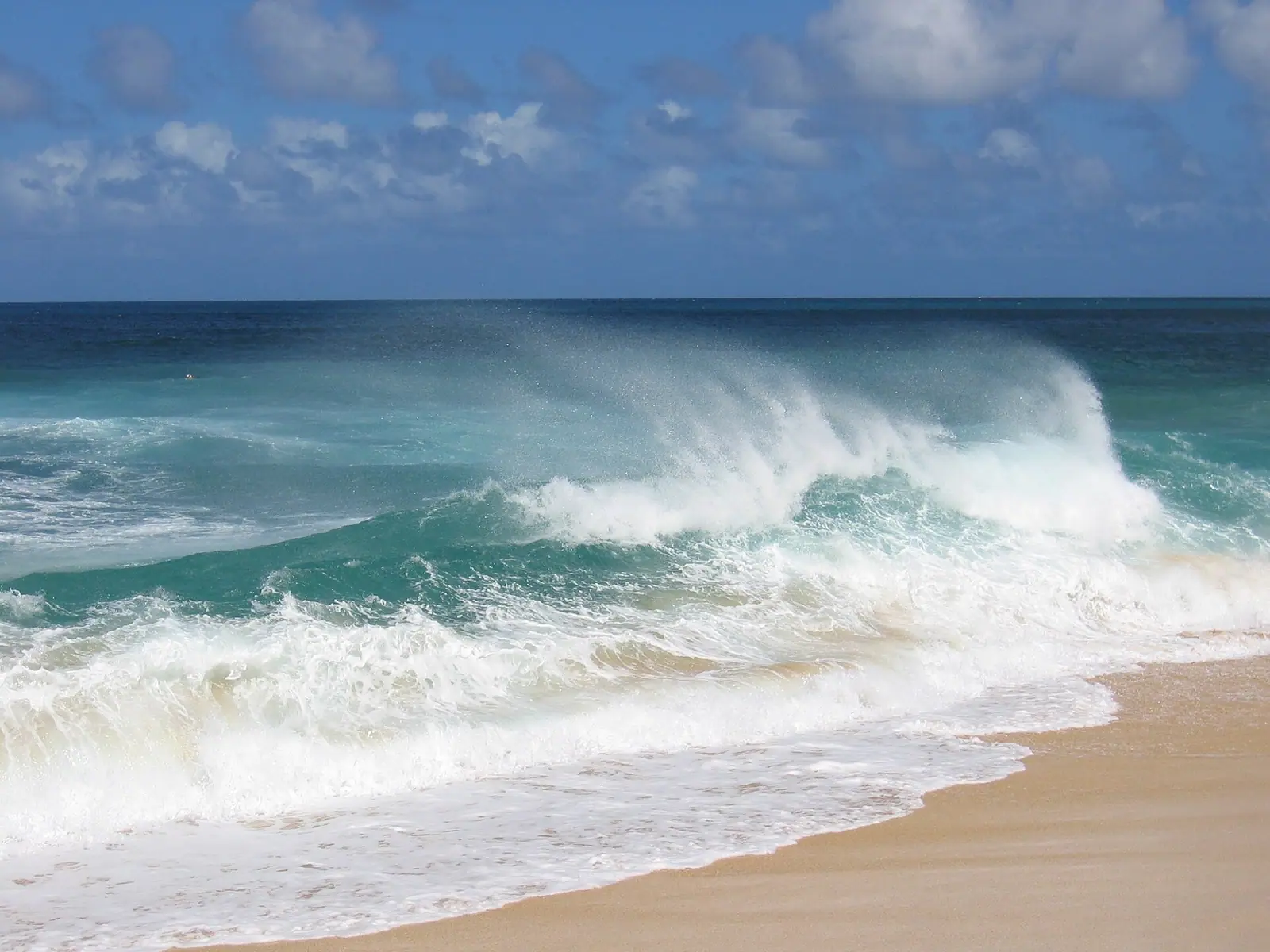
The surf. In winter, from roughly November to March, north swell breaks directly onto the limestone bench at the point and onto Kaihalulu. Waves wash across rock that was dry a minute earlier. Do not walk out onto the low bench when a swell is running, and do not turn your back on the water anywhere along this stretch. There is no lifeguard on Kaihalulu and no easy exit from the water over that rock.

Swimming. Kuilima Cove at the start of the walk is reef-protected and the sensible swim. Kaihalulu and the point are not swimming beaches — coarse sand, rock, surf and current.

The rock. Weathered limestone here is pitted and razor-edged. Trainers or trail shoes, not slippers. A fall on it removes skin.

Sun and water. There is no shade past the ironwood belt and no water anywhere on the route. Carry a litre each even for a short walk.

Man o' war blow onto this shore on strong trade days. Blue, small, and they sting after they are dead.

Kahuku town, five minutes away

The point takes its name from Kahuku, the town a few minutes east on Kamehameha Highway, and the town is worth understanding rather than just driving through to the shrimp trucks.

Kahuku was a sugar plantation town. The mill ran from the 1890s until 1971, and the community — Japanese, Filipino, Portuguese, Okinawan, Puerto Rican — was built around it in camp housing. When the mill closed, what replaced it was not tourism but aquaculture: brackish ponds dug into the old cane land to farm shrimp and prawns, fed by the coastal aquifer.

The shrimp trucks grew out of those farms. Giovanni's, Romy's, Fumi's and the rest are not a novelty imported for visitors; they are a farming town's second act, selling what it grows from trucks parked on its own land. Garlic shrimp on two scoops of rice is the dish, and the queue at midday is long.

Kahuku also has Kahuku Farms, a working family farm with a café and farm tours, and the old mill buildings, partly repurposed, still standing in the middle of town.

The practical note: the trucks close early — earlier than dinner, most days. If you have walked to Kahuku Point in the afternoon and you are thinking about shrimp afterwards, check the time before you start walking back.

Tours that visit Kahuku Point

Operators run these trips past Kahuku Point, or stop there as part of a longer route. We list what the booking data supports — not everything that mentions the name.

Some links below go to Viator, our booking partner. We earn a commission on bookings made through them — at no extra cost to you, and with no influence on what we recommend.

  • Oahu: Full or Half Day Grand Circle Island Tour
    Free cancellationInstant confirmation

    Plantation Tours

    Oahu: Full or Half Day Grand Circle Island Tour (opens in a new tab)

    19.5K reviews

    Choose from two exciting ways to experience Oahu's top attractions, scenic beauty, and local culture. Option 1: Dole Plantation & Haleiwa…

    6–7 hours

    Prices checked

    from $100
  • Parasailing Experience in Waikiki, HI
    Free cancellationInstant confirmation

    Low Supplier Cancellation Rate

    Parasailing Experience in Waikiki, HI (opens in a new tab)

    8.9K reviews

    Experience the thrill of Oahu parasailing on this unforgettable 1-hour adventure from Waikiki. Soar up to 1,000 feet above the stunning…

    1 hour

    Prices checked

    from $44
  • Roland dancing Hawaiian Kahiko
    Free cancellationLikely to sell out

    Curated Catalog

    Toa Luau at Waimea Valley, Oahu (opens in a new tab)

    3.8K reviews

    Toa Luau invites you to immerse yourself in the beauty and excitement of Polynesia on Oahu’s historic North Shore! Book any one our 3 Luau…

    3 hours

    Prices checked

    from $145
  • WAIMEA BAY
    Free cancellationInstant confirmation

    Low Supplier Cancellation Rate

    Oahu: Grand Tour Around Island with Snorkeling (opens in a new tab)

    11.1K reviews

    Come join on a circle island adventure led by some of Hawaii’s most knowledgeable local guides and experience breathtaking lookouts to…

    Full day

    Prices checked

    from $89

Near Kahuku Point

Straight-line distances, so allow more on the road — the island is long and has one main parkway.

  • A small sheltered cove of calm shallow water held behind an offshore reef
    Free

    Beach

    Turtle Bay

    The coast's only large resort — and under Hawaiʻi law its best swimming cove and its coastal trails are open to everyone.

    2–6 hoursThe beaches and coastal trails are free and public. Golf, riding, dining and spa services are resort-priced.0.5 mi away

  • A plate of shell-on garlic shrimp with two scoops of rice served on a paper plate
    Free

    Dining district

    Kahuku Food Trucks

    Shrimp farms that grew a kitchen, strung along two miles of a former sugar town. Order it shell-on and accept the garlic.

    1–2 hoursFree to visit; you pay for what you eat. A garlic shrimp plate with rice is a mid-range plate-lunch price rather than a snack price.3.6 mi away

  • A curving sandy beach backed by a dense belt of ironwood trees with a small island offshore
    Free

    Beach

    Mālaekahana Beach

    A mile of ironwood-shaded windward sand with an island you can walk to at low tide and a gate that locks at dusk.

    1.5–5 hoursFree for day use, with free parking inside the gate. Camping is permitted and charged.5.8 mi away

  • Low sun dropping towards the ocean at the end of a long open beach
    Free

    Beach

    Sunset Beach

    Two miles of sand the winter ocean removes and the summer ocean puts back, with the coast's most notorious rip running through it.

    1–4 hoursFree, with a free lot that is larger and more reliable than anything else on this stretch.3.8 mi away

Kahuku Point: common questions

How do you get to Kahuku Point?

On foot from Turtle Bay, roughly a mile and a half each way. Park in the signed public beach-access lot near the resort entrance — Hawaiʻi law requires resorts to provide public shoreline access and public parking, so this is a right rather than a favour — then walk east from Kuilima Cove along Kaihalulu Beach and out onto the limestone bench. About forty minutes each way, flat, with no road any closer.

Is Kahuku Point the northernmost point of Oʻahu?

Yes. It is the island's northern tip, and standing on the bench at the end of it the coast runs away southwest towards Sunset and Waimea and southeast towards Lāʻie. There is no marker, no plaque and no viewing platform — you know you have arrived because the coastline turns. It is the least-visited of the island's four corners, entirely because you cannot drive to it.

Can you see monk seals at Kahuku Point?

Sometimes. Hawaiian monk seals haul out on Kaihalulu Beach along this walk with enough regularity that volunteers turn up to rope them off. There are only a few thousand alive. NOAA guidance is to stay at least 50 feet away — a greater distance than the 10 feet advised for green sea turtles, which also use this shoreline. Never get between a seal and the water, and give mothers with pups far more room.

Can you swim at Kahuku Point?

No. The point and Kaihalulu Beach are coarse sand, limestone bench, surf and current, with no lifeguard and no easy exit over sharp rock. The swimming on this walk is at the start: Kuilima Cove in front of Turtle Bay is reef-protected and calm, and it is the only reliably swimmable water on this stretch of coast. Swim there on the way back rather than attempting anything at the point.

What is at Kahuku besides the point?

A former sugar plantation town whose mill ran until 1971 and which reinvented itself around aquaculture. The shrimp trucks — Giovanni's, Romy's, Fumi's — grew out of brackish shrimp farms dug into the old cane land, so they are a farming town's second act rather than a novelty for visitors. There is also a working family farm with a café and tours, and the old mill buildings still stand in the middle of town.