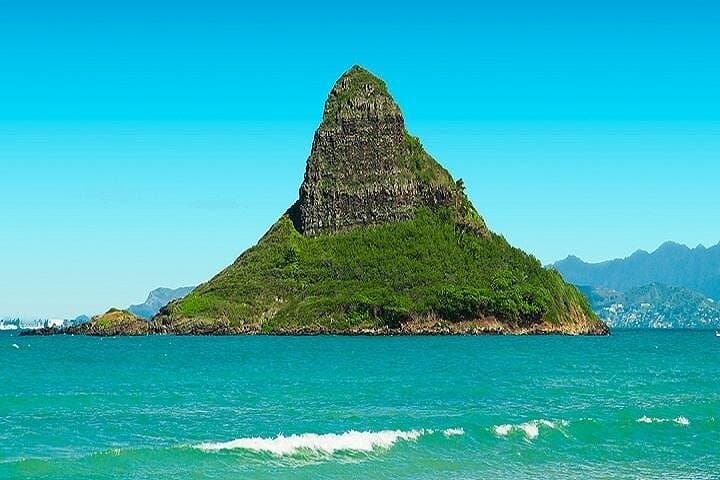
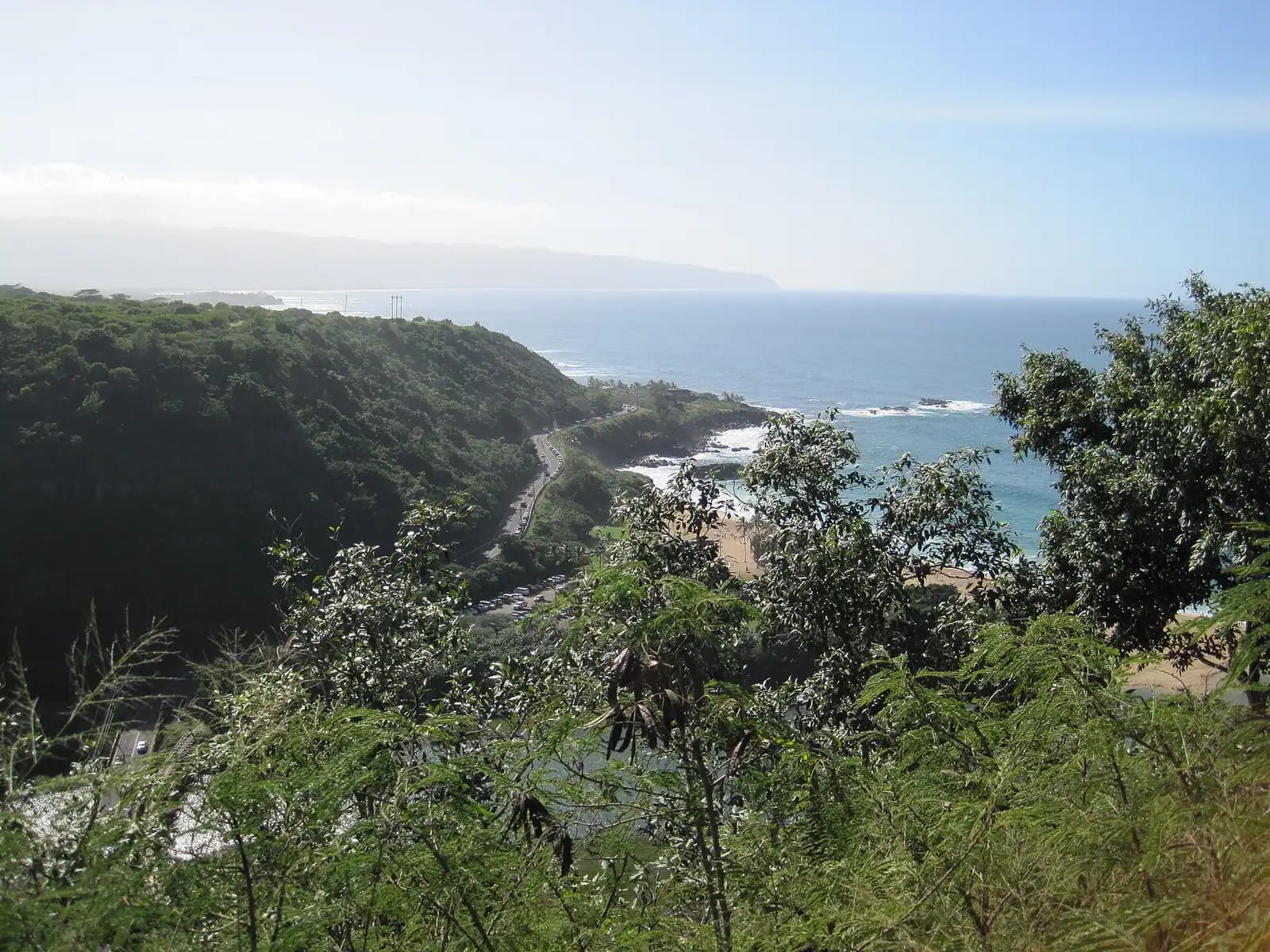
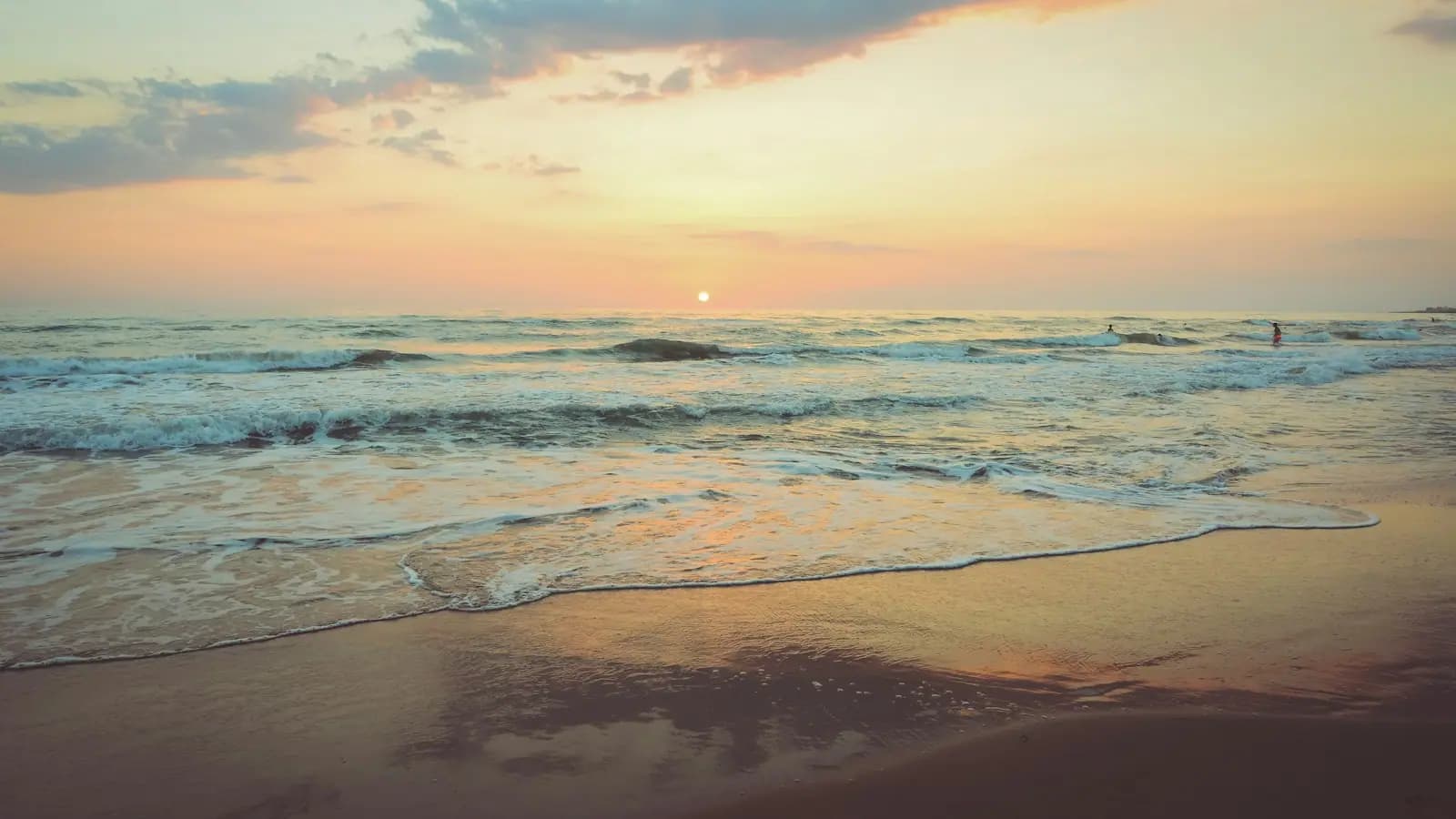
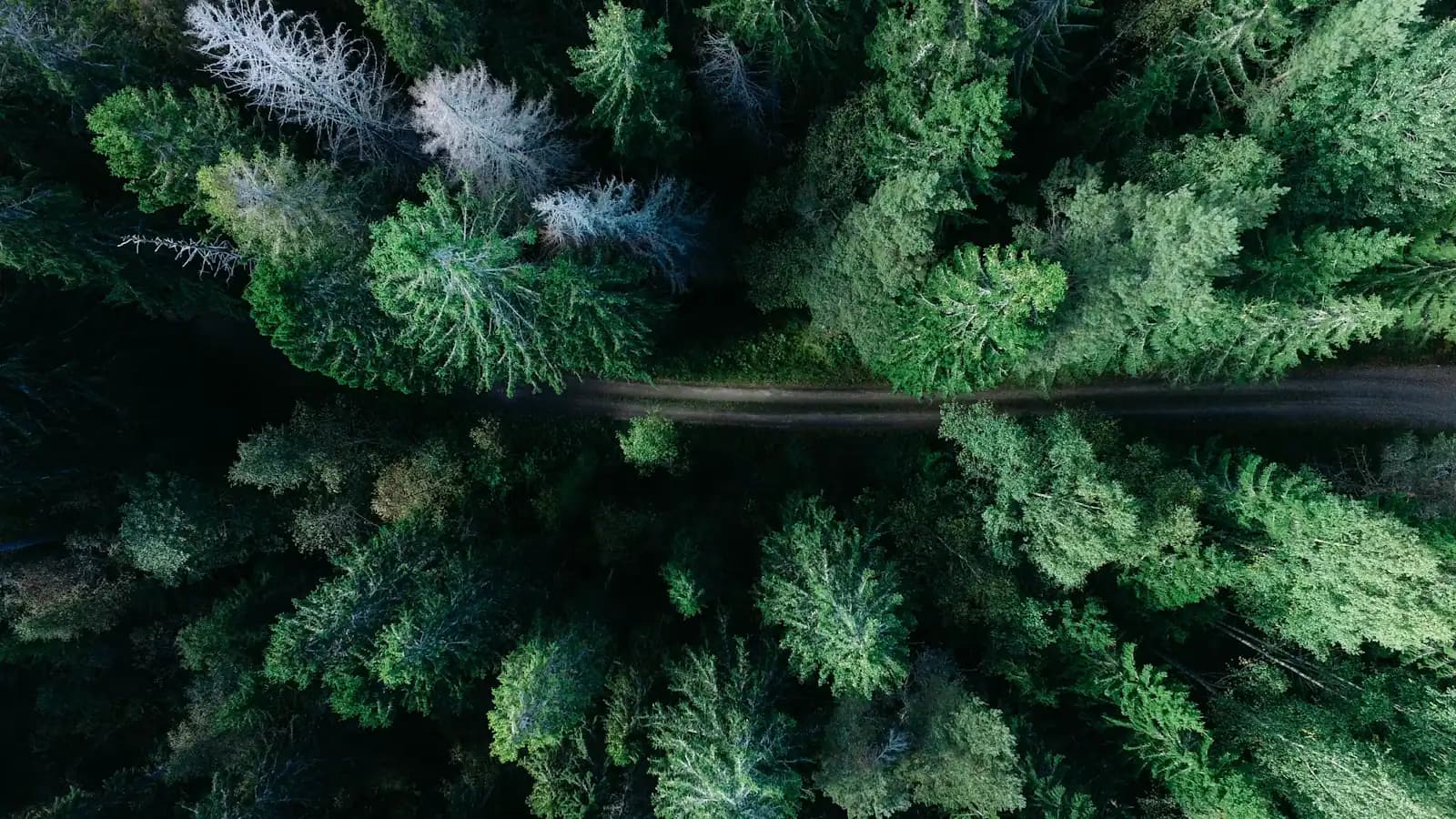
The North Shore is roughly thirty miles of coast along the top edge of Oʻahu, from the polo fields and the airfield at Mokulēʻia, round Kahuku Point, down to Lāʻie. One two-lane road serves all of it. Kamehameha Highway is not the main route up here; it is the entire transport system, with no parallel road and no detour when something blocks it. That single fact governs more of your day than any list of sights: where you can park, what a stop actually costs you in time, and why leaving Waikīkī at seven in the morning and leaving at nine produce two different trips.
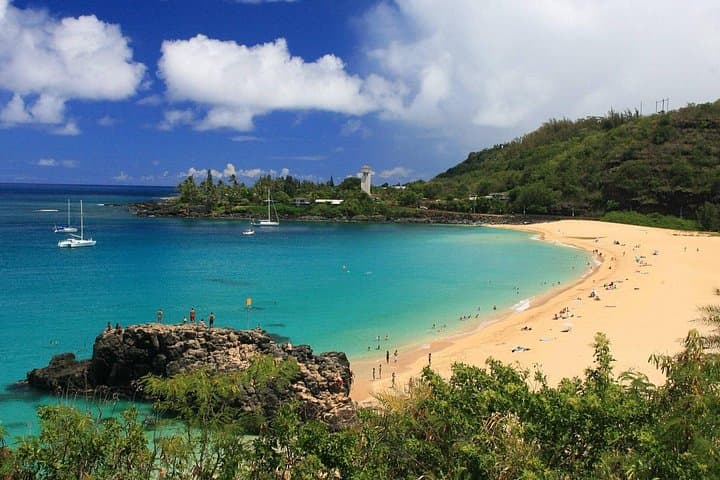
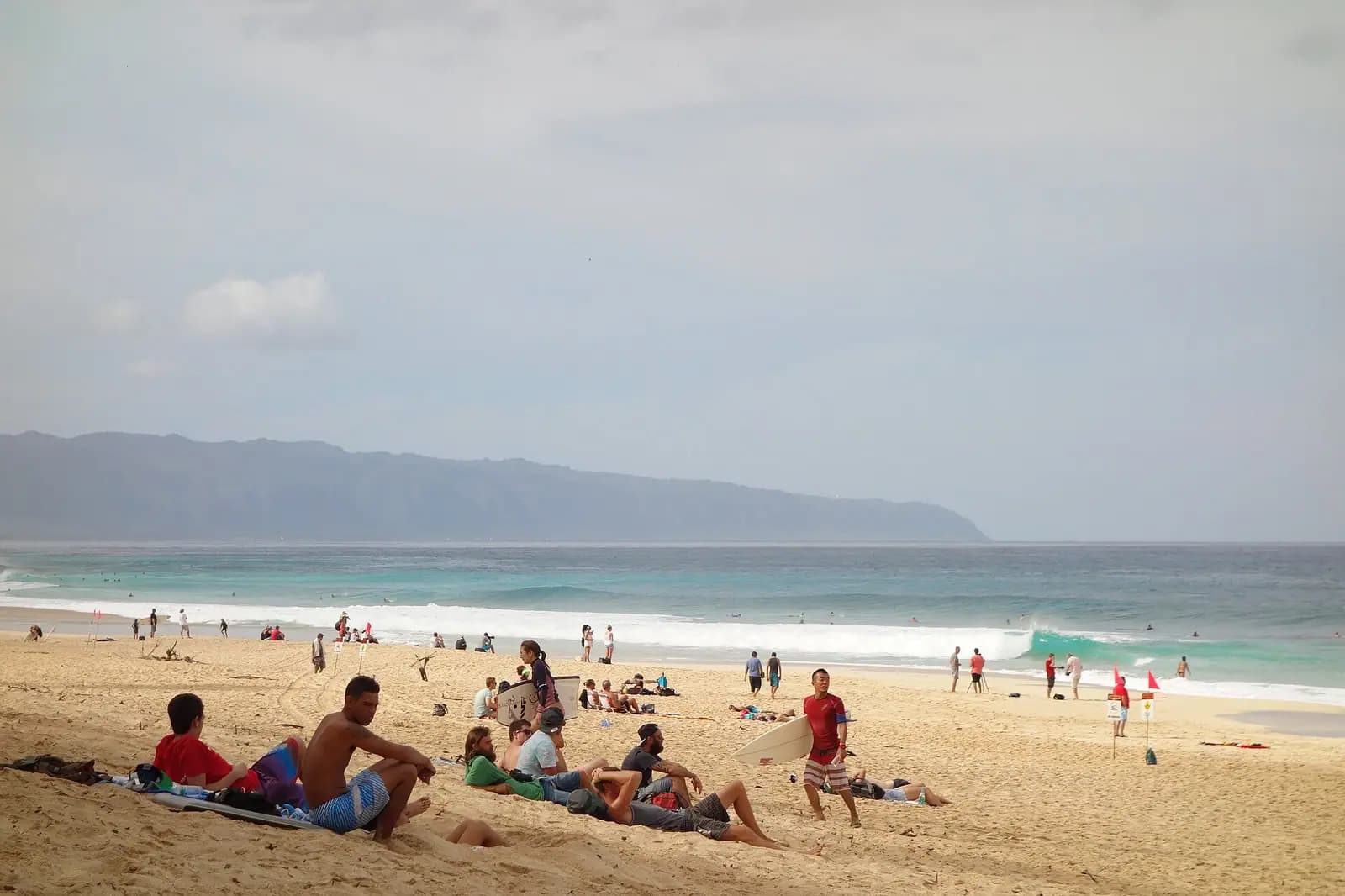
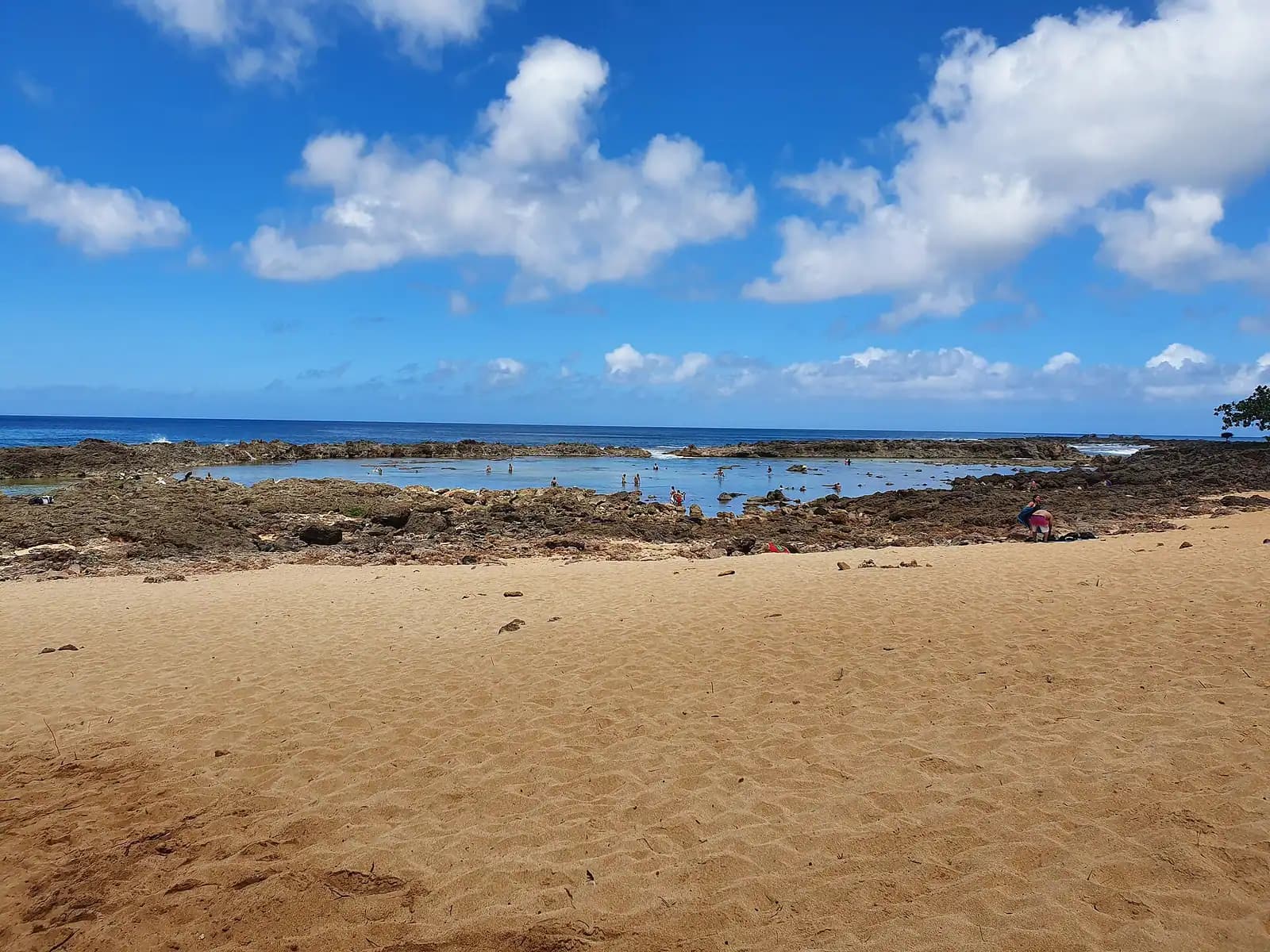
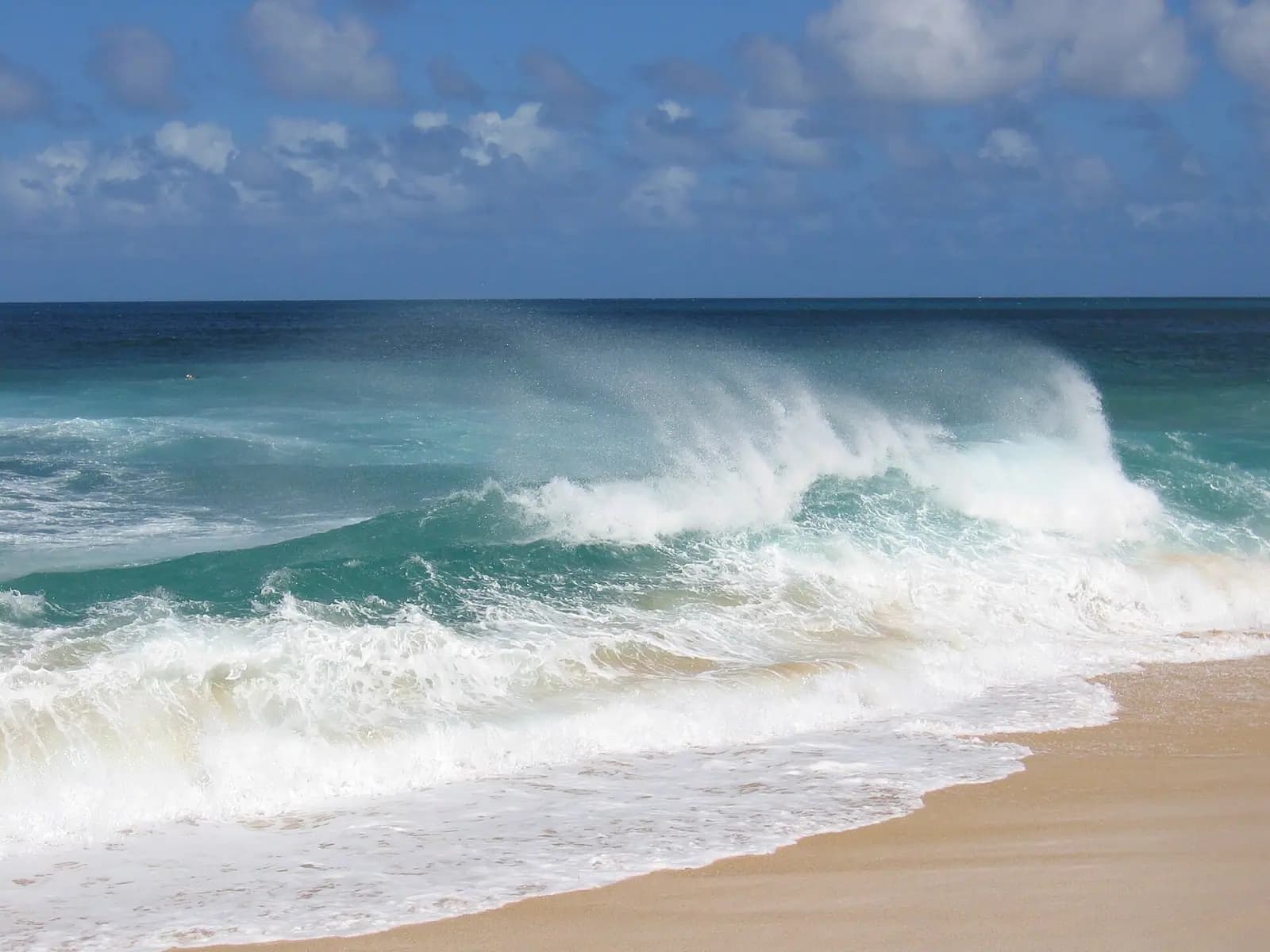
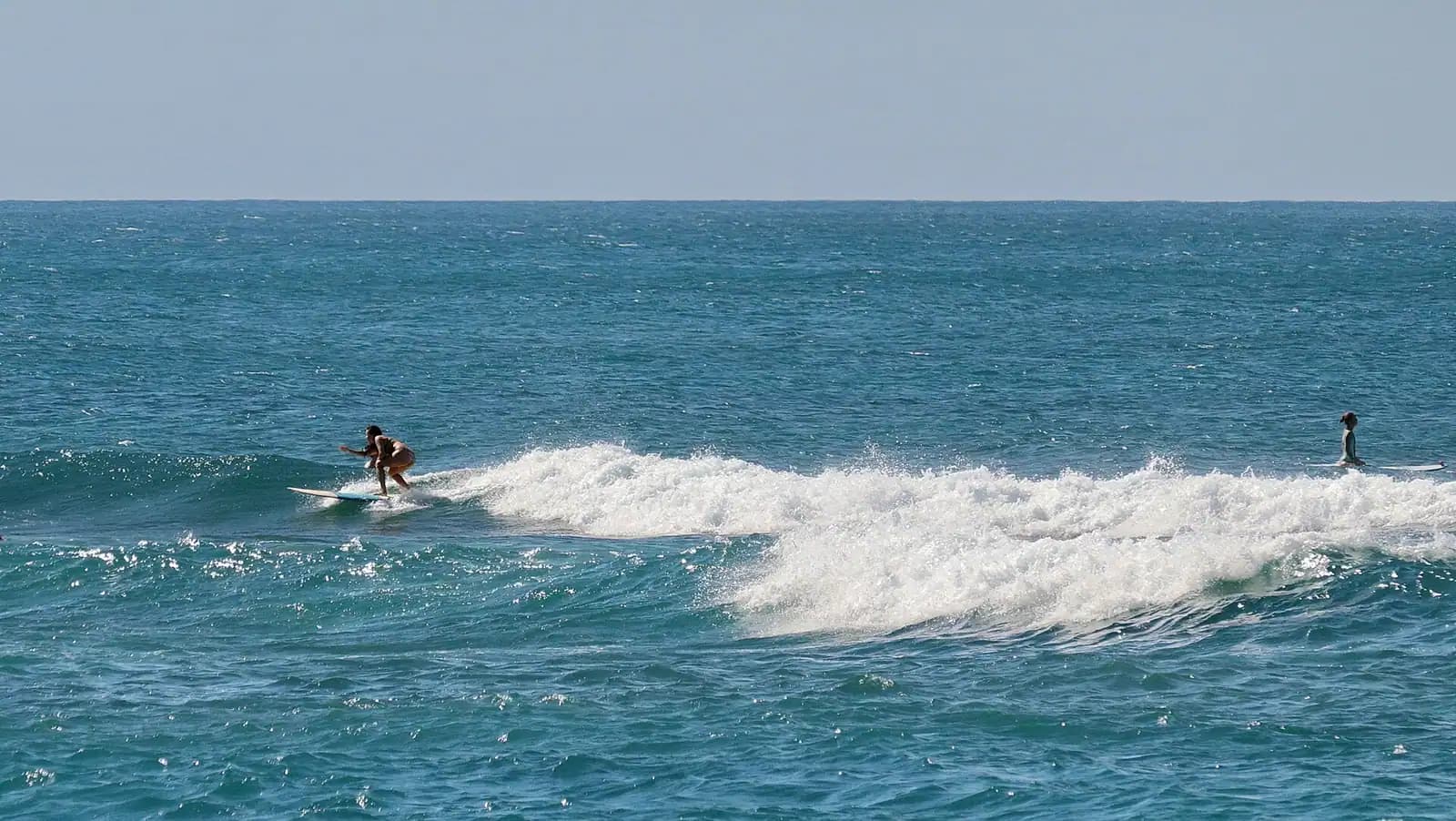
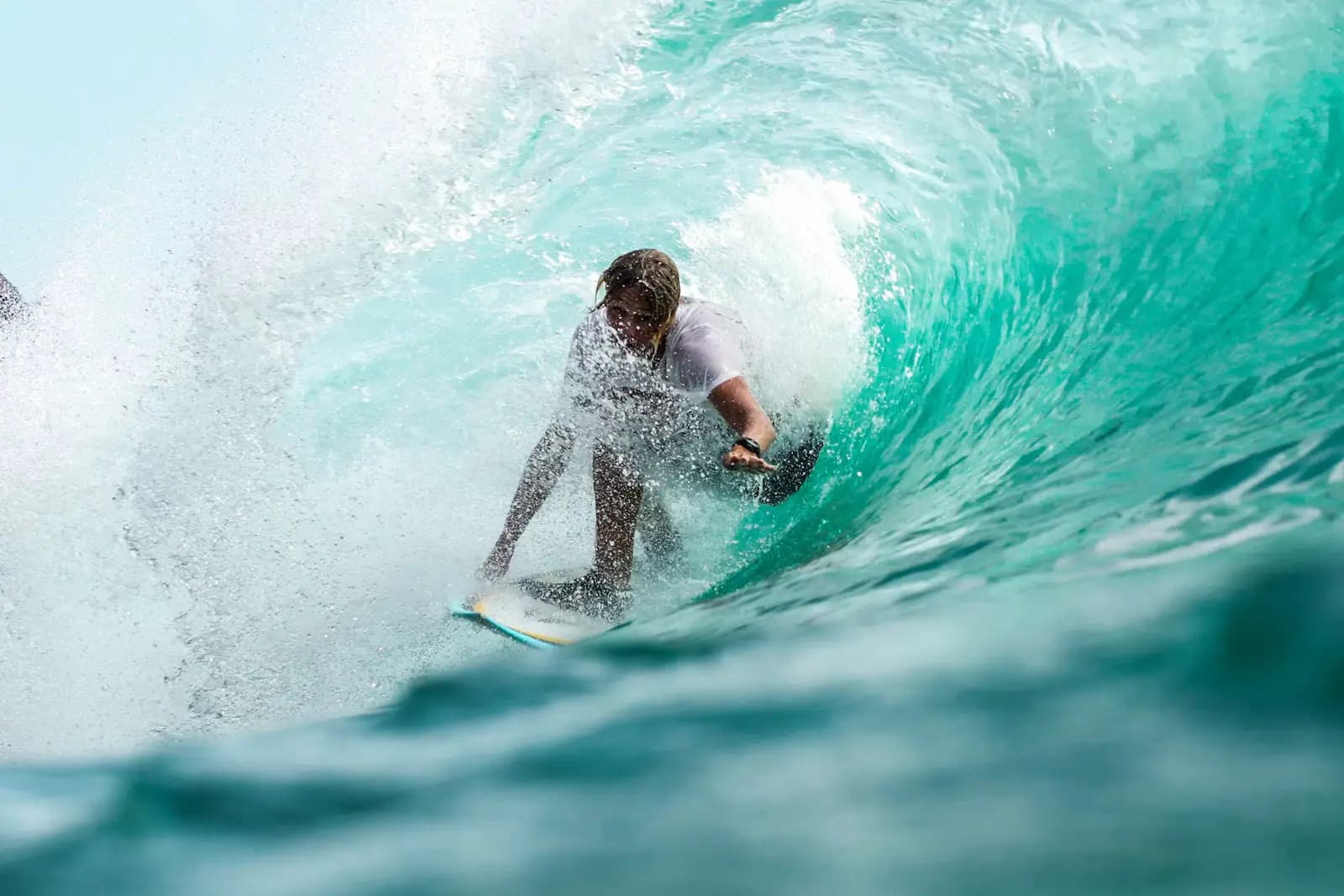
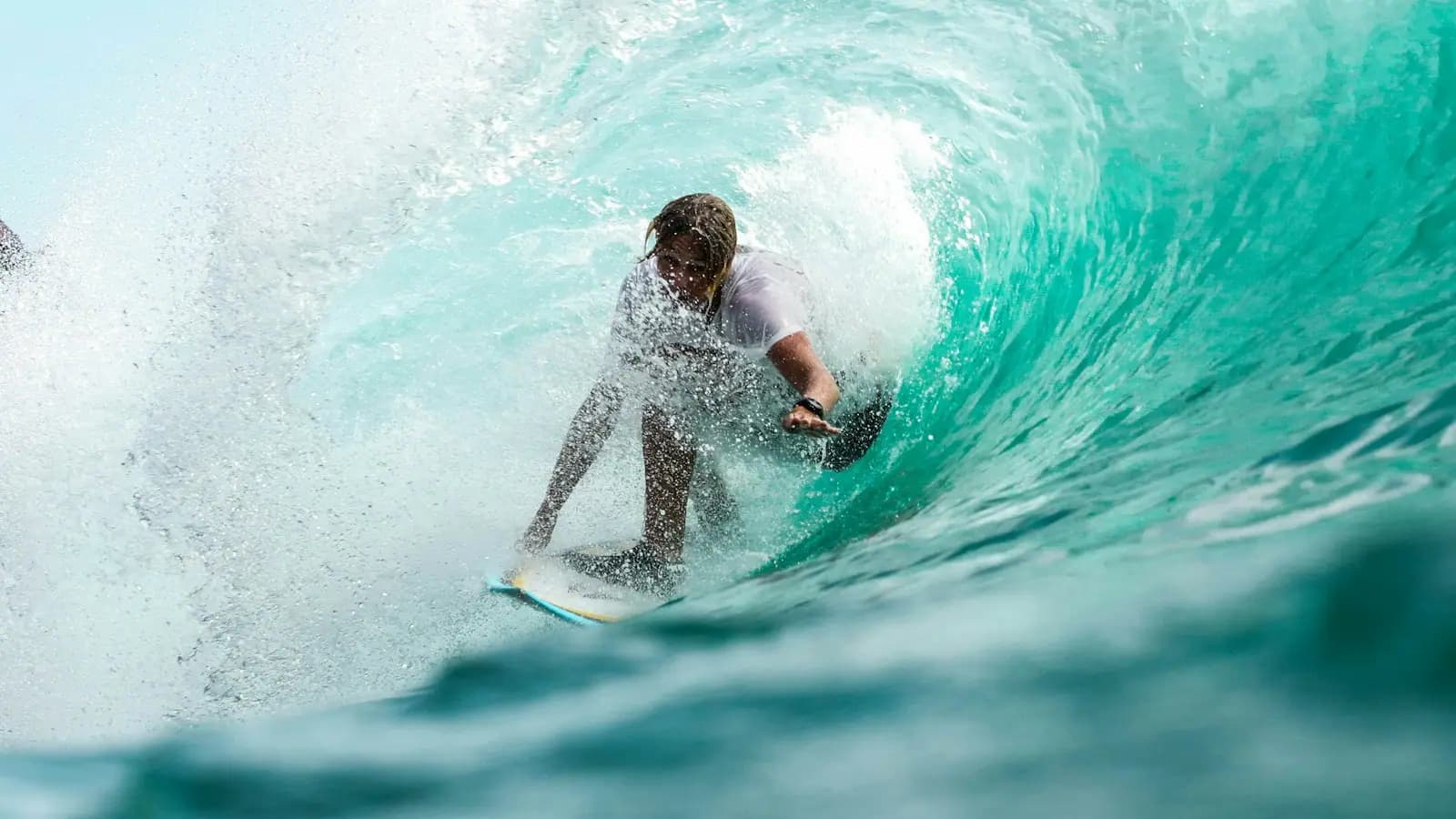
The second fact is the season, and it is not a detail to be tucked into a sidebar. This coast faces north, straight into the North Pacific, and from roughly November to March it takes the swell those winter storms generate. Waimea Bay, Banzai Pipeline and Sunset Beach run at sizes that close the water to everybody who is not a professional. Hawaiian scale measures the back of the wave, so a twenty-foot day on the surf report is a face of around forty. Lifeguards shut beaches for days at a time. The shorebreak at Waimea breaks collarbones in water you can stand up in. Then, from roughly May to September, the same beaches lie down and go glassy, and Shark's Cove — the reef inside the Pūpūkea Marine Life Conservation District, and genuinely lethal in January — becomes the best shore snorkelling on this side of the island. Everything else on this page sits downstream of which of those two coasts you have arrived on.
Most readers come at this coast one of two ways. The first is the day trip: up from a Waikīkī hotel in the morning, back before dark, about fifty-five minutes each way on the freeway route when the road behaves. That day is won or lost on timing and parking, not on choosing between attractions. The second is actually staying up here, at Turtle Bay, in a Pūpūkea rental or somewhere off the highway at Sunset, and that is a different problem entirely: you stop caring about the queue and start caring about tides, swell forecasts and the fact that most kitchens on this coast stop serving early. If you are here for four nights, the single biggest adjustment is eating before eight.
It is worth saying plainly what this coast is not. It is not Waikīkī, which is an hour away and has the nightlife, the hotels and about nine-tenths of the island's bookable tours. It is not Pearl Harbor, which is a separate day on the leeward side. Nothing up here is open late, the dining is a handful of trucks and small kitchens rather than restaurants, and the beach you saw in a surf film may be roped off by Ocean Safety on the morning you arrive. People who love the North Shore love it for the absence of those things.
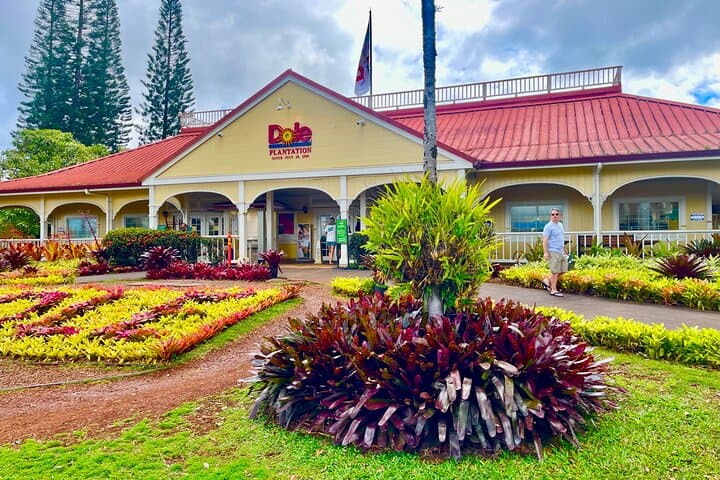
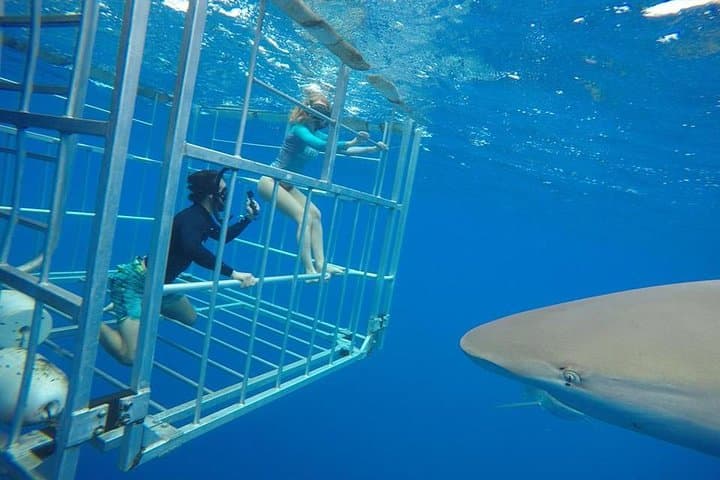
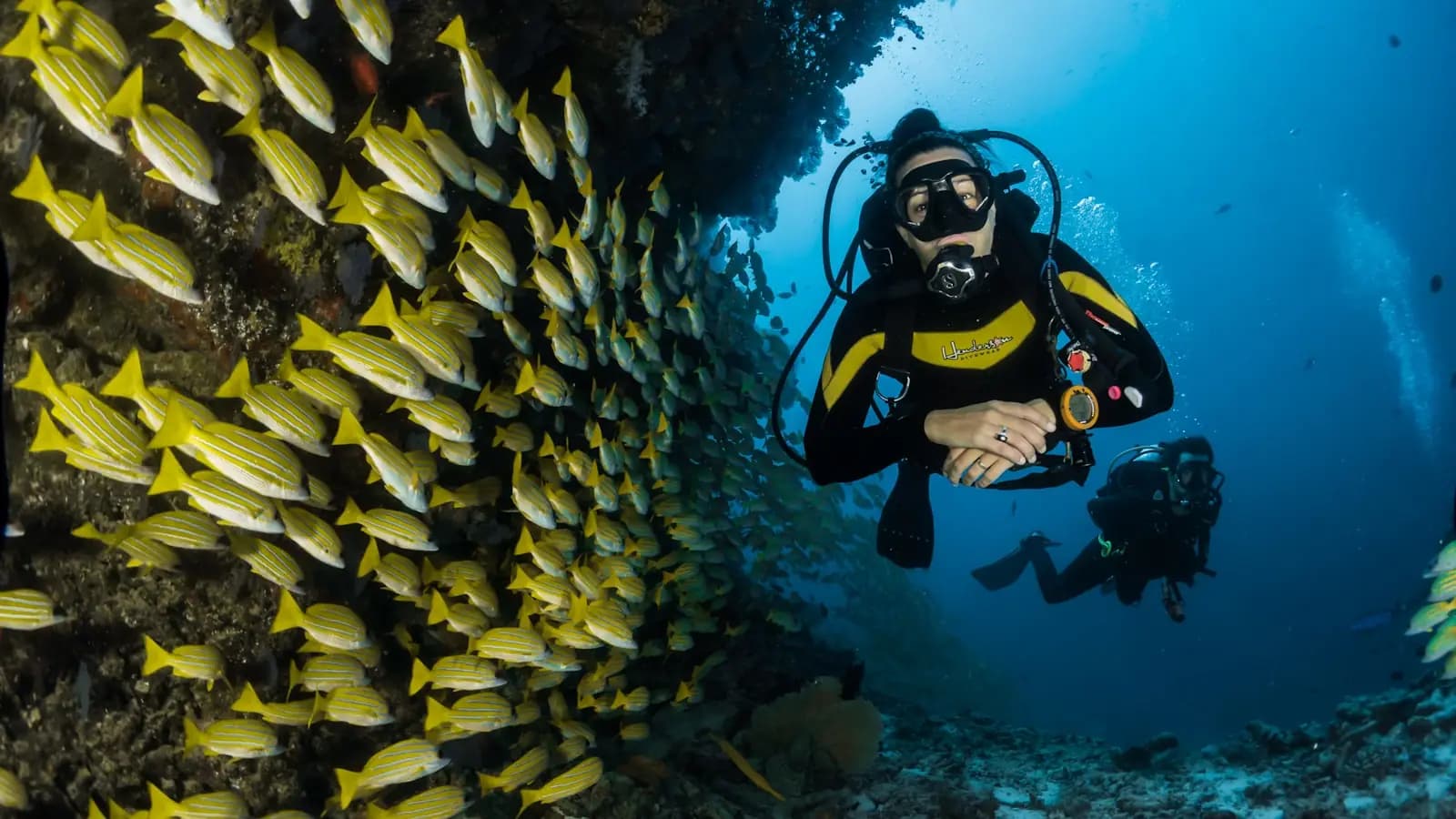
Money behaves differently here too. Every beach in Hawaiʻi is public to the high-water mark and almost everything on this coast is free to walk into, which makes the paid list short and easy to plan around: Waimea Valley, the Polynesian Cultural Center at Lāʻie, Kualoa Ranch on the windward run up, and the rides at Dole Plantation above Haleʻiwa. The bookable activities — shark cages and dive charters out of Haleʻiwa Small Boat Harbor, tandem skydives from Kawaihāpai Airfield at Mokulēʻia, horseback rides on the Kahuku pastures — mostly leave from two or three places. Across Oʻahu as a whole the typical tour runs near $109 a head, and the North Shore end of that market sits around the middle of it.