Kualoa Ranch is not on the North Shore, and pretending otherwise does nobody any favours. It sits on the windward coast at Kaʻaʻawa, roughly twenty-four miles from Waikīkī and about forty minutes south of Lāʻie, which makes it a stop on the long way round rather than a North Shore attraction. If you are driving the coast anticlockwise — over the Koʻolau, up the windward side, along to Kahuku and round to Haleʻiwa — Kualoa is the first thing worth stopping for. If you came up the H-2 through Wahiawā, it is an hour's detour from Waimea.
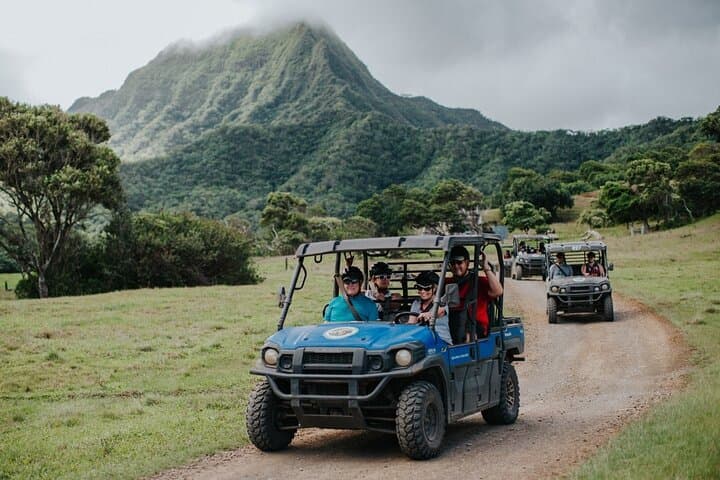
What it is: a working cattle ranch of about four thousand acres spread across three valleys — Kaʻaʻawa, Kualoa and Hakipuʻu — that has been in the same family since Dr Gerrit P. Judd bought the first parcel from Kamehameha III in 1850. It ran sugar for a few years in the 1860s, went back to cattle, and in the last few decades has become the place Hollywood films when it needs green ridges and no telephone poles. More than two hundred productions have shot here, and the ones people come for are Jurassic Park, Lost, 50 First Dates and the Jumanji films.
What it also is, and this matters more: the Kualoa ahupuaʻa was one of the most sacred places on Oʻahu. Chiefs' children were raised here. The Kumulipo, the Hawaiian creation chant, names Kualoa. The district was added to the National Register of Historic Places in 1974. Moliʻi fishpond on the property is a walled loko iʻa, a Hawaiian aquaculture system built centuries before any of this was a ranch, and it still works.
Practically, the thing to understand is that you cannot wander in. Everything is a booked, timed, guided tour — bus, UTV, horseback, e-bike, zipline, jungle walk, or a boat on the fishpond — and the popular slots go weeks out in summer. Turning up hoping to buy a ticket is how people end up looking at the gift shop.