Skip to content
Search
Menu

We earn a commission if you book through this link. You pay the same price.

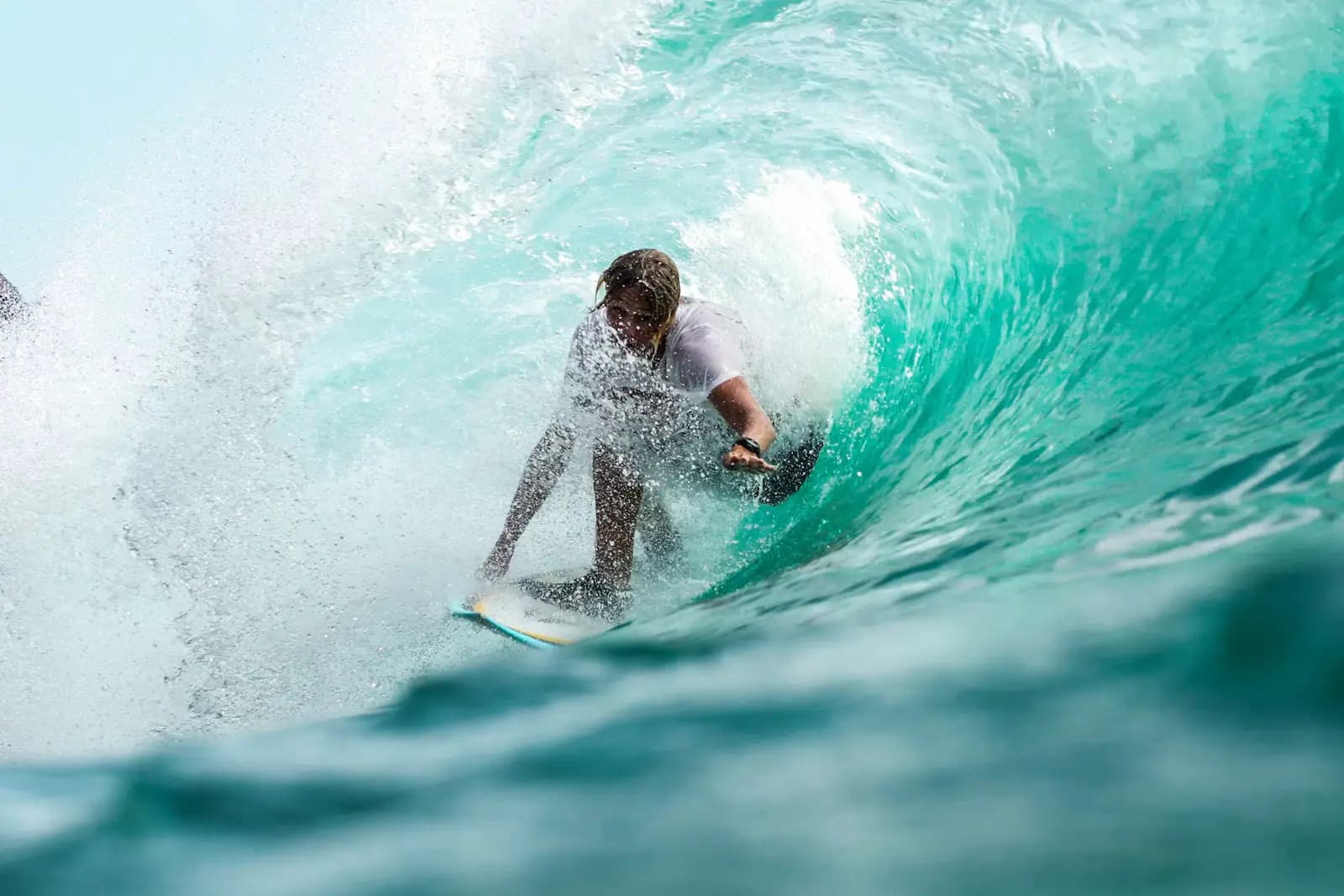
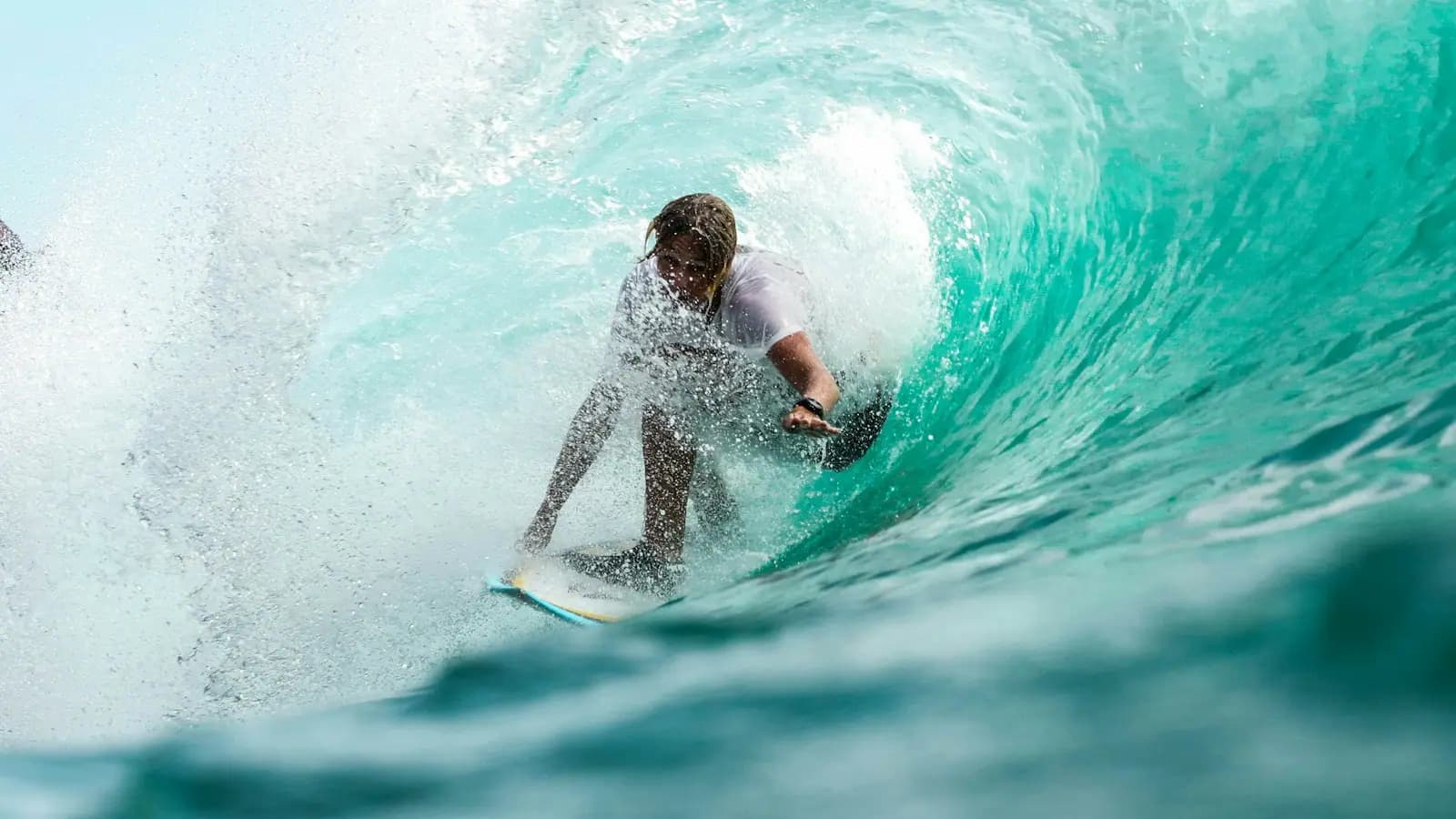
A surfer riding along the face of a long wave peeling past a rocky point

Things to Do

Surfing the North Shore

Last updated

Surfing Oʻahu's North Shore: why winter swell is for watching, where beginners actually learn, contest season at Pipeline and what a lesson costs.

Seven miles of coastline between Haleʻiwa and Sunset Point carry more named waves than most countries, and surfers have called the stretch the Seven Mile Miracle for decades. The reason is unglamorous geography. There is nothing between this coast and the Aleutians, so North Pacific winter storms arrive with thousands of miles of open water behind them, and the reefs along this shore are shallow, abrupt and shaped in a way that stands that energy up rather than bleeding it off gradually. Deep water runs close to the shore and then hits a shelf. The result is the concentration of world-class waves within a twenty-minute drive that made this the industry's centre of gravity.

What that means for a visitor is that the North Shore has two completely different relationships with surfing depending on when you show up. From roughly November to March it is a spectator sport for almost everyone reading this. Faces of twenty to thirty feet are an ordinary January at Waimea and Sunset, Pipeline breaks in shallow water over a caverned reef a short way off Ehukai Beach Park, and lifeguards spend the season pulling people out of water that looked survivable from the car park. Paddling out at any of the famous breaks in that window is not a stretch goal, it is a rescue call. From roughly May to September the swell switches to the south side of the island and the North Shore goes flat enough to snorkel.

Which leaves a genuine question the brochures skip: can you learn to surf here. Yes, in the right place, at the right time, with someone who knows the coast. The surf schools work out of Puaʻena Point, a protected cove next to Haleʻiwa Aliʻi Beach Park with a sandy bottom, a long gentle wave and a headland that keeps the worst of the north swell off it. Chun's Reef and the Haleʻiwa side handle small days. What an honest instructor will tell you in December is that the beginner option that day might be an hour's drive away on the south shore, and a school willing to say that is the one to book.

The other thing worth understanding before you get in is that this is a working lineup with a long memory. The waves here are crowded with people whose living depends on them, the etiquette is not optional, and the local reputation for enforcing it is earned rather than mythical. Learn the rules on a beginner break with an instructor, and do not treat a famous name as a bucket-list tick.

Below: how the season actually behaves month by month, the named breaks and what each demands, where beginners go, what lessons and rentals cost, and how to watch a contest without spending the day in a parked car.
Our picks

The ones we would book

  • Best for Beginners

    Best first lesson on the North Shore

    Why we chose it

    Look for a school that teaches at Puaʻena Point rather than naming a famous break in the listing. The cove is sheltered by the headland, the bottom is sand rather than reef, and the wave runs out into flat water, which is why instructors can stand beside you instead of shouting from shore. Confirm the group size and the winter fallback location before you pay.

    Hawaii Shark Encounters
    Best for BeginnersFree cancellationSmall group

    Short term availability

    Oahu: North Shore Shark Cage Diving (opens in a new tab)

    1.6K reviews

    Discover the open-ocean world of sharks on this unforgettable Oahu shark cage diving tour. More than just an adventure, this educational…

    2 hours

    Prices checked

    from $100

Why the waves are like that

Three things combine, and only here in this arrangement.

Fetch. Winter low-pressure systems spin up in the North Pacific between Japan and the Aleutians and drive wind across thousands of miles of unobstructed ocean. The swell that arrives on Oʻahu's north shore has had the entire ocean to organise itself into long-period lines, which is why the waves hit in sets several minutes apart rather than as constant chop.

Bathymetry. The shelf here is narrow. Deep water runs close in, then the bottom rises hard onto shallow basalt reef. A wave that has been travelling in thousands of feet of water feels the bottom suddenly rather than gradually, which is what makes it throw forward instead of crumbling. At Pipeline the reef has caves and ledges in it, and the wave breaks over about as much water as you would find in a bathtub.

Orientation. The coast faces roughly north to northwest, which is exactly where the winter swell comes from, and the prevailing trade winds blow offshore or across rather than onto it for much of the season. Offshore wind holds the face up and smooths it. That is the difference between a big messy wave and a photograph.

The same geometry explains the summer. When the North Pacific quietens and the swell generator moves to the southern hemisphere, the energy arrives on the opposite side of the island. Waikīkī gets its season; the North Shore gets its snorkelling.

The season, and what each month looks like

When to go

Treat these as tendencies rather than a timetable. A long-period swell can arrive on two days' notice in either shoulder month.

  • November to December. The season arrives. Swells build, the contest circus sets up along the highway, and the traffic between Haleʻiwa and Sunset becomes the worst it gets all year. Water access is closed repeatedly.
  • January to February. The heaviest part. High surf advisories and warnings run through the month, and forecasts in the thirty to forty foot range are not unusual at the peak. This is when Waimea is capable of running the big-wave invitational, and when the shorebreak injuries happen.
  • March to April. Winding down, unevenly. Some of the year's best days land in March. By late April the beaches begin to refill with sand and the snorkelling starts to come back.
  • May to September. Flat, or close to it. Beginner conditions at Puaʻena and Chun's on most days, the reef flats at Pūpūkea open up, and the swell moves to the south shore. Surf schools run their busiest months.
  • October. The transition. Often still calm, occasionally the first real north swell of the season without any of the winter crowd in place.

Two practical notes. First, the surf forecast that matters is the day's, not the week's. Second, the bigger the swell the earlier you should be on the road: on a headline day the highway shoulder from Ehukai to Sunset fills before most people have had breakfast.

Where you actually learn

Puaʻena Point is the answer most of the year. It is a cove immediately north of Haleʻiwa Aliʻi Beach Park, sheltered by the point, with a sandy bottom and a wave that breaks long and slow and runs out into a calm pool rather than onto reef. The established North Shore surf schools teach there, and the setup lets an instructor stand in waist-deep water and push you into waves rather than shouting from the beach. Honu turn up in the shallows, which is a pleasant distraction and a reminder to keep your board away from them.

Haleʻiwa Aliʻi Beach Park itself has a lifeguard, a proper car park and space to do a beach lesson before anyone gets wet. Chun's Reef works for a second or third session on a small day if you already stand up reliably.

What to ask a school before booking:

  • Where will we actually be, and what is the fallback if the north swell is up. A school with a south-shore alternative in December is being honest with you.
  • Group size. Two to four per instructor is teaching; eight is a queue.
  • Is the board a soft-top, and does it match the size of the person on it.
  • Do they provide rash guards, and is there anywhere to rinse afterwards.

If you are travelling in December or January and learning to surf is the priority rather than the North Shore specifically, book the lesson on the south shore and keep this coast for watching. That is the sequence residents would suggest, and it is the one that produces both a good day and a standing-up photograph.

Watching surf, and the contest season

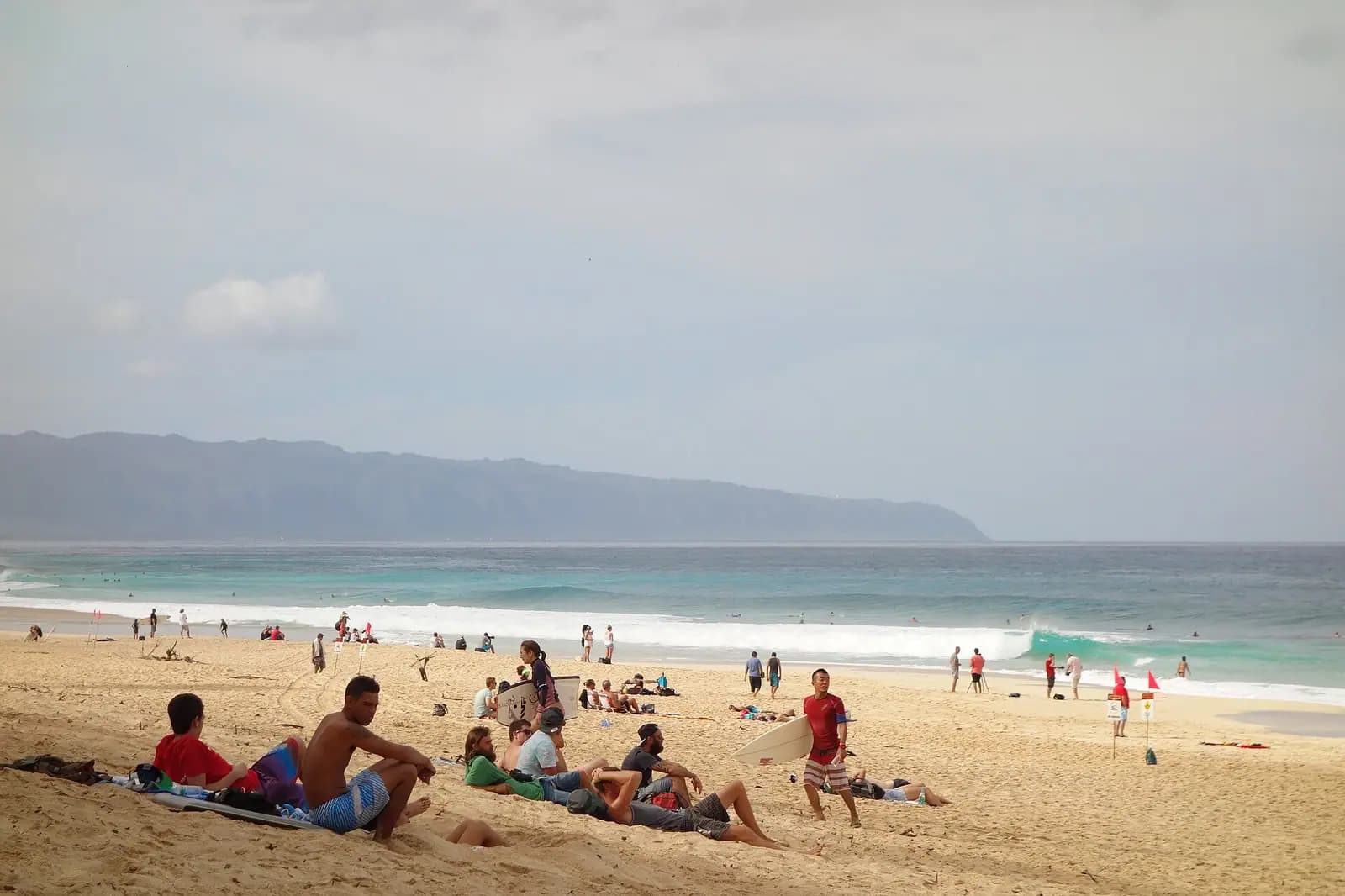
A big winter swell is one of the genuinely free spectacles in Hawaiʻi, and you do not need a contest for it. Waimea Bay's car park overlook, the sand at Ehukai facing Pipeline and the elevated shoulder near Sunset Point all put you close enough to feel the sets land.

The contest calendar itself needs a caveat. Professional events run at Haleʻiwa, Sunset and Pipeline through the winter, and they are scheduled as waiting periods rather than fixed dates, because competition starts only when the waves arrive. The historic Vans Triple Crown, which linked those three venues, has been through repeated format changes since 2020, so check the current season's calendar rather than assuming. The Eddie Aikau big-wave invitational at Waimea is the famous one: a holding period that runs roughly December into early March, and a threshold of consistent forty-foot faces that means it has only run a handful of times since it began in the mid-1980s. Most winters it does not run at all.

How to watch a big day without losing it to a car park:

  • Arrive very early. On a contest or a headline swell the lots at Ehukai and Waimea are gone by breakfast and the highway shoulder fills for a mile.
  • Park once and walk. Ehukai to Sunset is a long but flat walk along the sand when the beach is there.
  • Bring water, a hat and a folding chair, and expect no shade.
  • Stay well back from the waterline. The set that reaches the top of the beach arrives without warning, and people are swept off rocks and wet sand every winter.
  • Take the traffic seriously on the way out. The highway is one lane each way, and everybody leaves at once.

What lessons, rentals and surf tours cost

What it costs

Bands, not quotes. Confirm before booking, and expect winter availability to be thinner than the websites suggest.

  • Group lesson, roughly two hours: commonly around $100 to $150 per person, board and rash guard included, usually two to six students per instructor.
  • Semi-private or private lesson: typically $150 to $300 per person depending on group size and length, which buys far more time actually on waves.
  • Board rental: soft-tops and longboards from Haleʻiwa shops commonly run about $25 to $40 a day, with multi-day rates lower per day. Paddleboards sit in a similar band.
  • Multi-day surf camps and packages: priced per programme; ask what happens to the schedule when the north swell arrives.
  • Guided surf-watching or photography days from Waikīkī: these ride on the general Oʻahu tour market, where the median booking sits near $109, so a half-day up the coast lands around or below that.

Two costs that are not money. A lesson booked for 8am means leaving Waikīkī before 7, and a swell forecast can cancel a booking on the morning. Ask about the rescheduling policy at the point of booking, not afterwards.

Book it

Everything else we track

We could not find tours matching this right now

Nothing came back for North Shore surf lesson. Operators add and retire experiences constantly, so this list changes week to week. Try a broader category, or come back in a day or two.

The named breaks, and what each one demands

How they compare

West to east, in driving order. None of the winter columns are an invitation.

BreakWhereWinterWho surfs it
Haleʻiwa AliʻiBeside the harbourPowerful right with a bowl section and a rip that runs out through the channelCompetent surfers; the traditional contest opener
Puaʻena PointJust north of HaleʻiwaSheltered by the headland; smallest surf on the coastBeginners, with an instructor, most of the year
Chun's ReefBetween Haleʻiwa and LaniākeaManageable on small days, serious on big onesImprovers and longboarders
LaniākeaOff the turtle beachLong right-hand point wave over shallow reefExperienced surfers only
Waimea BayThe bay itselfThe big-wave paddle arena; only relevant when it is enormousA short list of specialists
Banzai PipelineOff Ehukai Beach ParkBreaks over a shallow caverned reef close to shore; the most dangerous wave hereProfessionals and a hard core of locals
Off The Wall / BackdoorEither side of PipelineSame reef system, different angleThe same crowd
Sunset BeachSunset PointHuge shifting peak in deep water with a powerful ripBig-wave experienced surfers
VelzylandToward KahukuFast, shallow right-handerLocals; visitors are not welcome in this lineup
MokulēʻiaWest of WaialuaExposed, windy, inconsistentIndependent surfers looking for space

The honest reading of that table: two of these eleven are places a visiting learner should ever be, and only in the right conditions with someone watching. Pipeline in particular has killed and paralysed experienced surfers. Watching it from the sand at Ehukai is a genuine experience in its own right and costs nothing.

Lineup etiquette, and why it is enforced here

Before you book

These are not beginner-friendly waters socially, and pretending otherwise does visitors no favours.

  • One surfer per wave. The person closest to the breaking peak has priority. Dropping in on somebody else's wave is the cardinal offence and it is taken seriously here.
  • Do not paddle through the lineup. Go around, out through the channel, even if it takes longer.
  • Do not snake. Paddling around someone to claim inside position is understood exactly as it is meant.
  • Never let go of your board. In crowded water a loose board is a weapon, and the reef bottoms here mean bailing has consequences for other people.
  • Earn the wave. Sitting on the peak at a break you cannot ride is worse than sitting wide and taking scraps.
  • Watch first. Twenty minutes on the beach tells you where the takeoff is, where the rip runs and who is running the lineup.
  • Be polite on land as well. Park legally, do not block residential driveways, take your rubbish, and do not hold a phone up at people's houses.

The underlying point: a few thousand people live along this highway and a good number of them are in the water every day of the year. Localism here has a reputation, and the reliable way to avoid any of it is to surf the beginner spots with an instructor, stay out of the famous lineups, and treat the whole coast as somebody's neighbourhood rather than a venue.

On the ground

Where to go

Every place below has its own page — hours, parking, what it costs and what to expect when you get there.

  • Heavy winter surf breaking across the mouth of a bay between two lava headlands
    Free

    Beach

    Waimea Bay

    Flat enough to swim across in July, closed by thirty-foot faces in January. The North Shore's seasonal flip at its most extreme.

    1.5–5 hoursFree, including parking. The lot is small and fills early.

  • A surfer inside the barrel of a hollow wave breaking over shallow reef
    Free

    Water feature

    Banzai Pipeline

    A hollow left breaking over shallow lava a short paddle offshore: the most dangerous wave in surfing, and a free grandstand in December.

    1–3 hoursFree to watch from ʻEhukai Beach Park. Parking is free but there is very little of it.

  • A wide sandy beach with large surf breaking offshore and ironwood trees along the back of the sand
    Free

    Beach

    Sunset Beach Park

    Two miles of sand that swallows swimmers in January and lets you snorkel off it in July, with a car park that fills by nine.

    1–4 hoursFree. County beach park with free parking in the beach-front and support-park lots.

  • Low sun dropping towards the ocean at the end of a long open beach
    Free

    Beach

    Sunset Beach

    Two miles of sand the winter ocean removes and the summer ocean puts back, with the coast's most notorious rip running through it.

    1–4 hoursFree, with a free lot that is larger and more reliable than anything else on this stretch.

  • Low wooden plantation-era storefronts along a single main street with mountains behind
    Free

    Neighbourhood

    Haleʻiwa Town

    The coast's only real town, and the traffic jam that decides your whole day. Shave ice, surf shops, galleries, and everything shut by nine.

    1–3 hoursFree to visit. Parking is free in the shop lots and on the street.

  • A wide, near-empty beach backed by ironwood trees on a calm summer afternoon
    Free

    Beach

    ʻEhukai Beach Park

    The small county park you stand in to watch Pipeline — and, for four months of the year, an ordinary swimming beach almost nobody visits.

    1–4 hoursFree. Parking is free too, but the lot is very small and fills at dawn whenever there is surf.

  • Calm shallow water over sand inside a sheltering reef on a wide bay
    Free

    Beach

    Haleʻiwa Beach Park

    Behind a reef on Waialua Bay, this is the one North Shore beach that stays swimmable in January. Grass, shade, lifeguards, canoes.

    1.5–5 hoursFree, with a free lot and a short flat walk to the sand.

  • A surfer riding a fast right-hand wave peeling off a shallow reef near a harbour entrance
    Free

    Beach

    Haleʻiwa Aliʻi Beach Park

    A professional contest break at one end, a sheltered pool for small children at the other, and the coast's lifeguard base in between.

    1–4 hoursFree, including during the winter contest. Parking is free in the beach park lot.

  • A long empty beach backed by ironwood trees with a mountain ridge rising behind
    Free

    Beach

    Mokulēʻia Beach

    Six miles of mostly empty sand west of Haleʻiwa, where the trades blow hardest and almost nobody stops.

    1–3 hoursFree. County beach park with a small free lot; roadside parking elsewhere.

Straight answers

Questions people actually ask

Can beginners surf on the North Shore?

Yes, in the right place and mostly in the right season. Surf schools teach at Puaʻena Point, a sheltered cove beside Haleʻiwa Aliʻi Beach Park with a sandy bottom and a long gentle wave. From roughly May to September conditions across the coast are beginner-friendly. In winter, a good instructor may move the lesson to the south shore instead, and a school willing to say that is the one worth booking.

When is surf season on Oʻahu's North Shore?

Roughly November to March, with January and February the heaviest. North Pacific storms send long-period swell onto a coast with nothing in front of it, producing faces of twenty to thirty feet and more at Waimea, Pipeline and Sunset. From May to September the swell moves to the south side of the island and the North Shore goes flat enough to snorkel. October and April can deliver either version.

Can you swim at Pipeline?

In summer, Ehukai Beach Park in front of Pipeline is an ordinary swimming beach with a lifeguard. In winter it is one of the most dangerous stretches of water in Hawaiʻi: the wave breaks over a shallow caverned reef close to shore, the shorebreak alone causes serious injuries, and lifeguards close water access regularly. Watching from the sand is the winter activity, and it is a genuinely good one.

How much is a surf lesson on the North Shore?

Group lessons of around two hours commonly run about $100 to $150 per person including the board and rash guard, usually with two to six students per instructor. Semi-private and private tuition typically runs $150 to $300 per person and buys far more time on waves. Board rental alone from a Haleʻiwa shop is generally around $25 to $40 a day. Confirm current pricing when you book.

Where can you watch surfing on the North Shore?

Waimea Bay's overlook by the car park, the sand at Ehukai Beach Park directly in front of Pipeline, and the shoulder near Sunset Point are the three classic vantage points, and all of them are free. Arrive very early on a big swell, because the lots fill before breakfast and the highway shoulder backs up for a mile. Stay well back from the waterline: sets sweep people off wet sand every winter.

Does the Vans Triple Crown still run?

Not in its classic form. The series that linked Haleʻiwa, Sunset Beach and Pipeline has been through repeated format changes since 2020, including a digital, video-submission version, and the traditional three-contest run is no longer a reliable fixture. Professional events do still run at those venues through the winter, scheduled as waiting periods rather than fixed dates. Check the current season's calendar before planning a trip around one.

What is the Eddie and when does it run?

The Eddie Aikau big-wave invitational is held at Waimea Bay in memory of the Hawaiian lifeguard and waterman. It has a holding period running roughly from December into early March and a threshold of consistent forty-foot faces, which is why it has only run a handful of times since the mid-1980s. Most winters it is called off. If it does go, expect the North Shore highway to be at a standstill.

Is localism a problem for visiting surfers?

The North Shore lineups are crowded, shared with people who surf them every day, and the etiquette is enforced. That is manageable: learn on a beginner break with an instructor, never drop in, paddle around the lineup rather than through it, and stay out of the famous waves entirely. Off the water, park legally and do not block residential driveways. Most friction visitors report traces back to one of those.