Skip to content
Search
Menu

We earn a commission if you book through this link. You pay the same price.

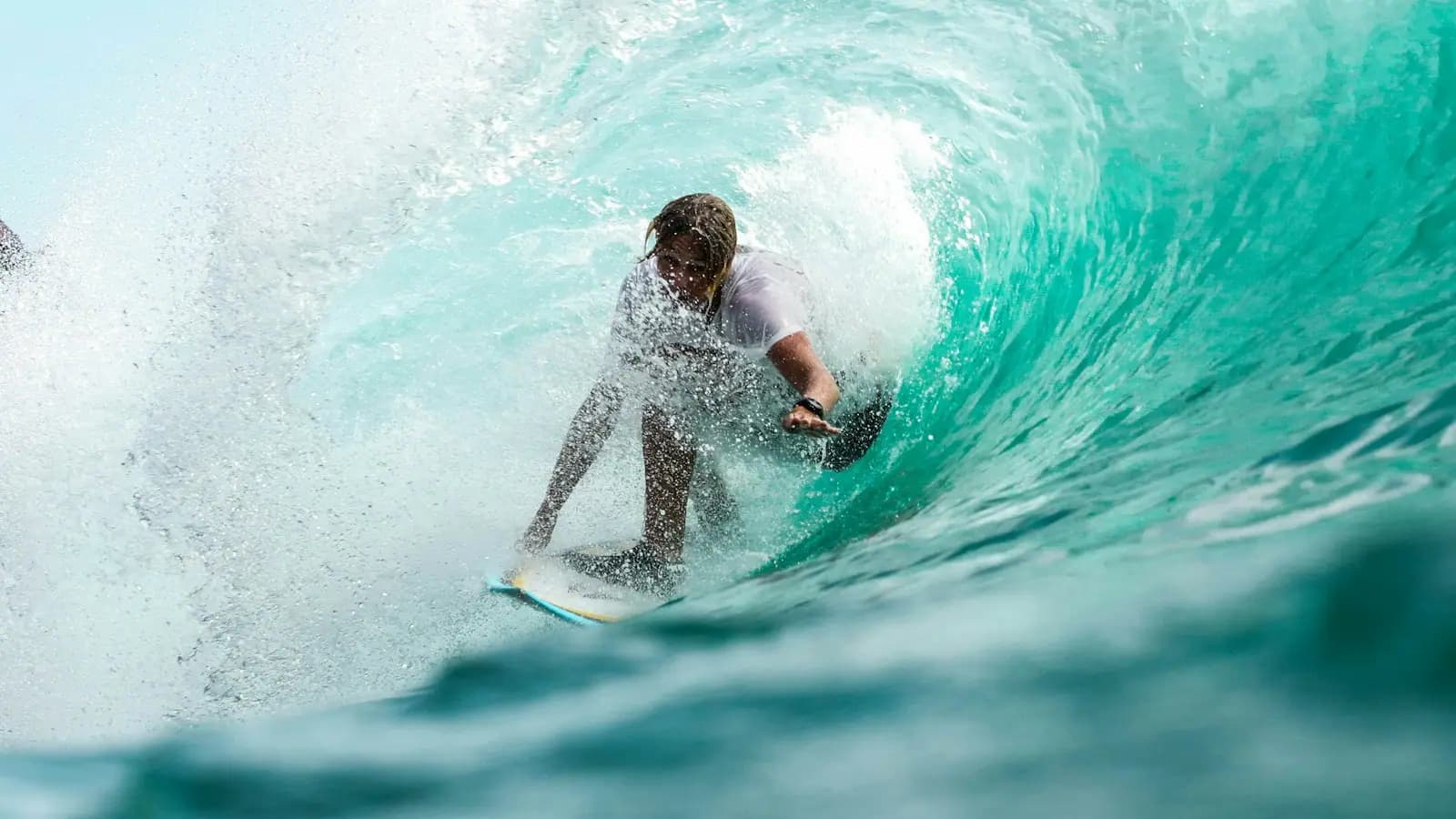
A surfer inside the barrel of a hollow wave breaking over shallow reef
Daniel Ramirez from Honolulu, USA

Water feature

Banzai Pipeline

Last updated

A hollow left breaking over shallow lava a short paddle offshore: the most dangerous wave in surfing, and a free grandstand in December.

Pipeline is not a beach. It is a wave, and it breaks a short paddle off the sand at ʻEhukai Beach Park, on a shelf of lava reef that sits close enough to the surface that surfers talk about it in terms of how many feet of water are over it rather than how many fathoms. That geometry is the whole story. Swell arriving from the North Pacific runs into shallow rock and throws forward all at once, producing a barrel wide enough to stand in and a lip that lands with the weight of a wall falling over.

It is the most closely watched wave in surfing and, by common agreement among the people who ride it, the most dangerous. The danger is not drowning in open water. It is the reef: the wave holds you down, and the bottom you are held against is sharp, shallow and unforgiving. Surfers who have made careers here still describe it as a place that gives no second chances.

There are really three waves at this spot. First Reef is the famous one, breaking close in on ordinary big days. Second Reef breaks further out and starts to work when the swell gets large enough that First Reef cannot hold it. Backdoor is the right-hander that peels the opposite way off the same peak, and on the right swell direction the two run away from each other from a single takeoff.

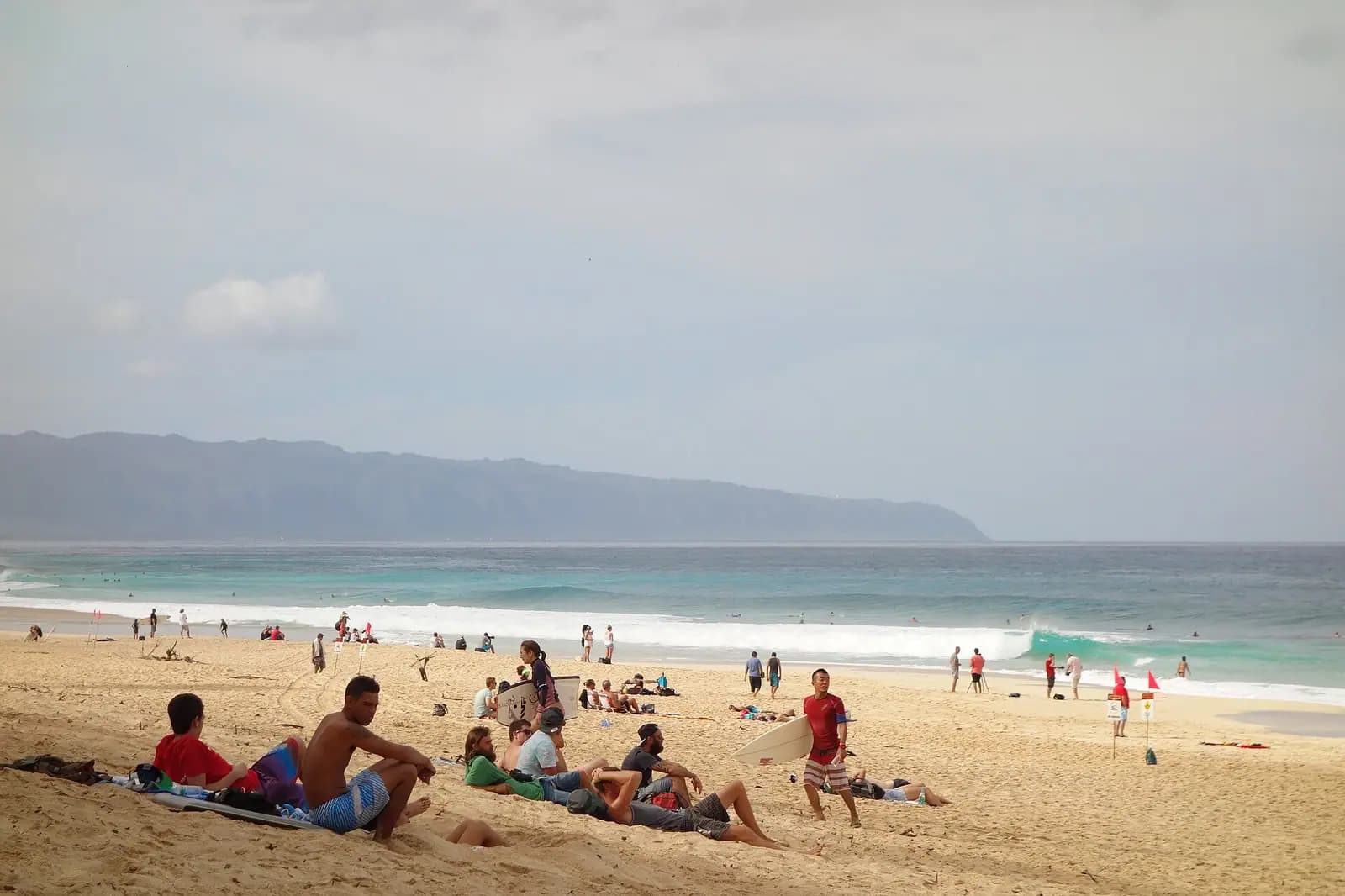
For a visitor, Pipeline is a spectator attraction and should be treated as one. In winter this is the best free grandstand in surfing: you stand on the sand at ʻEhukai, forty or fifty metres from the takeoff, and watch professionals do something genuinely difficult at close range. In December the coast's biggest professional event has historically been held here, and the crowd is a North Shore institution in its own right.

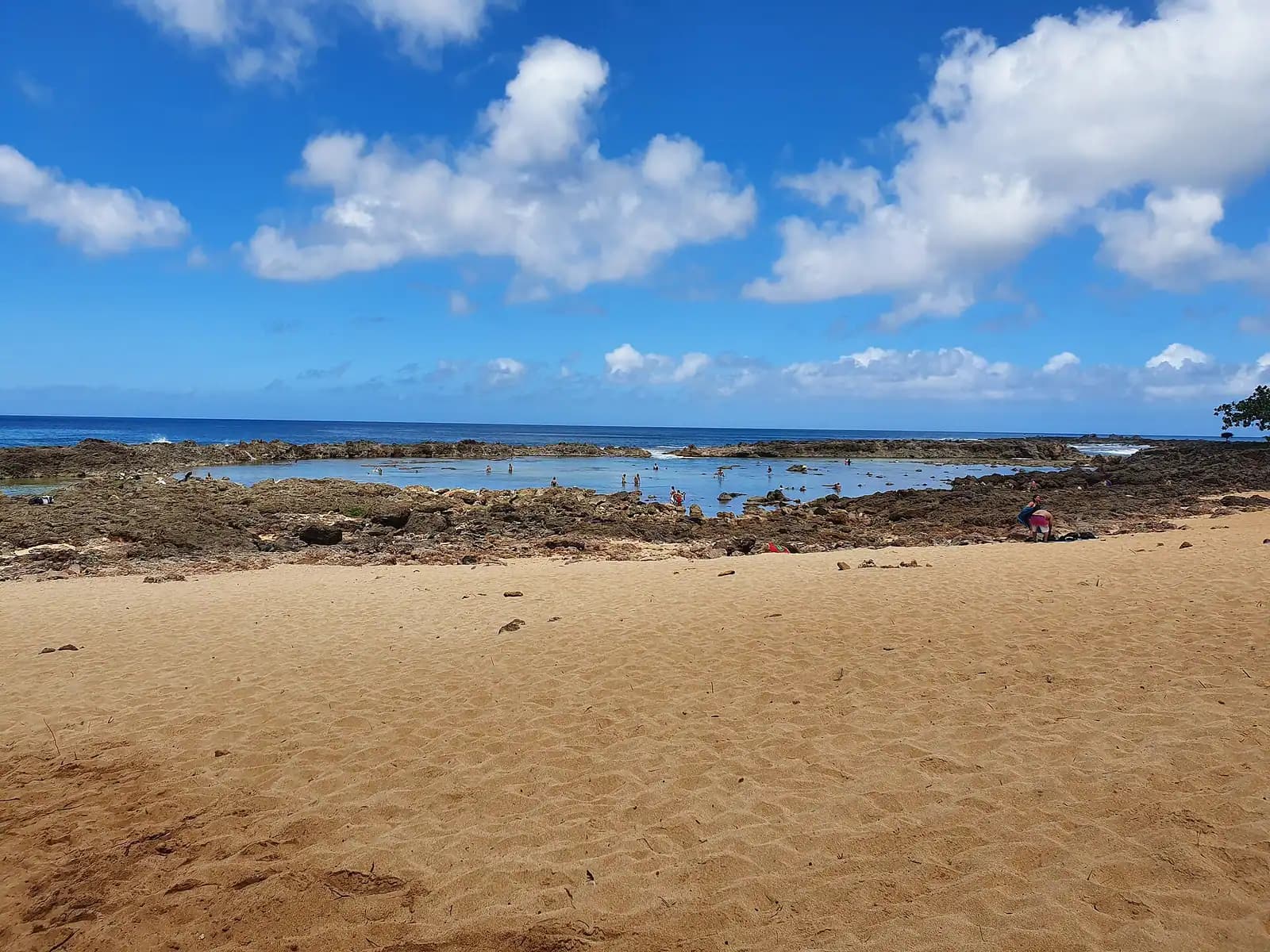
In summer the whole thing vanishes. The swell shuts off, the reef sits under flat water, and people snorkel over it. It is the same rock.
Getting there and parking

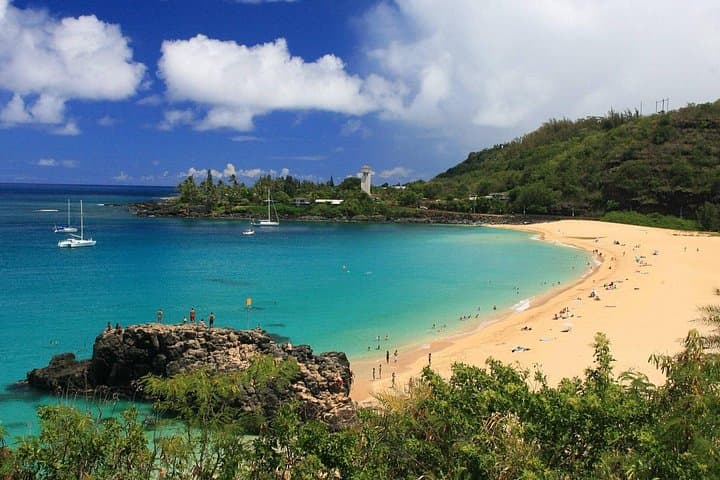
Pipeline breaks off ʻEhukai Beach Park, and the park is how you reach it. The small lot is on the ocean side of Kamehameha Highway opposite Sunset Beach Elementary School, between Pūpūkea and Sunset Beach. From the lot, walk through the ironwoods to the sand and turn left.

From Waikīkī allow an hour via H-1, H-2 and Kamehameha Highway, more on a weekend or a big-swell day. From Haleʻiwa town it is roughly fifteen minutes up the coast past Waimea Bay and Pūpūkea.

The lot holds very few cars and fills at dawn whenever there is swell. Roadside parking along Kamehameha Highway is heavily signed and enforced through the winter, and towing does happen. On contest days, park in Haleʻiwa or at Sunset and walk, or take TheBus route 60 up the coast.

Why you do not swim here in winter

This is the single most important paragraph on the page. Pipeline in winter is not a swimming beach, and the shorebreak in front of it is not a paddling area.

  • The reef is shallow. In places there are only a few feet of water over lava. A wave that would merely roll you elsewhere puts you onto rock here.
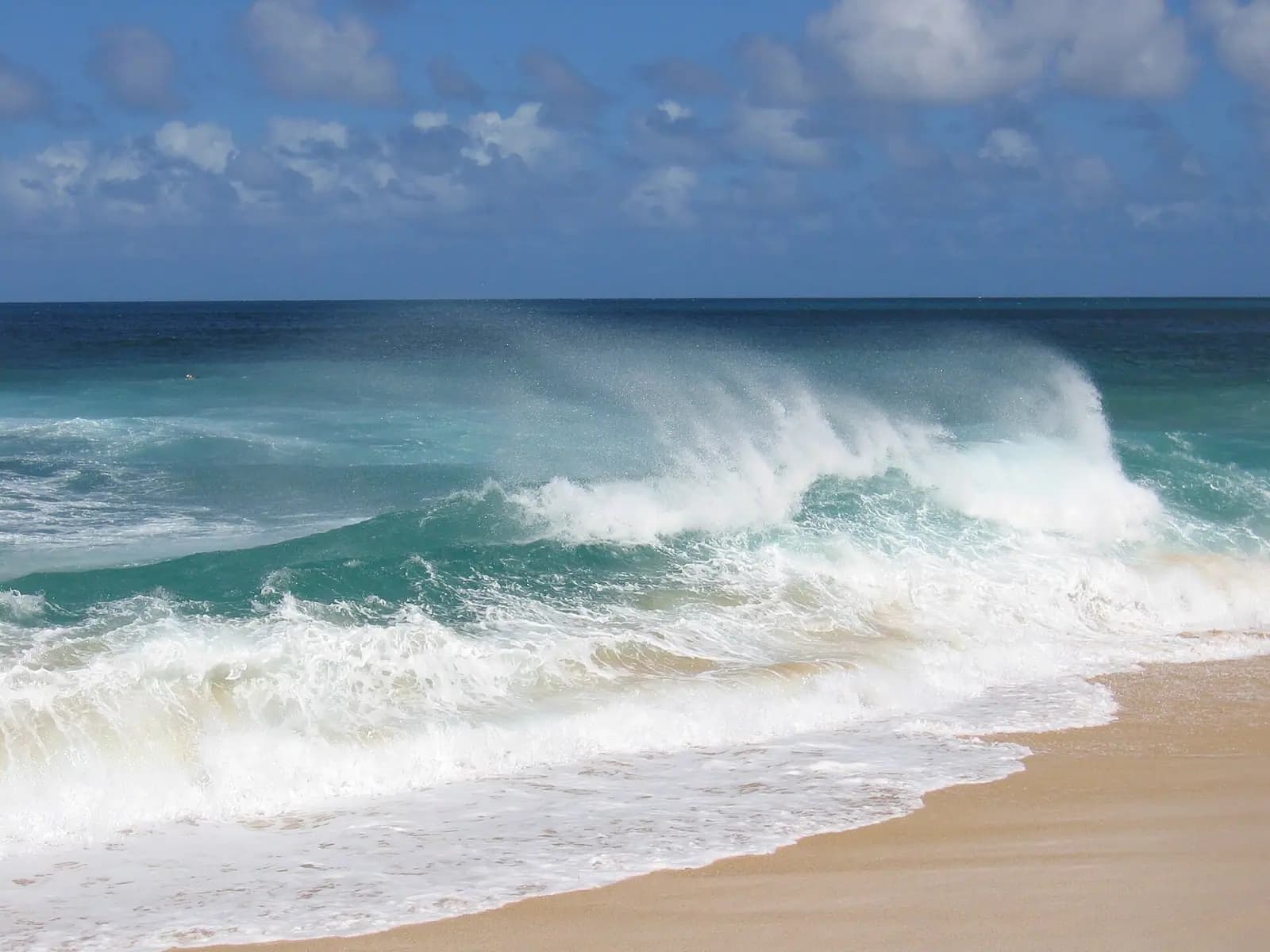
  • The shorebreak alone breaks bones. People are injured every winter on the sand at ʻEhukai without ever getting past the whitewater. Spinal and shoulder injuries are the common ones.
  • The current runs hard along the beach when surf is up, and it will move you towards the rocks at either end faster than you can walk back.
  • Lifeguards close this water, and they are not being cautious. They are the busiest rescue crews in the state for a reason.

Watch from the sand, stay well back from the water's edge, and keep small children at the dune line rather than the shoreline. If you want to get in the water on a winter day on this coast, Haleʻiwa Beach Park behind its reef is the answer, not this.

In summer — roughly May to September — the same water is often flat and people do swim and snorkel over the reef. Even then, know where the lava is and do not stand on coral.

When Pipeline actually works

Pipeline needs North Pacific groundswell, which means winter: roughly November through March, with December and January the reliable heart of it.

What makes a good day is not just size. The wave wants a swell with some west or northwest in it and a light offshore or glassy morning wind. Straight north swell tends to make it less hollow; too much size and First Reef stops holding and the action moves out to Second Reef.

Practical timing for a spectator:

  • Go in the morning. Wind usually comes up through the day and the wave gets messier.
  • Check a North Shore surf forecast the night before rather than driving up hopefully. A flat winter week happens.
  • December is contest season. The coast's marquee professional event has historically been held at Pipeline in December, with a holding period rather than fixed dates, and it runs when the surf arrives. On a contest day expect scaffolding on the sand, a commentary PA, restricted beach areas and a parking situation that is worse than usual.
  • A big-swell weekend is the busiest the North Shore gets. Leave Waikīkī before seven or accept the traffic.

In summer the spot is genuinely flat and there is nothing to see. Visitors who turn up in July expecting the photograph are routinely baffled.

Where to stand, and how not to be in the way

Access is through ʻEhukai Beach Park, whose small lot sits opposite Sunset Beach Elementary School on Kamehameha Highway. From the lot it is a two-minute walk through the ironwoods to the sand, and the peak is to your left as you face the water.

  • The best vantage is the sand itself, slightly north of the takeoff, where the wave comes towards you rather than past you.
  • Stay behind the flags and out of the marked channels on contest days. The paths surfers use to get in and out are working thoroughfares.
  • Do not set up in front of somebody who has been there since dawn. North Shore beach etiquette is real and it is politely but firmly enforced.
  • A long lens flatters this wave; a phone will not get you anything like what you can see with your eyes. Watch it rather than filming it.
  • Sunset is at your back. Morning light is better for photography here.

Facilities at ʻEhukai are limited: restrooms, showers, and shade under the ironwoods. Bring water. The nearest reliable food is the trucks at Pūpūkea and Sunset, a few minutes' drive either way.

Pipeline, Backdoor and the rest of the peak

The stretch of reef in front of ʻEhukai carries several named waves within a few hundred metres, and surf reports use the names as if everyone knows them.

  • Pipeline (First Reef) — the left. The famous barrel, breaking closest in over the shallowest rock.
  • Backdoor — the right off the same peak, working best when the swell has enough west in it. On a good day two surfers take off together and go opposite ways.
  • Second Reef Pipeline — further out, working on the largest swells when First Reef is overloaded. What you see from the beach is a wave breaking a long way offshore and reforming.
  • Off the Wall — a short walk north, a heavy shifting peak that produces a lot of the photography you have seen without ever being as famous.

If someone tells you "Pipe was ten foot", they are using the Hawaiian scale, which measures the back of the wave and reads roughly half what a face measurement would. A ten-foot Hawaiian day at Pipeline is a very large wave.

Tours that visit Pipeline

Operators run these trips past Pipeline, or stop there as part of a longer route. We list what the booking data supports — not everything that mentions the name.

Some links below go to Viator, our booking partner. We earn a commission on bookings made through them — at no extra cost to you, and with no influence on what we recommend.

  • Oahu: Full or Half Day Grand Circle Island Tour
    Free cancellationInstant confirmation

    Plantation Tours

    Oahu: Full or Half Day Grand Circle Island Tour (opens in a new tab)

    19.5K reviews

    Choose from two exciting ways to experience Oahu's top attractions, scenic beauty, and local culture. Option 1: Dole Plantation & Haleiwa…

    6–7 hours

    Prices checked

    from $100
  • Parasailing Experience in Waikiki, HI
    Free cancellationInstant confirmation

    Low Supplier Cancellation Rate

    Parasailing Experience in Waikiki, HI (opens in a new tab)

    8.9K reviews

    Experience the thrill of Oahu parasailing on this unforgettable 1-hour adventure from Waikiki. Soar up to 1,000 feet above the stunning…

    1 hour

    Prices checked

    from $44
  • Roland dancing Hawaiian Kahiko
    Free cancellationLikely to sell out

    Curated Catalog

    Toa Luau at Waimea Valley, Oahu (opens in a new tab)

    3.8K reviews

    Toa Luau invites you to immerse yourself in the beauty and excitement of Polynesia on Oahu’s historic North Shore! Book any one our 3 Luau…

    3 hours

    Prices checked

    from $145
  • WAIMEA BAY
    Free cancellationInstant confirmation

    Low Supplier Cancellation Rate

    Oahu: Grand Tour Around Island with Snorkeling (opens in a new tab)

    11.1K reviews

    Come join on a circle island adventure led by some of Hawaii’s most knowledgeable local guides and experience breathtaking lookouts to…

    Full day

    Prices checked

    from $89

Near Pipeline

Straight-line distances, so allow more on the road — the island is long and has one main parkway.

  • A wide, near-empty beach backed by ironwood trees on a calm summer afternoon
    Free

    Beach

    ʻEhukai Beach Park

    The small county park you stand in to watch Pipeline — and, for four months of the year, an ordinary swimming beach almost nobody visits.

    1–4 hoursFree. Parking is free too, but the lot is very small and fills at dawn whenever there is surf.650 ft away

  • Low sun dropping towards the ocean at the end of a long open beach
    Free

    Beach

    Sunset Beach

    Two miles of sand the winter ocean removes and the summer ocean puts back, with the coast's most notorious rip running through it.

    1–4 hoursFree, with a free lot that is larger and more reliable than anything else on this stretch.1 mi away

  • Reef fish moving over shallow lava structure in very clear water close to shore
    Free

    Beach

    Shark's Cove

    The best shore snorkelling on Oʻahu for four months of the year, and one of the most dangerous places on the island for the other four.

    1.5–4 hoursFree, with free parking in the beach park lot and along the highway.1.2 mi away

  • Shoaling reef fish grazing over shallow lava rock in protected nearshore water
    Free

    Nature preserve

    Pūpūkea Marine Life Conservation District

    A hundred-odd acres of protected reef over Shark's Cove, Three Tables and Waimea Bay, and why the fish here are not frightened of you.

    1–4 hoursFree. There is no permit or fee for recreational snorkelling, swimming or diving.1.4 mi away

Pipeline: common questions

Can you swim at Banzai Pipeline?

Not in winter. From roughly November to March Pipeline breaks over lava with only a few feet of water over it in places, the shorebreak on the sand injures people who never get past the whitewater, and lifeguards close the water on most days with swell running. In summer, roughly May to September, the swell shuts off and the same stretch is often calm enough to swim and snorkel. The reef does not change; the ocean does.

When is the best time to see Pipeline breaking?

December and January, in the morning, on a day when a North Pacific groundswell has arrived and the wind is still light. Check a North Shore surf forecast the night before rather than driving up on spec, because flat spells happen even in midwinter. December also carries the coast's marquee professional contest, which runs on a holding period rather than fixed dates and brings the largest crowds of the year.

Why is Pipeline considered so dangerous?

Because of what is underneath it. The wave breaks on a shallow lava shelf rather than over sand or deep water, so a wipeout puts a surfer onto rock rather than simply under water, and the wave holds people down while it does so. Add a lip heavy enough to drive a body to the bottom and a reef with caves and ledges in it, and you get a wave that experienced professionals still treat with real caution.

Where do you park to watch Pipeline?

At ʻEhukai Beach Park, opposite Sunset Beach Elementary School on Kamehameha Highway. The lot is small — a couple of dozen cars — and on any day with swell it is full at first light. Roadside parking along the highway is signed and enforced through the winter and cars do get towed. On a contest day, park in Haleʻiwa or at Sunset Beach and walk, or ride TheBus route 60 up the coast.

What is the difference between Pipeline and Backdoor?

They are two waves off the same peak going in opposite directions. Pipeline is the left, breaking towards Haleʻiwa, and it is the one the name is famous for. Backdoor is the right, breaking the other way, and it works best when the swell carries some west in it. On the right day surfers take off together from the same spot and ride away from each other. Further out, Second Reef Pipeline breaks only on the largest swells.