Skip to content
Search
Menu

We earn a commission if you book through this link. You pay the same price.

Reef fish moving over shallow lava structure in very clear water close to shore
Syced

Beach

Shark's Cove

Last updated

The best shore snorkelling on Oʻahu for four months of the year, and one of the most dangerous places on the island for the other four.

Photo: SycedCC0

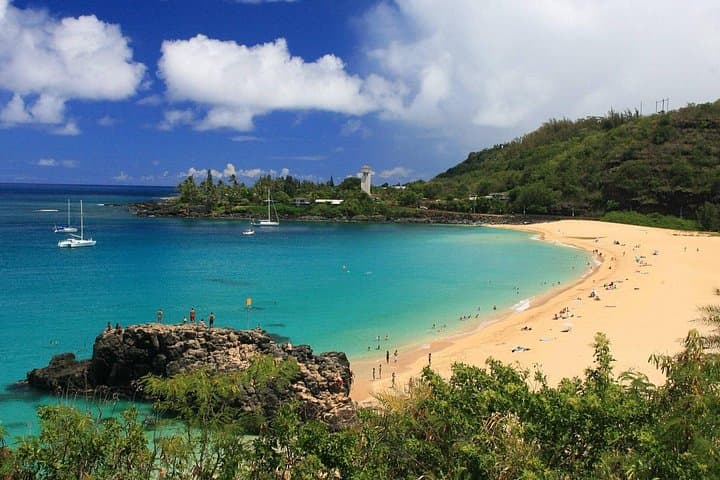
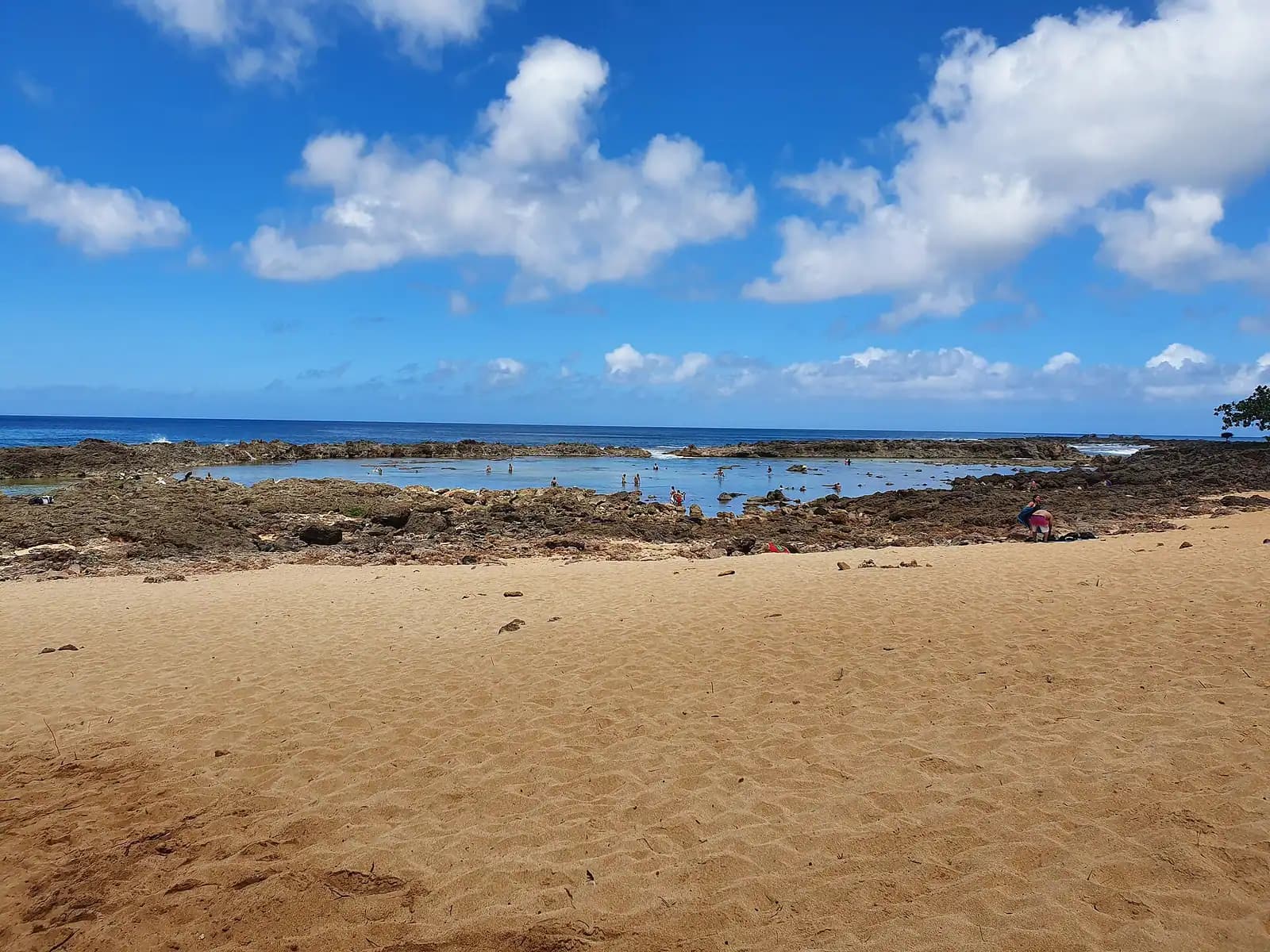
Shark's Cove is the clearest illustration of the rule that governs this entire coast: the season decides, not the place. Between roughly May and September it is arguably the best shore-entry snorkelling on Oʻahu — a lava-rimmed basin of clear, sheltered water, full of structure, with fish that have been protected long enough to be unbothered by people. Between roughly November and March the same basin takes the full weight of North Pacific swell breaking directly into it over rock, and it kills people.

That is not a figure of speech. Waves wash across the lava shelf, fill the cove, surge through the channels and drag back out. There is no sand to be deposited on, no gentle shelf to stand up on, and the exits are all sharp rock. Rescues here are difficult and injuries are severe. If there is white water anywhere in the cove, you do not get in, and there is no version of "just a quick look" that is sensible.

The summer version, though, is superb, and it is why so many people make the drive. Shark's Cove sits inside the Pūpūkea Marine Life Conservation District, where taking marine life has been prohibited for decades, and the difference that makes is immediately visible. Uhu, manini, humuhumu, moray eels in the cracks, honu passing through. Depths run from ankle-deep in the pools at the south end to comfortable free-diving depth in the middle, so it works for a nervous first-timer and a competent free-diver on the same morning.

The name has nothing to do with sharks. It is a shape, not a warning.

The practical issues are the entry and the rock. Everything underfoot here is lava — sharp, uneven, often covered in a film of algae — and the standard injury is a cut foot or a barked shin rather than anything dramatic. Reef-safe footwear is close to mandatory, and the sensible route in is at the south end where the shelf steps down rather than over the middle of the rim.

Above the cove, across the highway, sit a row of food trucks and the Foodland at Pūpūkea — the last supermarket before Kahuku.
Getting there and parking

Shark's Cove sits within Pūpūkea Beach Park on the ocean side of Kamehameha Highway, at the Pūpūkea Road junction marked by the Foodland. Coming up the coast it is a couple of minutes past Waimea Bay; coming down from Sunset it is about five minutes.

From Waikīkī, allow an hour via H-1, H-2 and Kamehameha Highway in light traffic, and add whatever Haleʻiwa town is doing that morning. The windward route via Kāneʻohe, Kualoa and Lāʻie is longer and prettier and brings you in from the Kahuku end.

Park in the beach park lot or in the roadside spaces along the highway; both fill through the middle of a summer day. TheBus route 60 stops at the junction.

The walk from the lot to the water is short but entirely over uneven lava. Bring footwear you can walk on rock in.

Winter: this is the one to take seriously

Between roughly November and March, do not enter the water at Shark's Cove. Not to wade, not to look, not because it seems calm in the ten seconds you are watching.

What happens here in winter is specific and nasty. Swell breaks over the outer lava rim and surges into the cove, so the hazard is not a wave you can see coming from open water but a sudden rise and a powerful outflow across rock. People get lifted, put down on lava, and dragged. There is no beach to be washed up on. The exits are all sharp and all above the water level.

Warning signs to obey without argument:

  • Any white water on the outer rim, even intermittently.
  • Water surging in and out of the tide pools at the south end.
  • A lifeguard, a local or a sign telling you not to. People who live here do not stop strangers for fun.

Waves also sweep the flat rock around the cove, which is where a surprising number of incidents begin: someone standing on the shelf to take a photograph gets knocked over by a set that was not there a minute earlier. Stay well back from the edge, and never turn your back on the water.

Lifeguard coverage at Pūpūkea has improved in recent years but is not the permanent, full-strength presence you get at Waimea or Sunset. Check before you rely on it, and understand that in winter nobody is stationed here to make the cove safe. They are stationed here to deal with what happens when it is not.

Summer: how to snorkel it properly

From roughly May into September the cove is usually flat, clear and genuinely excellent. Doing it well takes a little more thought than walking in.

  • Wear reef-safe footwear. Water shoes or booties with a firm sole. Everything you walk on is lava and much of it is slick with algae.
  • Enter at the south end, where the shelf steps down in stages, rather than trying to cross the rim in the middle. Time your step into the water between the small surges rather than fighting them.
  • Go in the morning. Wind picks up through the day and chops the surface; light is also better before noon for seeing into the structure.
  • Mid to high tide is easier for getting in and out over the shelf. Low tide exposes more rock and makes the entry more awkward.
  • Do not stand on coral or the reef. It is alive, it is protected, and it will cut you.
  • Buddy up. There are channels and undercuts here that make it easy to lose sight of someone.
  • Sunscreen on before you arrive, or wear a rash guard. This is a protected marine district and the fish are close enough to matter.

What you will see: parrotfish grazing audibly on the rock, convict tangs in shoals, wrasse, moray eels tucked into cracks, and with luck a green turtle passing through. The far side of the cove holds larger structure and caverns that free-divers work; they are not a place for a first-timer with a rented mask.

The tide pools, and the North Shore with small children

At the south end of the cove, on the Waimea side, a shelf of shallow lava pools holds warm, calm water at low tide in summer. Locals call this stretch the keiki pools, and it is one of very few places on this coast where a small child can safely be in the ocean.

The pools are ankle to knee deep at low water, full of small fish, hermit crabs and urchins, and they warm up quickly. For a family day this is often more successful than the cove proper: nobody needs a mask, nobody is out of their depth, and the entertainment is in looking rather than swimming.

The same cautions apply in reduced form. The rock is sharp and slippery, so footwear matters. Urchin spines are a real and painful possibility if a hand goes down carelessly. And the pools are only calm when the ocean is; in winter, when swell washes across this shelf, they are as dangerous as everything else here.

Nothing gets taken home. No shells, no rocks, no creature in a bucket. This is inside the marine conservation district and collecting is prohibited, which is exactly why there is still something in the pools to look at.

Parking, gear and what is across the road

Shark's Cove is part of Pūpūkea Beach Park, on the ocean side of Kamehameha Highway at the Pūpūkea Road junction, a couple of minutes north of Waimea Bay.

  • Parking is a lot and roadside spaces along the highway. It fills through the middle of a summer day; before ten is comfortable, after eleven is a hunt. Do not leave anything visible in the car.
  • Restrooms and showers are on site; the park was substantially rebuilt in recent years and the facilities are better than they used to be.
  • Rentals. Mask and snorkel hire operates from businesses along the highway near the junction. Renting fins is optional; in the cove itself they are more hindrance than help on the entry.
  • Food. A row of trucks sits opposite — plate lunch, shrimp, tacos, açaí — and Foodland Pūpūkea at the junction is the last full supermarket heading north before Kahuku. If you are staying up here, this is where your cool box gets filled.
  • Puʻu o Mahuka Heiau is up Pūpūkea Road from the same junction, about a mile and a half of narrow climbing road. It is free, it is the largest heiau on Oʻahu, and it is a five-minute detour from your snorkel.

Tours that visit Shark's Cove

Operators run these trips past Shark's Cove, or stop there as part of a longer route. We list what the booking data supports — not everything that mentions the name.

Some links below go to Viator, our booking partner. We earn a commission on bookings made through them — at no extra cost to you, and with no influence on what we recommend.

  • Oahu: Full or Half Day Grand Circle Island Tour
    Free cancellationInstant confirmation

    Plantation Tours

    Oahu: Full or Half Day Grand Circle Island Tour (opens in a new tab)

    19.5K reviews

    Choose from two exciting ways to experience Oahu's top attractions, scenic beauty, and local culture. Option 1: Dole Plantation & Haleiwa…

    6–7 hours

    Prices checked

    from $100
  • Parasailing Experience in Waikiki, HI
    Free cancellationInstant confirmation

    Low Supplier Cancellation Rate

    Parasailing Experience in Waikiki, HI (opens in a new tab)

    8.9K reviews

    Experience the thrill of Oahu parasailing on this unforgettable 1-hour adventure from Waikiki. Soar up to 1,000 feet above the stunning…

    1 hour

    Prices checked

    from $44
  • Roland dancing Hawaiian Kahiko
    Free cancellationLikely to sell out

    Curated Catalog

    Toa Luau at Waimea Valley, Oahu (opens in a new tab)

    3.8K reviews

    Toa Luau invites you to immerse yourself in the beauty and excitement of Polynesia on Oahu’s historic North Shore! Book any one our 3 Luau…

    3 hours

    Prices checked

    from $145
  • WAIMEA BAY
    Free cancellationInstant confirmation

    Low Supplier Cancellation Rate

    Oahu: Grand Tour Around Island with Snorkeling (opens in a new tab)

    11.1K reviews

    Come join on a circle island adventure led by some of Hawaii’s most knowledgeable local guides and experience breathtaking lookouts to…

    Full day

    Prices checked

    from $89

Near Shark's Cove

Straight-line distances, so allow more on the road — the island is long and has one main parkway.

  • Shoaling reef fish grazing over shallow lava rock in protected nearshore water
    Free

    Nature preserve

    Pūpūkea Marine Life Conservation District

    A hundred-odd acres of protected reef over Shark's Cove, Three Tables and Waimea Bay, and why the fish here are not frightened of you.

    1–4 hoursFree. There is no permit or fee for recreational snorkelling, swimming or diving.0.2 mi away

  • Flat reef slabs breaking the surface of shallow clear water off a small sand beach
    Free

    Beach

    Three Tables Beach

    Sand underfoot instead of a lava scramble, half the crowd of Shark's Cove, and three flat reef slabs that surface at low tide.

    1–3 hoursFree, with free roadside parking and no facilities.0.3 mi away

  • Heavy winter surf breaking across the mouth of a bay between two lava headlands
    Free

    Beach

    Waimea Bay

    Flat enough to swim across in July, closed by thirty-foot faces in January. The North Shore's seasonal flip at its most extreme.

    1.5–5 hoursFree, including parking. The lot is small and fills early.0.6 mi away

  • The low stacked stone walls of Puʻu o Mahuka Heiau laid out on open ground above the coast
    Free

    Historic site

    Puʻu o Mahuka Heiau State Historic Site

    The largest heiau on Oʻahu, on the bluff above Waimea Bay. A sacred site that is still in use, not a lookout with a car park.

    20–45 minutesFree. There is no entrance fee and no charge to park.1 mi away

Shark's Cove: common questions

Is Shark's Cove safe to snorkel?

In summer, yes, and it is among the best shore snorkelling on Oʻahu. From roughly May to September the cove is sheltered, clear and calm. From roughly November to March it is one of the most dangerous places on the island: swell breaks over the outer lava rim and surges through the cove, there is no sand to be washed up on, and every exit is sharp rock. If there is white water anywhere on the rim, do not get in at all.

Are there sharks at Shark's Cove?

No more than anywhere else on this coast, and the name has nothing to do with them. It refers to the shape of the cove, not its inhabitants. What you will actually see snorkelling here in summer is parrotfish grazing on the rock, shoals of convict tangs, wrasse, moray eels in the cracks and, with luck, a green sea turtle passing through. Decades of protection inside the marine conservation district are why the fish are so unbothered.

Do you need water shoes at Shark's Cove?

Effectively yes. There is no sand entry — everything underfoot is lava, much of it sharp and a good deal of it slick with algae. Cut feet are the standard injury here, far more common than anything involving the ocean. Water shoes or booties with a firm sole make the difference between an easy morning and a limp back to the car. Enter at the south end where the shelf steps down rather than crossing the rim in the middle.

Can you take shells or rocks from Shark's Cove?

No. Shark's Cove sits inside the Pūpūkea Marine Life Conservation District, where taking marine life, coral, rock and sand is prohibited, and has been for decades. That prohibition is precisely why the snorkelling is good: fish here have not been fished, and they behave accordingly. The same applies in the tide pools at the south end, which are the part most likely to tempt a child with a bucket.

Is Shark's Cove good for young children?

The shallow tide pools at the south end are, in summer. They hold warm ankle-to-knee-deep water at low tide, with small fish, hermit crabs and urchins to look at, and nobody needs a mask or to be out of their depth. The rock is sharp and urchin spines are a real possibility, so footwear and watched hands matter. In winter these pools wash out with the rest of the cove and are as dangerous as everything else here.