Skip to content
Search
Menu

We earn a commission if you book through this link. You pay the same price.

A green sea turtle gliding above a shallow coral reef in clear water

Things to Do

The North Shore with Kids

Last updated

Family activities on Oʻahu's North Shore: which beaches small children can swim at, what works when winter surf closes the water, and how to do turtles right.

The North Shore with children is two completely different holidays, and the one you get depends on the month rather than on how you plan it.

From roughly May to September this is one of the better family coasts in Hawaiʻi. The north swell shuts off, Waimea Bay becomes a wide calm swimming bay, and the tide pools and shallows at Three Tables and Shark's Cove inside the Pūpūkea Marine Life Conservation District are shallow enough that a six-year-old with a mask can see fish without going out of their depth. Green sea turtles haul out at Laniākea most days. There are shrimp trucks, shave ice, a pineapple maze, a botanical garden with a waterfall you can swim under in a life jacket, and a ranch down the windward road full of valleys children recognise from films.

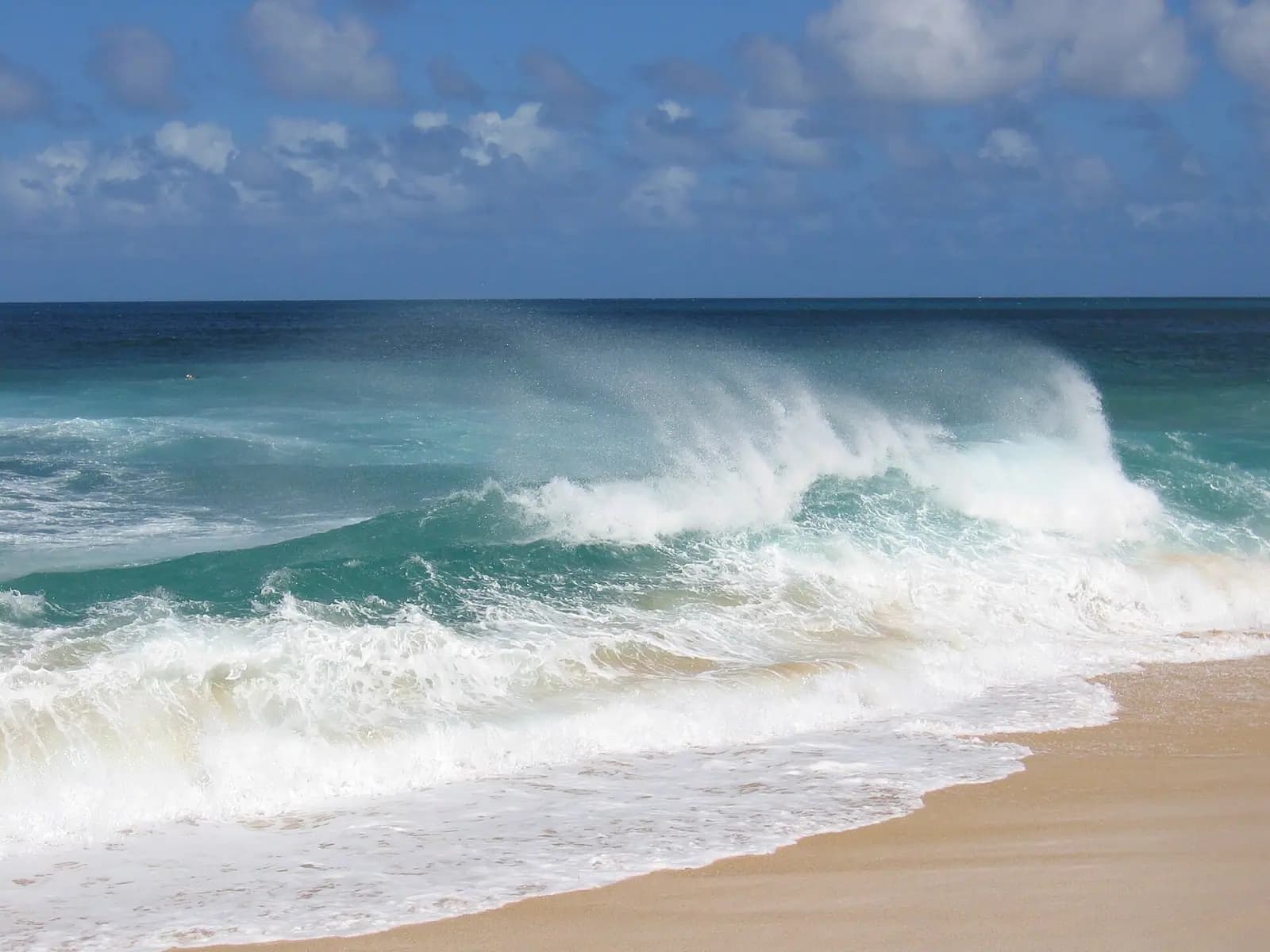
From roughly November to March, none of the swimming is true. This coast faces the North Pacific and takes twenty to thirty feet of surf on Hawaiian scale, which puts the faces at forty and up. Lifeguards close beaches for days at a time. The shorebreak at Waimea injures adults in knee-deep water, and Shark's Cove — the same reef with the tide pools — is a place people are swept off the rock shelf in January. Bringing a family here in winter is entirely reasonable. Bringing a family here in winter expecting to swim at the famous beaches is not.

So this page is organised around that. First the sheltered water that works for small children, which is a specific and short list. Then an age breakdown, because what a four-year-old and a fourteen-year-old need from this coast are different problems. Then the winter version of the trip, which is genuinely good and involves Waimea Valley, the Polynesian Cultural Center at Lāʻie, Kualoa Ranch and standing on the sand watching waves that will stay in a child's memory for thirty years.

Two practical notes before the detail. Nothing up here is designed for families the way a resort is — there are no kids' clubs outside Turtle Bay, no boardwalk and no arcade. And kitchens close early, so the six o'clock dinner that suits small children is actually the local rhythm rather than a compromise.

Our picks

The ones we would book

  • Best for Families

    The booking that works in any weather

    Why we chose it

    Waimea Valley solves the family problem this coast creates. A paved, gently graded path suits pushchairs and tired legs, the botanical collection gives older children something to look at, and the waterfall at the top is a swim with a provided life jacket rather than a view. It works on the days the ocean is closed, which is most of the winter.

    Oahu: Full or Half Day Grand Circle Island Tour
    Best for FamiliesFree cancellationInstant confirmation

    Plantation Tours

    Oahu: Full or Half Day Grand Circle Island Tour (opens in a new tab)

    19.5K reviews

    Choose from two exciting ways to experience Oahu's top attractions, scenic beauty, and local culture. Option 1: Dole Plantation & Haleiwa…

    6–7 hours

    Prices checked

    from $100
  • Best for Beginners

    Best first surf lesson for a child

    Why we chose it

    Summer only, off the sand-bottom beaches near Haleʻiwa town where the whitewater is waist-high and an instructor can stand beside a child the whole time. Ask which beach they use and what the age and swimming requirements are. A school that will not put a beginner on this coast in January is telling you something good about itself.

    WAIMEA BAY
    Best for BeginnersFree cancellationInstant confirmation

    Low Supplier Cancellation Rate

    Oahu: Grand Tour Around Island with Snorkeling (opens in a new tab)

    11.1K reviews

    Come join on a circle island adventure led by some of Hawaii’s most knowledgeable local guides and experience breathtaking lookouts to…

    Full day

    Prices checked

    from $89
  • Best Value

    Cheapest hour that reliably works

    Why we chose it

    Dole Plantation's garden maze and the Pineapple Express train, each a low-teens ticket with a combined adult ticket recently under thirty dollars. The grounds, the pineapple-cutting demonstration and the koi pond cost nothing. It sits directly on the freeway route above Haleʻiwa, so it adds no driving to the day at all.

  • Small Group

    Best tour with children in the vehicle

    Why we chose it

    A small-group van rather than a fifty-seat coach. Shorter loading, fewer stops spent waiting for other people, and a driver who can change the order if the swell has closed the beach you were heading for. Ask about car seats before booking — Hawaiʻi's requirements apply in a tour vehicle and not every operator carries them.

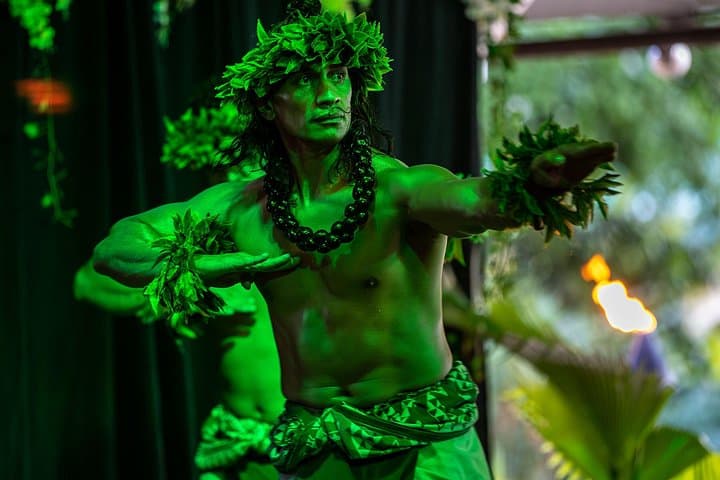
    Roland dancing Hawaiian Kahiko
    Small GroupFree cancellationLikely to sell out

    Curated Catalog

    Toa Luau at Waimea Valley, Oahu (opens in a new tab)

    3.8K reviews

    Toa Luau invites you to immerse yourself in the beauty and excitement of Polynesia on Oahu’s historic North Shore! Book any one our 3 Luau…

    3 hours

    Prices checked

    from $145
  • Top Rated

    The afternoon children remember

    Why we chose it

    Kualoa Ranch's movie-site bus or fishpond boat, twenty minutes down the windward road. Shaded seats, flat loading, around two hours, and valleys children recognise from films they have already watched. Check minimum ages and weights for the ATV and horseback products before you book rather than at the gate.

Where small children can actually get in the water

A short list, and worth knowing precisely rather than approximately.

Haleʻiwa Aliʻi Beach Park, in town. The most protected swimming close to Haleʻiwa, with a lifeguard tower, restrooms and a proper lot, and calm enough on most summer days for young children. It is also the Triple Crown's opening contest venue in November, which tells you it is not always like that.

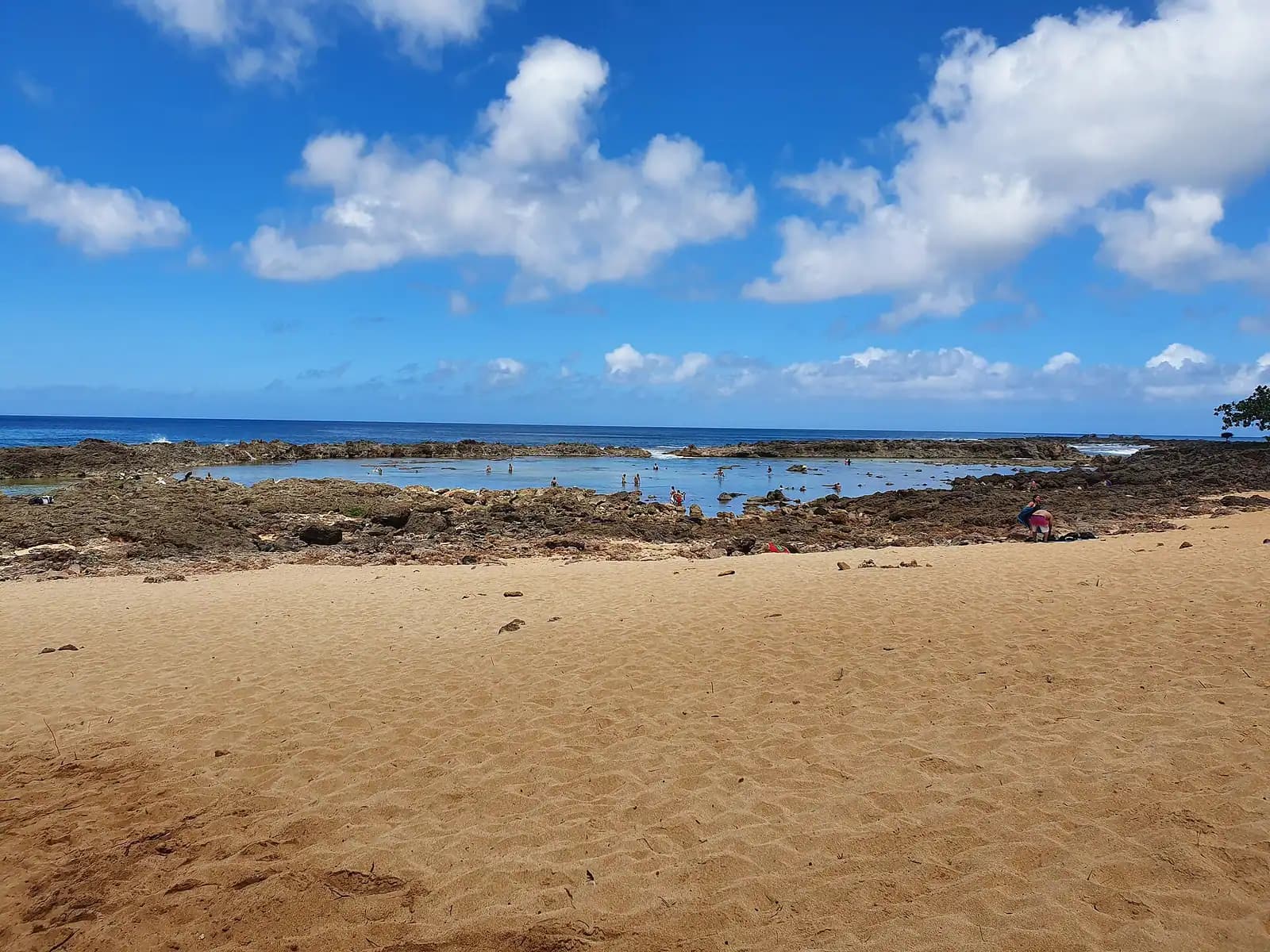
Three Tables, at the southern end of the Pūpūkea reef. In summer the flat rock slabs create shallow pools and gentle water between them, and it is the easiest reef snorkelling on the coast for a first-timer of any age. Water shoes, an adult in the water, and check the tide.

The tide pools at Shark's Cove, on the Pūpūkea side. In summer these are genuinely excellent for small children: ankle to knee deep, full of small fish, and separate from the open cove where competent snorkellers go. In winter they are not a place to be at all.

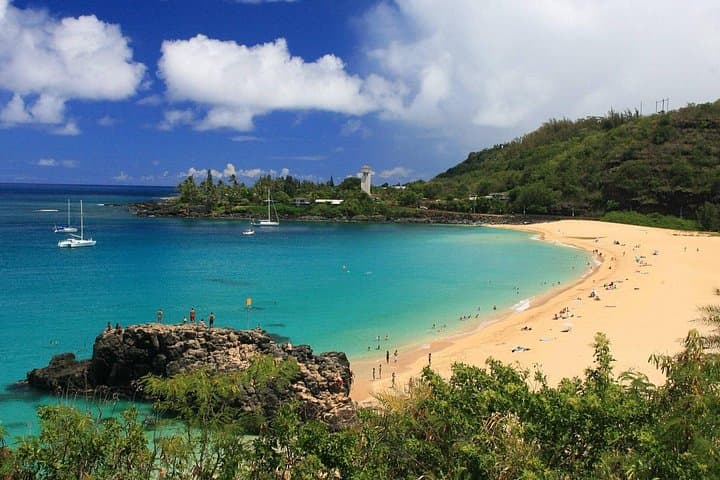
Waimea Bay, in summer only. Wide, sandy, lifeguarded, with the rock at the north end that older children queue to jump from. In winter it is the most dangerous beach on this list.

Mālaekahana, near Lāʻie. Sheltered by the reef and by Goat Island offshore, with a long sandy shallow, restrooms and a campground. The calmest family water on the coast, and it works more often in winter than anywhere on the Seven Mile Miracle.

The coves beside Turtle Bay. Protected by their orientation and a reef lip, these are the realistic winter swimming option here. The beach is public, like every beach in Hawaiʻi, and the resort marks access stalls, which are limited and go early.

Not on the list, deliberately: Ehukai, Sunset, Laniākea, Mokulēʻia. All are fine to visit and none of them are children's swimming beaches.
Turtles, and what to tell your children

Laniākea, about a mile north of Haleʻiwa, is where green sea turtles most reliably come ashore to bask, and for a lot of families it is the memory of the trip. It is also where visitors most often get it wrong, usually with the best intentions and usually with a child involved.

The rule is ten feet, on the sand and in the water, and it comes from NOAA Fisheries rather than from a local preference. Honu are protected under the federal Endangered Species Act and under Hawaiʻi state law. Volunteers stand at Laniākea with ropes and cones and they will move you back; they are doing a job, not being officious.

The useful framing for a child is that the turtle has come out of the water to rest, the way you would lie down after swimming, and being crowded means it does not get the rest. That lands better than "you are not allowed", and it also explains why nobody touches, nobody stands in front of one for a photograph, and nobody puts a child beside one for scale. A phone with any zoom at all handles ten feet perfectly well.

Practical notes for the stop. There is no car park — only a dirt pull-off on the mountain side of a fast highway, which means a road crossing with children. Hold hands, cross together, and if the pull-off is full, keep driving rather than stopping on the shoulder. Twenty minutes is plenty. Turtles also feed along the Pūpūkea reef and around Turtle Bay, so if Laniākea is chaos there are other chances.

The same logic applies to Hawaiian monk seals at fifty feet, which you may meet at Kaʻena Point, Turtle Bay or a quiet stretch of Mokulēʻia. A seal with a pup gets the whole beach.

The winter itinerary, which is genuinely good

Local tips

When the ocean is shut — and it will be, on and off, from November to March — this is the day that works.

Waimea Valley. The single best family booking on the coast in any weather. A paved, gently graded three-quarter-mile path up a botanical valley to a waterfall, with life jackets provided and included for anyone swimming when lifeguards have the pool open. Pushchairs work. Adult admission has recently been in the mid-twenties with children's rates well below.

Watching the surf. Do not underestimate this. Ehukai Beach Park for Pipeline, the cliff above Waimea Bay, or the long stretch at Sunset. Forty-foot faces detonating two hundred yards from a child on dry sand is why a lot of adults are here at all. Stay well back and keep hold of small children — the shorebreak runs further up the sand than it looks.

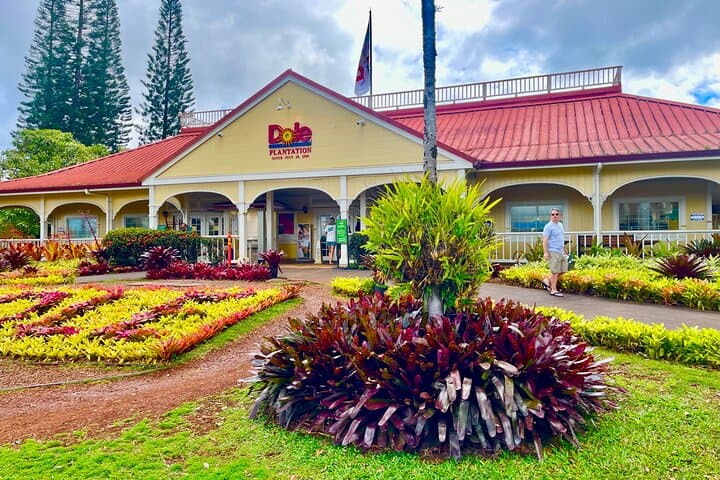
Dole Plantation. On the freeway route above Haleʻiwa, so it costs no detour. The grounds and the pineapple-cutting demonstration are free; the train and maze are low-teens tickets each, with a combined adult ticket recently under thirty dollars. The maze buys an hour.

Kualoa Ranch. Twenty minutes down the windward road. Movie-site buses, the ancient fishpond boat tour, horseback and ATV where ages allow. Everything is a timed booking on private land, and summer dates sell out days ahead.

The Polynesian Cultural Center. An afternoon and evening at Lāʻie: six island villages, a canoe pageant, an evening show. Closed Sundays, and in recent calendars Wednesdays too — check before building a day around it.

Puʻu o Mahuka Heiau. Free, a short level path, a view over Waimea Bay, and the chance to explain to a child why some places are not for climbing on. Stay outside the enclosure walls.

Feeding children on this coast

When to go

The rhythm here is early, and it surprises every family that arrives expecting resort hours.

Breakfast. Haleʻiwa has coffee and pastries from early, which suits a 7am departure from Waikīkī badly — most places open after you would want to have left. Eat before you drive, or eat at Dole Plantation on the way up.

Lunch. The Kahuku shrimp trucks are the institution and the queue is part of it. Plates have recently run in the mid to high teens, portions are large enough to share with a small child, and the garlic butter is the point. There is no shade in most of the queues. Individual trucks open, close and move, so do not promise a specific one. Shark's Cove has a cluster of food trucks across from the reef, which is the practical answer on a snorkelling morning.

Shave ice. Haleʻiwa town has two long-established shops whose rivalry is a local sport, and the queue at either can run twenty minutes in summer. It is worth it once. Ask for it with ice cream underneath if you want the local version.

Dinner. This is the adjustment. Most kitchens on this coast stop serving well before nine and Haleʻiwa is quiet by then. Outside the resort at Turtle Bay, very little will feed you at half past eight. Six o'clock is the local dinner hour, which happens to be exactly what families with small children want anyway.

Self-catering. If you are staying up here, do the main shop in Wahiawā or Honolulu on the way in. There is a supermarket at Pūpūkea and small stores elsewhere, and prices reflect the distance. Carry more water than you think — there is nowhere to buy it between stops at the western end.

Book it

Everything else we track

Some links below go to Viator, our booking partner. We earn a commission on bookings made through them — at no extra cost to you, and with no influence on what we recommend.

Read this before you book anything

Before you book

The single decision that matters is which coast you are arriving on.

Summer, roughly May to September. The famous beaches are swimmable. Waimea Bay is calm enough for children with an adult in the water. Three Tables and the tide pools at Shark's Cove are the best shallow snorkelling on this side of Oʻahu. The water sits around eighty degrees. This is the family version of the North Shore.

Winter, roughly November to March. Assume the ocean is not available to your children at the famous beaches, and plan a land itinerary. Lifeguards close Waimea, Ehukai and Sunset regularly. Red flags are not advisory. A moderate winter day at Waimea still has a shorebreak that dumps directly onto a steep sand face and breaks adult collarbones, which is not a risk you manage by holding a child's hand.

Either way, use the guarded beaches. Waimea Bay, Haleʻiwa Aliʻi Beach Park, Ehukai and Sunset have lifeguard towers. If you are unsure, walk up and ask — that is what the tower is for, they answer this question a hundred times a day, and they will tell you plainly whether today is a day for your children to be in the water.
Two rules that apply in every month. Rip currents run out through the reef channels at Pūpūkea even on a flat day, so children snorkel with an adult beside them rather than nearby. And everybody wears something on their feet at Shark's Cove and Three Tables, because the entry is sharp lava with urchins in the cracks and the injury that actually ruins a family holiday here is a cut foot.

What works, by age

How they compare

AgeWorks wellStruggles withThe one to book
Under 4Tide pools at Shark's Cove in summer, Waimea Valley's paved path, the Dole train, sand at MālaekahanaLong drives, the sun, any reef entry, queues at the shrimp trucksDole Plantation's Pineapple Express, which is short and level
4 to 7Three Tables snorkelling in summer, turtles at Laniākea, the Dole maze, the fishpond and movie-site tours at KualoaSnorkelling in anything but flat water, the two-and-a-half-mile Kaʻena trackWaimea Valley — a walk, a waterfall and a life jacket
8 to 12Shark's Cove proper in summer, the Waimea jumping rock, a surf lesson off Haleʻiwa, Kualoa ATV where age limits allowSitting still through the Polynesian Cultural Center's slower villagesA beginner surf lesson in the summer months
13 and upSurfing, snorkelling, the Ehukai pillbox hike, Kaʻena Point, watching a contest from the sandBeing told they cannot go in the water in January, which will happenA shark-cage trip out of Haleʻiwa harbour
Mixed agesWaimea Valley, the Polynesian Cultural Center, Kualoa's bus tours, Haleʻiwa townAny plan that depends on one beach being openThe Polynesian Cultural Center, which holds a whole afternoon

Two age-related traps. Kualoa's ATV and horseback products carry minimum ages and weights that catch families out — check before booking, not at the gate. And the Polynesian Cultural Center is a long afternoon and evening: excellent for children old enough to sit through a show, hard work with a toddler after about four hours.

What to bring for a family day

What to bring

  • Water shoes for everyone. Not optional at Shark's Cove or Three Tables. The entry is sharp lava, there are urchins in the cracks, and a cut foot ends the beach part of a holiday.
  • Mineral sunscreen, zinc oxide or titanium dioxide. Hawaiʻi bans the sale of sunscreens containing oxybenzone and octinoxate, and the Pūpūkea reef is a conservation district. Buy it before you fly or buy it locally.
  • Rash vests rather than repeated sunscreen. Twenty-one degrees north with hard trade winds burns children who do not feel hot.
  • Masks that actually fit. Rental sizes for small faces are hit and miss; a child's own mask is the difference between snorkelling and crying.
  • More water than you plan to drink, and something to eat. The gaps between shops on this coast are longer than they look on a map.
  • Cash in small notes for the food trucks and roadside stands, some of which do not take cards.
  • A towel each and a dry bag. Everyone gets wet somewhere.
  • A rubbish bag. Bins at the beach parks are few, and overflowing bins are a genuine local grievance.
  • Hats and sunglasses for the surf-watching days, because there is no shade at Ehukai, Waimea or Sunset.
  • Motion sickness tablets if you are driving the windward coast road, which is ninety-five minutes of curves.

Leave behind: any expectation of shade at a beach park, and anything valuable you would mind losing from a parked car.

On the ground

Where to go

Every place below has its own page — hours, parking, what it costs and what to expect when you get there.

  • Heavy winter surf breaking across the mouth of a bay between two lava headlands
    Free

    Beach

    Waimea Bay

    Flat enough to swim across in July, closed by thirty-foot faces in January. The North Shore's seasonal flip at its most extreme.

    1.5–5 hoursFree, including parking. The lot is small and fills early.

  • Reef fish moving over shallow lava structure in very clear water close to shore
    Free

    Beach

    Shark's Cove

    The best shore snorkelling on Oʻahu for four months of the year, and one of the most dangerous places on the island for the other four.

    1.5–4 hoursFree, with free parking in the beach park lot and along the highway.

  • A waterfall dropping into a deep green pool at the head of a forested valley

    Park

    Waimea Valley

    A paved three-quarter-mile walk through botanical collections to a waterfall pool you may swim in. Life jacket required, lifeguard's call.

    2–3.5 hoursPaid admission, in the mid-twenties per adult at the time of writing, with lower rates for seniors, students and children and discounts for kamaʻāina and military with ID.

  • Low sun dropping towards the ocean at the end of a long open beach
    Free

    Beach

    Sunset Beach

    Two miles of sand the winter ocean removes and the summer ocean puts back, with the coast's most notorious rip running through it.

    1–4 hoursFree, with a free lot that is larger and more reliable than anything else on this stretch.

  • Low wooden plantation-era storefronts along a single main street with mountains behind
    Free

    Neighbourhood

    Haleʻiwa Town

    The coast's only real town, and the traffic jam that decides your whole day. Shave ice, surf shops, galleries, and everything shut by nine.

    1–3 hoursFree to visit. Parking is free in the shop lots and on the street.

  • A plate of shell-on garlic shrimp with two scoops of rice served on a paper plate
    Free

    Dining district

    Kahuku Food Trucks

    Shrimp farms that grew a kitchen, strung along two miles of a former sugar town. Order it shell-on and accept the garlic.

    1–2 hoursFree to visit; you pay for what you eat. A garlic shrimp plate with rice is a mid-range plate-lunch price rather than a snack price.

  • A wide green valley floor enclosed by steep fluted ridges under scattered cloud

    Landmark

    Kualoa Ranch

    Four thousand acres in three windward valleys, sold as a film set and older than the film industry by a very long way.

    2–6 hoursPaid, per tour. Prices vary widely between the bus tour at the low end and UTV, horseback and zipline at the high end; combination passes bundle several.

  • A green sea turtle resting on wet sand at the edge of the water
    Free

    Wildlife

    Laniākea Beach

    Green sea turtles haul out on this sand most days: federally protected, roped off by volunteers, ten feet away from you at the closest.

    0.5–1 hoursFree. Parking is free, informal and genuinely hazardous.

  • Outrigger canoes on a lagoon in front of thatched island houses on a green Pacific island site

    Entertainment

    Polynesian Cultural Center

    Six Pacific island villages on 42 acres at Lāʻie, largely staffed by BYU–Hawaiʻi students, running midday to the night show.

    5–9 hoursPaid, and not cheap. Tiered packages: general admission, admission plus lūʻau, admission plus the evening show, and all-in options with a guided element.

  • A small sheltered cove of calm shallow water held behind an offshore reef
    Free

    Beach

    Turtle Bay

    The coast's only large resort — and under Hawaiʻi law its best swimming cove and its coastal trails are open to everyone.

    2–6 hoursThe beaches and coastal trails are free and public. Golf, riding, dining and spa services are resort-priced.

  • A slice of layered cream pie with a dark chocolate band and a white coconut layer beneath

    Dining district

    Ted's Bakery

    A roadside bakery counter near Sunset Beach whose chocolate haupia pie is the most exported thing on this coast.

    20–45 minutesCounter service. A slice of pie is a few dollars; a plate lunch is a cheap, large meal by any standard. Whole pies are sold to take away.

  • A tall cone of finely shaved ice in a paper cup with three bands of coloured syrup

    Dining district

    Matsumoto Shave Ice

    A 1951 plantation-town grocery that became the most photographed queue on Oʻahu's North Shore.

    0.5–1 hoursA few dollars for a cup, more with ice cream, azuki beans and a snow cap. Merchandise is sold alongside.

  • A curving sandy beach backed by a dense belt of ironwood trees with a small island offshore
    Free

    Beach

    Mālaekahana Beach

    A mile of ironwood-shaded windward sand with an island you can walk to at low tide and a gate that locks at dusk.

    1.5–5 hoursFree for day use, with free parking inside the gate. Camping is permitted and charged.

  • Calm shallow water over sand inside a sheltering reef on a wide bay
    Free

    Beach

    Haleʻiwa Beach Park

    Behind a reef on Waialua Bay, this is the one North Shore beach that stays swimmable in January. Grass, shade, lifeguards, canoes.

    1.5–5 hoursFree, with a free lot and a short flat walk to the sand.

  • A surfer riding a fast right-hand wave peeling off a shallow reef near a harbour entrance
    Free

    Beach

    Haleʻiwa Aliʻi Beach Park

    A professional contest break at one end, a sheltered pool for small children at the other, and the coast's lifeguard base in between.

    1–4 hoursFree, including during the winter contest. Parking is free in the beach park lot.

  • Flat reef slabs breaking the surface of shallow clear water off a small sand beach
    Free

    Beach

    Three Tables Beach

    Sand underfoot instead of a lava scramble, half the crowd of Shark's Cove, and three flat reef slabs that surface at low tide.

    1–3 hoursFree, with free roadside parking and no facilities.

  • Rows of low spiky pineapple plants growing in red soil under open sky

    Entertainment

    Dole Plantation

    A 1950 fruit stand that became the busiest stop between Honolulu and Haleʻiwa, with a hedge maze and a Dole Whip queue.

    1–2.5 hoursGrounds, shop and food counters are free. The train, the maze and the garden tour are each ticketed, with combination tickets available.

Straight answers

Questions people actually ask

Is the North Shore good for families with young children?

In summer, yes. From roughly May to September the north swell is off, Waimea Bay is a calm swimming bay, and the tide pools at Shark's Cove and the shallows at Three Tables are excellent for small children with an adult in the water. In winter the famous beaches close regularly and the shorebreak injures adults, so plan a land itinerary: Waimea Valley, Dole Plantation, Kualoa Ranch and the Polynesian Cultural Center.

Where can kids swim safely on the North Shore?

Haleʻiwa Aliʻi Beach Park in town, the tide pools and shallows at Three Tables and Shark's Cove in summer, Waimea Bay in summer, Mālaekahana near Lāʻie, and the sheltered coves beside Turtle Bay — which are the most reliable option in winter. All of those still depend on the day. Use the lifeguarded beaches and ask at the tower, which is exactly what it is there for.

Can children snorkel at Shark's Cove?

In summer, yes, and it is one of the best places in Hawaiʻi for it. The tide pools on the Pūpūkea side are ankle to knee deep and full of small fish, separate from the open cove where stronger swimmers go. Water shoes are essential — the entry is sharp lava with urchins in the cracks — and an adult should be in the water. From November to March the cove is dangerous and children should not be in it.

Is Waimea Valley worth it with kids?

It is the best family booking on this coast. The main route to the falls is a paved, gently graded path of about three quarters of a mile, so pushchairs work and a tired six-year-old can manage it. Life jackets are provided and included for anyone swimming at the falls, and whether the pool is open depends on the day's rain. Adult admission has recently been in the mid-twenties with children's rates well below that.

How close can kids get to the turtles at Laniākea?

Ten feet, on the sand and in the water — NOAA Fisheries guidance, and the honu are protected under federal and state law. Volunteers rope off resting animals and will move you back. No touching, no posing beside one, and no putting a child next to a turtle for scale. There is no car park at Laniākea, only a dirt pull-off across a fast two-lane highway, so hold hands crossing and keep the stop short.

What can you do on the North Shore with kids when the surf is too big?

Quite a lot. Waimea Valley's paved walk and waterfall, the free grounds and ticketed train and maze at Dole Plantation, Kualoa Ranch's movie-site and fishpond tours down the windward road, the Polynesian Cultural Center at Lāʻie, Haleʻiwa town and shave ice, and the shrimp trucks at Kahuku. Watching forty-foot faces break from safely up the sand is also, for most children, the thing they talk about afterwards.

Are there lifeguards on North Shore beaches?

At the main ones, yes: Waimea Bay, Haleʻiwa Aliʻi Beach Park, Ehukai and Sunset all have towers, with Honolulu Ocean Safety closing beaches and flying red flags when conditions require it. Laniākea, Three Tables and most of Mokulēʻia do not. Walk up and ask the lifeguard whether today is a day for your children to be in the water — they answer that question constantly and their answer is the one that counts.

Where should families eat on the North Shore?

Shrimp plates from the Kahuku trucks, which are large enough to share with a small child and have recently run in the mid to high teens; the food trucks across from Shark's Cove on a snorkelling day; and shave ice in Haleʻiwa from one of the two long-established shops. Eat dinner early — most kitchens on this coast stop serving well before nine, so six o'clock is the local hour rather than a compromise.