Plantation Tours
Oahu: Full or Half Day Grand Circle Island Tour (opens in a new tab)
Choose from two exciting ways to experience Oahu's top attractions, scenic beauty, and local culture. Option 1: Dole Plantation & Haleiwa…
6–7 hours
Prices checked

Neighbourhood
Last updated
The coast's only real town, and the traffic jam that decides your whole day. Shave ice, surf shops, galleries, and everything shut by nine.
Haleʻiwa is the North Shore's town in the singular. Everything north of it — Waimea, Pūpūkea, Sunset, Kahuku — is beaches and houses and the occasional food truck. Haleʻiwa is where the bank is, and the supermarket, and the surf shops, and the galleries, and the two shave ice counters that people queue outside in the sun.
It got there by rail. Benjamin Dillingham ran the Oʻahu Railway up this coast and, in 1899, built a resort hotel at the end of the line to give people a reason to ride it. The hotel is long gone and the railway with it, but the shape of the town is still the shape the plantation era left: low wooden storefronts along a single main road, a small boat harbour at one end, and the double-arched concrete bridge over the Anahulu River that everyone calls the Rainbow Bridge. Haleʻiwa carries a state historic, cultural and scenic district designation, which is why the buildings still look like this instead of like a strip mall.
For a visitor, the town is two things. It is a genuinely good stop — an hour of shave ice, browsing and a plate lunch, with a farmers' market and gallery scene that is not manufactured for tourists. And it is the bottleneck. Kamehameha Highway narrows through the centre and every car heading up the coast on a Saturday morning is in the same queue. The Joseph P. Leong Highway bypass, opened in 2012, lets through traffic skip the town entirely, and knowing when to use it is the most practically useful thing on this page.
The other thing worth knowing is the closing time. Haleʻiwa is not an evening town. Most of it shuts in the late afternoon and the dinner options thin out fast after seven. If you are staying up here, sort your evening before five or plan on cooking.
From Waikīkī, take H-1 west to H-2 north and follow Kamehameha Highway down through Wahiawā to the coast. In light traffic it is about fifty minutes; on a weekend morning add whatever the queue into town is doing.
The Joseph P. Leong Highway bypasses the town centre on the inland side. Take it if you are heading straight up the coast; come off it and into the town if you are stopping.
The longer windward route — Likelike or Pali Highway to Kāneʻohe, then Kamehameha Highway up past Kualoa and Lāʻie — reaches Haleʻiwa from the Kahuku end and is a far better drive, though it takes closer to ninety minutes.
Parking in town is a mix of small shop lots and street parking. It is tight through the middle of the day; the lots at the Store Lots and the Marketplace are the reliable ones. TheBus route 60 runs through the town centre.
Haleʻiwa is the constraint on a North Shore day trip. Not the freeway, not the distance — the town.
Kamehameha Highway runs straight through the middle of it, two lanes, with pedestrian crossings, a bridge and cars turning into shop lots. On a Saturday or Sunday morning in summer, or any morning with big surf running in winter, the queue through the centre can add twenty to forty minutes in each direction.
The Joseph P. Leong Highway is the bypass, opened in 2012, and it runs around the inland side of the town. Use it when:
Stop in the town when you are going in the opposite direction to the crowd — mid-morning on a weekday, or on the way back down at four when everyone else is still at the beach.
The single best trick for a day trip from Waikīkī is to leave early enough to pass through Haleʻiwa before eight-thirty, spend the morning up the coast, and stop in town on the way home. That reverses you out of both queues.
Shave ice is Haleʻiwa's most photographed export, and the two counters everyone knows are a few doors apart.
Matsumoto's opened in 1951 as a general store and became the name outsiders arrive knowing. It is the longer queue and, on a busy afternoon, the one that spills across the walkway. Aoki's, nearby, is the local's answer and the queue is usually shorter for something functionally identical.
How to order it properly, because most visitors get a snow cone and wonder what the fuss is:
Eat it fast, outside, in the shade. It does not travel and it does not survive a car.
The town splits loosely into three. The Haleʻiwa Store Lots and North Shore Marketplace are the two organised clusters, with coffee, boutiques, surf brands, a bookshop and several galleries between them. The main strip along Kamehameha Highway carries the older storefronts, the shave ice, the food and the long-standing surf shops that have been selling boards to people who actually surf Pipeline for decades. The harbour end, past Aliʻi Beach Park, holds the small boat harbour where the North Shore's charter, shark-cage and dive operations run from.
The galleries are worth more than a glance. The North Shore has supported a working art community for a long time — surf photography, printmaking, woodwork, ceramics — and much of what is on the walls here is made within a few miles.
Practical anchors: the supermarket and the petrol station in town are the last convenient ones before Kahuku if you are heading up the coast, and the surf shops rent boards, bodyboards and snorkel gear at rates that are generally better than the beachfront operators further north.
Haleʻiwa's farmers' market has moved location more than once in recent years, so check where and when it is currently running rather than turning up on spec.
This is the part that catches out people staying on the North Shore rather than driving up for the day.
Haleʻiwa closes early. Most of the retail shuts in the late afternoon. The food scene thins out sharply after seven, and by nine the town is essentially done. There is no strip of late restaurants, no bar district, and the nearest thing to a night out is a long drive back towards town.
What that means in practice:
For lunch, though, this is the best-fed stretch of the coast: shrimp, poke, plate lunch, açaí, garlic fries, and more coffee than a town this size ought to support.
Operators run these trips past Haleʻiwa, or stop there as part of a longer route. We list what the booking data supports — not everything that mentions the name.
Some links below go to Viator, our booking partner. We earn a commission on bookings made through them — at no extra cost to you, and with no influence on what we recommend.

Plantation Tours
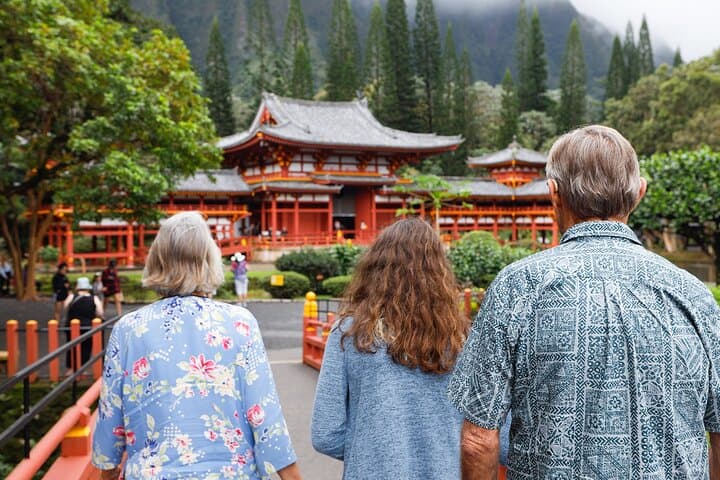
Choose from two exciting ways to experience Oahu's top attractions, scenic beauty, and local culture. Option 1: Dole Plantation & Haleiwa…
6–7 hours
Prices checked

Excellent Quality
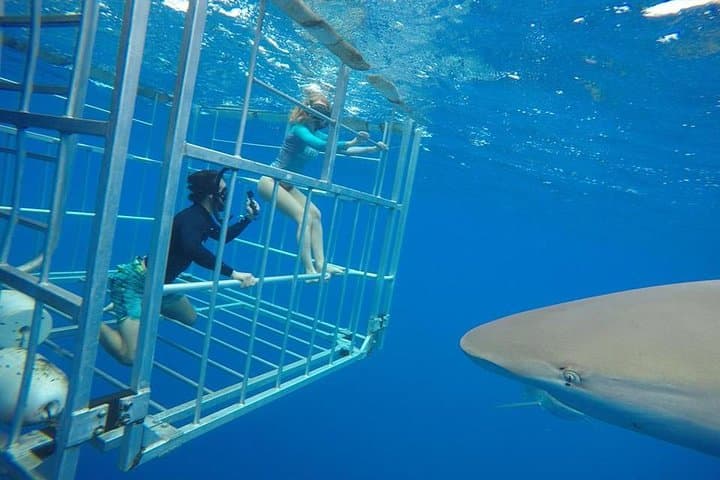
Book the Oahu Shark Dive for a thrilling shark encounter off the North Shore. You’ll travel by boat from Haleiwa Harbor, then view sharks…
1–2 hours
Prices checked

Day Trips
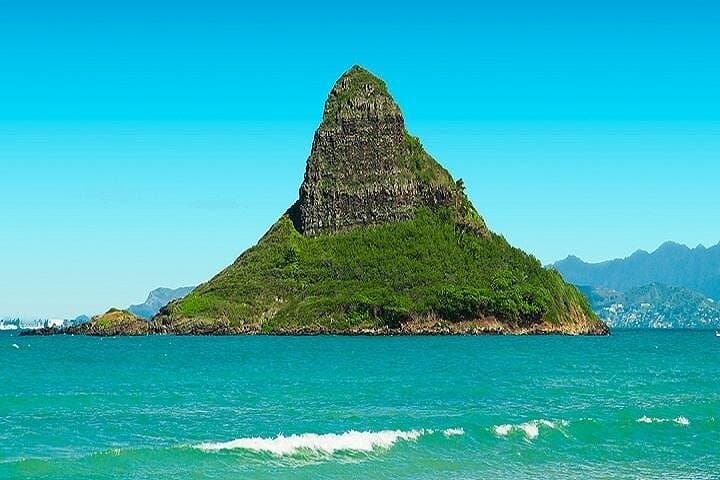
Enjoy Grand Circle Island experience tour with breathtaking views of Amelia Earhart Lookout on Diamond Head, admire Chinaman’s Hat in…
Full day
Prices checked

Day Trips
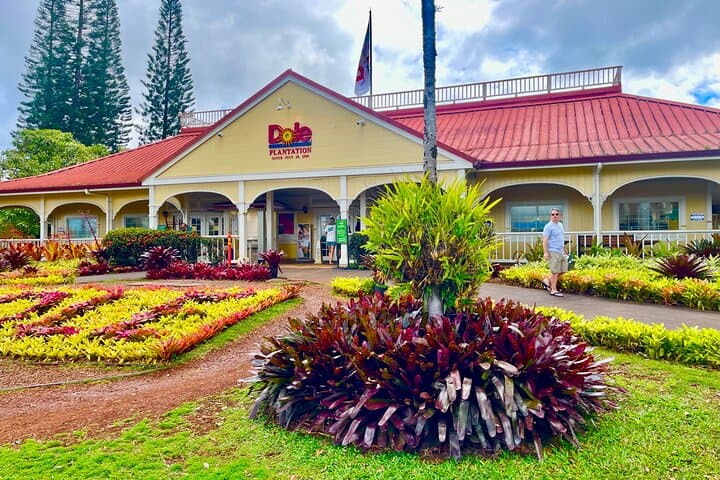
Skip Circle Island and visit two of the most popular places to visit here on the Island of Oahu. Experience a unique fusion of…
6 hours
Prices checked
Straight-line distances, so allow more on the road — the island is long and has one main parkway.

Beach
A professional contest break at one end, a sheltered pool for small children at the other, and the coast's lifeguard base in between.
1–4 hoursFree, including during the winter contest. Parking is free in the beach park lot.0.4 mi away

Beach
Behind a reef on Waialua Bay, this is the one North Shore beach that stays swimmable in January. Grass, shade, lifeguards, canoes.
1.5–5 hoursFree, with a free lot and a short flat walk to the sand.0.4 mi away

Wildlife
Green sea turtles haul out on this sand most days: federally protected, roped off by volunteers, ten feet away from you at the closest.
0.5–1 hoursFree. Parking is free, informal and genuinely hazardous.2.1 mi away

Dining district
A 1951 plantation-town grocery that became the most photographed queue on Oʻahu's North Shore.
0.5–1 hoursA few dollars for a cup, more with ice cream, azuki beans and a snow cap. Merchandise is sold alongside.180 ft away
Where this place fits into a day, and the pages that plan one.

Guide hub
The North Shore is roughly thirty miles of coast along the top edge of Oʻahu, from the polo fields and the airfield at Mokulēʻia, round Kahuku…

Guide hub
The North Shore's named places are almost all natural, almost all free, and almost all strung in a line along one road. There is no historic…

Who it suits
The North Shore with children is two completely different holidays, and the one you get depends on the month rather than on how you plan it. From…

Things to do
Haleʻiwa is the only place on this coast that behaves like a town, and everything about it is a second act. The name means house of the ʻiwa, the…

Who it suits
Start with the thing that will save you a wasted decision: rain on the North Shore is almost never a reason to cancel a day. It arrives as squalls…

Guide
One large resort, a thin and legally complicated rental market, two campgrounds and a coast where dinner stops at seven. Staying up here is a decision, not a default.
9 min readNalani Kahale

Guide
A sugar town lost its mill in 1971 and put shrimp ponds on the cane land. Fifty years later the roadside stands are the most reliable meal on the North Shore, and they close early.
8 min readMalia Fonoti

Guide
About a hundred miles, three and a half hours of driving and no road around Kaʻena Point. Which direction you choose decides which side of the car the ocean is on.
9 min readNalani Kahale
Yes, for an hour or two. It is the only real town on the North Shore and the only place on the coast with a concentration of shops, galleries, coffee and food. Shave ice, surf shops that sell boards to people who actually surf Pipeline, and a working art community make it more than a souvenir stop. Time it for a weekday mid-morning or a late afternoon on the way back, not a weekend nine o'clock.
Bad enough that it, rather than the distance, is what decides a North Shore day trip. Kamehameha Highway runs through the town centre as a two-lane road with crossings, a bridge and cars turning into shop lots, and on a busy morning the queue can add twenty to forty minutes each way. The Joseph P. Leong Highway bypass, opened in 2012, skips the town entirely — use it whenever you are not stopping.
They are a few doors apart and the ice is functionally the same. Matsumoto's, open since 1951, is the name visitors arrive knowing and has the longer queue; Aoki's is the local's answer with a shorter one. What actually decides quality is how you order: ice cream at the bottom, azuki beans under the ice, and a snow cap of condensed milk over the top. Li hing powder if you like salty-sour.
Not many places, and this catches people out. Haleʻiwa is not an evening town: most retail shuts in the late afternoon and the food thins sharply after seven. Haleʻiwa Joe's by the small boat harbour is the long-standing sit-down option at this end, and Turtle Bay at the far end of the coast has the only resort dining. If you are staying up here, decide dinner before five or buy groceries and cook.
It is generally given as 'house of the ʻiwa', the great frigatebird. The town's modern shape comes from the plantation and railway era: Benjamin Dillingham's Oʻahu Railway reached this coast and in 1899 he built a resort hotel at the end of the line. The hotel and the railway are gone, but the low wooden storefronts remain, protected by a state historic, cultural and scenic district designation.