Plantation Tours
Oahu: Full or Half Day Grand Circle Island Tour (opens in a new tab)
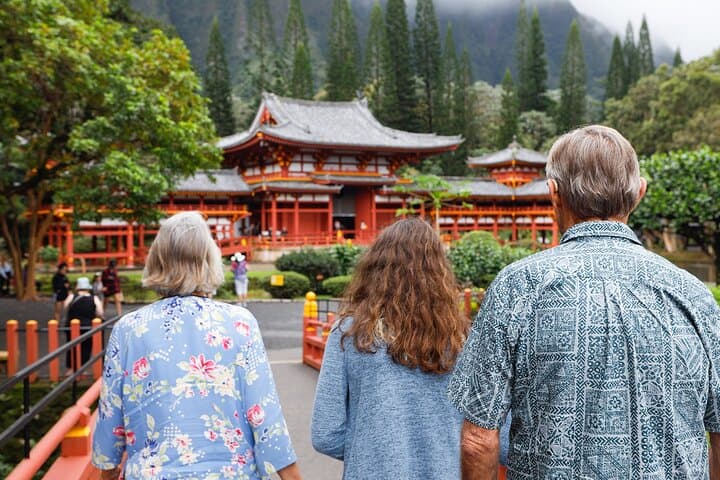
Choose from two exciting ways to experience Oahu's top attractions, scenic beauty, and local culture. Option 1: Dole Plantation & Haleiwa…
6–7 hours
Prices checked

Beach
Last updated
Behind a reef on Waialua Bay, this is the one North Shore beach that stays swimmable in January. Grass, shade, lifeguards, canoes.
Every guide to Oʻahu's North Shore spends its energy on the beaches that become unusable in winter. This is the one that does not. Haleʻiwa Beach Park sits on Waialua Bay just north of the Anahulu River mouth, behind a reef that takes the force out of incoming swell before it reaches the sand. The result is a shallow, protected, generally calm stretch of water in a place where calm water is a seasonal luxury.
That single fact makes this the most useful beach on the coast for a large category of visitor: families with small children, anyone who is not a confident swimmer, and every day-tripper who arrives in December wanting to swim and discovers that Waimea and Sunset are closed. If you are on the North Shore between November and March and you want to be in the ocean rather than looking at it, this is the answer, and it is a ten-minute drive from Pipeline.
The park itself is generous in a way the beach parks further up the coast are not. There is a large grassy area with mature shade trees, picnic pavilions, ball courts, restrooms and showers, a proper parking lot, and lifeguards. Outrigger canoe clubs launch from this stretch, and on a weekday evening you will see crews going out through the gap in the reef, which is one of the better things to watch on this coast and costs nothing.
Two honest caveats. The water clarity here is not Shark's Cove — the Anahulu River empties nearby, and after heavy rain the bay browns up. Hawaiʻi issues brown-water advisories for exactly this reason, and swimming in runoff is a genuine health risk rather than an aesthetic one. And the swimming is pleasant rather than spectacular: this is a place to let children paddle and to cool off, not to snorkel.
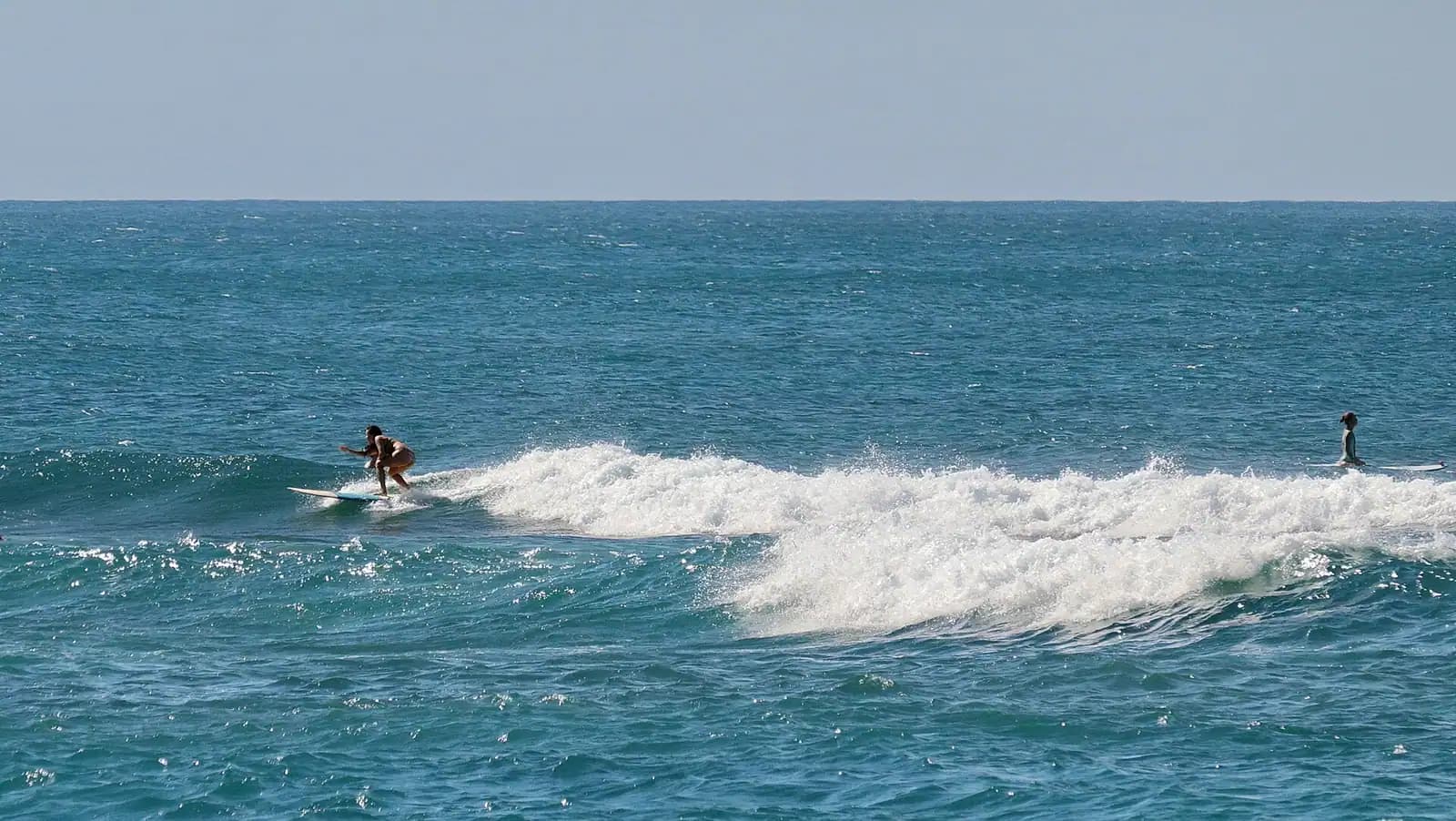
Puaʻena Point, at the north end of the park, picks up a gentler wave than anything further up the coast and is where a good number of North Shore surf schools take beginners in summer.
The park is on the ocean side of Kamehameha Highway immediately north of Haleʻiwa town, just after the bridge over the Anahulu River. It is signed, and it has a proper lot rather than roadside spaces.
From Waikīkī, allow about fifty minutes via H-1, H-2 and Kamehameha Highway in light traffic. If you are coming specifically for this beach and not stopping in the town, the Joseph P. Leong Highway bypass rejoins the coast road just north of the park.
From the surf beaches up the coast, it is roughly fifteen minutes back down from Waimea Bay and twenty from Sunset — which is the whole point of the place in winter.
TheBus route 60 stops on the highway outside. The walk from the lot to the sand is short and flat.
The North Shore's beaches are dangerous in winter because they face directly into North Pacific swell across deep water that lets waves arrive at full strength. Haleʻiwa Beach Park does not have that geometry.
The bay here is shallower and fronted by reef. Incoming swell breaks out on the reef rather than on the sand, and what reaches the beach is a fraction of what reaches Waimea a few miles north. The water inside is shallow, gently sloping and usually no more than ruffled, even on days when the coast beyond is producing twenty-foot faces.
That does not make it a swimming pool. Three things still matter:
Lifeguards are on duty. Ask them. On this coast that is not a formality — they know exactly which of the day's conditions matter.
If you have children under about eight, this park solves a problem the rest of the coast cannot.
Two things to bring: reef shoes, because there is rock and coral rubble in the shallows, and more shade than you think — the trees are at the back of the park, not at the waterline.
For a family day that includes the famous beaches, the workable pattern is to look at Pipeline and Waimea in the morning, drive back down, and let everyone actually swim here in the afternoon.
This is the one genuine health caution at Haleʻiwa Beach Park, and it applies to river-mouth beaches across Hawaiʻi rather than uniquely here.
After heavy rain, streams carry runoff into the ocean: soil, agricultural residue, animal waste, and whatever has washed off the roads. The Anahulu River empties near this park, so the bay discolours noticeably when it has rained hard upstream, sometimes for a day or more afterwards.
The state issues brown-water advisories when this happens. What they mean in practice:
If the bay is brown, the sensible move is to drive up to Shark's Cove or Three Tables if it is summer, or to treat it as a day for Waimea Valley and Haleʻiwa town. The advisory usually lifts within a couple of days.
Outrigger canoe paddling is a serious sport in Hawaiʻi rather than a tourist activity, and this stretch of Waialua Bay is one of the places on Oʻahu where you can watch it properly. Club crews launch from the beach and go out through the reef gap on weekday evenings and weekend mornings through the season. Six-person canoes, a coach shouting from the beach, and a level of coordination that is genuinely impressive once you understand what is being attempted. Stand back, do not get in the way of a hull being carried down the sand, and watch.
Puaʻena Point, at the northern end of the park, is the other reason to walk the length of the beach. The wave that breaks off the point is softer and more forgiving than anything further up the coast, which makes it one of the places North Shore surf schools bring beginners in summer. It is not a beginner wave in winter — nothing on this coast is — but in July it is a reasonable place to stand up for the first time without the consequences that apply at Sunset.
The point also collects honu. Green turtles rest on the rocks and in the shallows here fairly regularly, which means the ten-foot rule applies at this end of the park as much as it does at Laniākea.
Operators run these trips past Haleʻiwa Beach, or stop there as part of a longer route. We list what the booking data supports — not everything that mentions the name.
Some links below go to Viator, our booking partner. We earn a commission on bookings made through them — at no extra cost to you, and with no influence on what we recommend.

Plantation Tours
Choose from two exciting ways to experience Oahu's top attractions, scenic beauty, and local culture. Option 1: Dole Plantation & Haleiwa…
6–7 hours
Prices checked

Low Supplier Cancellation Rate
Experience the thrill of Oahu parasailing on this unforgettable 1-hour adventure from Waikiki. Soar up to 1,000 feet above the stunning…
1 hour
Prices checked

Curated Catalog
Toa Luau invites you to immerse yourself in the beauty and excitement of Polynesia on Oahu’s historic North Shore! Book any one our 3 Luau…
3 hours
Prices checked

Snorkeling
Book our Turtle Canyon snorkel tour and experience one of Waikiki’s most popular turtle snorkeling destinations! Depart conveniently by…
2 hours
Prices checked

Top Product
Experience a special turtle snorkeling adventure in Waikiki aboard a smooth and comfortable catamaran. This all-in-one 6-in-1 ocean tour…
3 hours
Prices checked

Low Supplier Cancellation Rate
Come join on a circle island adventure led by some of Hawaii’s most knowledgeable local guides and experience breathtaking lookouts to…
Full day
Prices checked
Straight-line distances, so allow more on the road — the island is long and has one main parkway.

Neighbourhood
The coast's only real town, and the traffic jam that decides your whole day. Shave ice, surf shops, galleries, and everything shut by nine.
1–3 hoursFree to visit. Parking is free in the shop lots and on the street.0.4 mi away

Beach
A professional contest break at one end, a sheltered pool for small children at the other, and the coast's lifeguard base in between.
1–4 hoursFree, including during the winter contest. Parking is free in the beach park lot.0.5 mi away

Wildlife
Green sea turtles haul out on this sand most days: federally protected, roped off by volunteers, ten feet away from you at the closest.
0.5–1 hoursFree. Parking is free, informal and genuinely hazardous.1.9 mi away

Neighbourhood
A plantation town that lost its mill in 1996 and turned the tower into a soap factory, two miles and one world from Haleʻiwa.
1–2 hoursFree. There is no gate, no ticket and no charge to walk the mill yard.2.2 mi away
Where this place fits into a day, and the pages that plan one.

Guide hub
The North Shore is roughly thirty miles of coast along the top edge of Oʻahu, from the polo fields and the airfield at Mokulēʻia, round Kahuku…

Guide hub
Seven miles of sand run from Haleʻiwa town to Sunset Point, and a single two-lane road threads the whole of it. Kamehameha Highway is the North…

Who it suits
The North Shore with children is two completely different holidays, and the one you get depends on the month rather than on how you plan it. From…

Budget
Most destinations make you hunt for the free things. On the North Shore you have to hunt for the paid ones. There are four ticketed gates on this…

Things to do
Start with what this coast is not. The photograph you have seen of turquoise water and two green islets is Kailua, on the windward side, roughly an…

Guide
In July the North Shore is one of the best family coasts in Hawaiʻi. In January it is a place to watch from behind a rope. Planning the right one is the whole job.
9 min readNalani Kahale

Guide
Seven miles of coast with one place to park the car and walk. Haleʻiwa is a former plantation and railway town that turned into the commercial heart of surfing, and still shuts early.
8 min readMalia Fonoti

Guide
Five months of the best shore snorkelling on this side of Oʻahu, and seven months of water that has killed people. The whole guide is about telling which one you are looking at.
9 min readPete Sorensen
At Haleʻiwa Beach Park, usually yes, and that makes it close to unique on this coast. The bay sits behind a reef that breaks incoming swell offshore, so the water at the sand stays shallow and generally calm while Waimea, Pipeline and Sunset are closed. On the very largest swells surge does get over the reef, so check with the lifeguards. Everywhere else on the North Shore, treat winter swimming as off the table.
It is the best option on the North Shore. The water is shallow a long way out, the entry is gentle, there are lifeguards, and behind the sand there is a large grassed area with mature shade trees, picnic tables and restrooms — which almost no other beach park on this coast has. Parking is a proper lot with a short flat walk. Bring reef shoes; there is rock and coral rubble in the shallows.
Because the Anahulu River empties nearby and heavy rain flushes runoff into the bay. The state issues brown-water advisories when this happens, and they are a health warning rather than a comment on the view: runoff carries bacteria and leptospirosis risk, and open cuts are the main route in. Do not swim in discoloured water, even if the weather has since cleared. Advisories usually lift within a day or two.
At Puaʻena Point, at the northern end of the park, in summer. The wave there is softer and more forgiving than anything further up the coast, and North Shore surf schools use it for first lessons between roughly May and September. In winter it is not a beginner wave — nothing on this coast is. Green sea turtles also rest around the point, so keep ten feet clear of them in the water as well as on land.