Skip to content
Search
Menu

We earn a commission if you book through this link. You pay the same price.

A green sea turtle resting on wet sand at the edge of the water
Robert Linsdell from St. Andrews, Canada

Wildlife

Laniākea Beach

Last updated

Green sea turtles haul out on this sand most days: federally protected, roped off by volunteers, ten feet away from you at the closest.

Laniākea is a short stretch of sand a few minutes north of Haleʻiwa that has become, without asking to be, one of the busiest wildlife-viewing sites in Hawaiʻi. Green sea turtles — honu — come ashore here to bask, which is unusual behaviour: most sea turtle populations worldwide haul out only to nest. Hawaiian greens bask for warmth and rest, in daylight, on a beach twenty metres from a state highway.

The turtles are federally protected under the Endangered Species Act, and the practical rule is simple: stay at least ten feet away, on land and in the water. Volunteers from Mālama nā Honu are on the beach most days, rope off resting animals with a red cordon, and will explain all of this before you get close enough to need telling. They identify individual turtles by the markings on their heads and know many of them by name. Their numbers for daily footfall run well into four figures.

The hazard people underestimate is not the turtles. It is Kamehameha Highway. The beach is on the ocean side, most of the parking is on the inland side, and between them runs a fast two-lane road on a slight bend with cars slowing, stopping and pulling out unpredictably. Pedestrians have been struck here, including a child who was hospitalised. There is no crossing, no light and no refuge. If you stop at Laniākea, park fully clear of the carriageway, hold children's hands, and cross as though the road were the dangerous thing, because it is.

The rest is straightforward. The best window is mid-morning to late afternoon, which is when turtles tend to be up on the sand. Winter surf strips the beach narrow and sometimes removes it altogether, and the turtles come ashore less often when there is heavy shorebreak. Summer is both calmer and better.

Swimming here is incidental. People come for the honu, look for twenty minutes, and drive on.
Getting there and parking

Laniākea is on Kamehameha Highway roughly two miles north of Haleʻiwa, between the town and Waimea Bay. There is no sign and no turning; the cue is a line of parked cars and people crossing the road.

Parking is informal. Most of it is on the inland side of the highway, which means crossing a fast two-lane road with no crossing to reach the beach. Park with all four wheels fully clear of the carriageway, and if there is no safe space, drive on rather than improvising one.

From Waikīkī, allow around fifty minutes via H-1, H-2 and Kamehameha Highway, plus the Haleʻiwa bottleneck. TheBus route 60 passes the beach.

If you are driving the coast anyway, Laniākea works best as a twenty-minute stop between Haleʻiwa and Waimea rather than as a destination in its own right.

Watching honu without breaking the law

Green sea turtles in Hawaiʻi are protected under federal law. Harassment — which includes touching, chasing, blocking a turtle's path to the water, or crowding one that is trying to rest — is an offence, and enforcement does happen.

The rules that matter:

  • Ten feet, minimum. NOAA's guidance is to stay at least ten feet, about three metres, from a sea turtle on land and in the water. Further is better.
  • Never touch a turtle. Not for a photograph, not to "help" one back to the sea, not at all.
  • Do not get between a turtle and the water. A basking honu that feels cut off will try to move, and moving on land costs it energy it came ashore to conserve.
  • Respect the rope. Volunteers cordon off resting animals. The cordon is the ten feet, made visible.
  • No flash photography, no drones, no noise. Use zoom rather than proximity.
  • Do not feed anything.

If there is no volunteer on the beach when you arrive, the rules still apply. A turtle asleep on sand with nobody standing over it is not an invitation.

One more: people occasionally see a turtle that looks injured or is tangled in line. Do not intervene. Note the location and call the state's marine wildlife hotline or tell a volunteer. Handling a protected animal, even with good intentions, is both illegal and likely to make things worse.

The road is the actual danger here

This is the part that guidebooks leave out, and it has put people in hospital.

Laniākea sits on a stretch of Kamehameha Highway with the beach on the ocean side and most of the usable parking on the inland side. The road is two lanes, the traffic is moving, and the whole arrangement produces a predictable set of problems: cars braking hard when they spot a gap, cars reversing out onto the carriageway, drivers watching the beach instead of the road, and a steady stream of pedestrians crossing without a crossing.

  • There is no marked crossing, no signal and no central refuge.
  • Pedestrians have been struck here. A child was hospitalised after being hit crossing to see the turtles.
  • The backup caused by cars slowing for parking is a recognised traffic problem on this road, and periodic proposals to close or remove the roadside parking have come and gone.

What to do about it:

  • Park with all four wheels fully off the carriageway, or use the larger informal areas rather than squeezing into a gap.
  • Cross as a group, at a point where you can see both ways properly, and do not trust a car that has slowed to have seen you.
  • Hold small children's hands the entire time. This is the single highest-risk moment of a North Shore day trip and it is not the ocean.
  • If it is heaving and there is nowhere sane to stop, keep driving. The turtles will be there another day, and Haleʻiwa Aliʻi Beach Park and Turtle Bay both produce honu sightings without the road.

When the turtles are actually there

Turtles are not scheduled, but the pattern is consistent enough to plan around.

  • Mid-morning to late afternoon is when honu are most likely to be up on the sand basking. Very early and at dusk you are more likely to see them in the water, or not at all.
  • Calm water helps. Turtles haul out more readily when there is no heavy shorebreak to negotiate, which makes summer — roughly May to September — the better season.
  • Winter is unreliable in two ways. North Pacific swell strips this beach narrow and in some winters takes most of the sand away entirely, and the surf itself discourages basking.
  • Weekends and the middle of the day are the busiest. Volunteer counts at this site run well over a thousand people on a normal day.

If you arrive and there are no turtles, that is a normal outcome rather than bad luck. Twenty minutes is the standard visit either way. The honest framing is that Laniākea is a stop rather than a destination — build it into a drive up the coast rather than making it the reason for one.

There is no lifeguard here and swimming is not the point. In winter the same rules apply as everywhere on this shore: heavy shorebreak, strong current, stay out.

Why turtles bask at this particular beach

Basking is the interesting part. Around the world, sea turtles come out of the water to nest and very little else — being on land is slow, exposed and thermally risky for an animal built for water. Hawaiian green turtles are one of a small number of populations that regularly haul out simply to rest and warm up, and the North Shore is one of the places they reliably do it.

The working explanations are warmth, energy conservation and, plausibly, relative safety from tiger sharks in shallow water. What Laniākea offers specifically is a shallow reef flat with good limu — the algae that adult greens graze — immediately offshore, and a sand beach directly behind it. The turtles feed on the reef and come ashore to sit.

Hawaiian green turtles have recovered substantially since they were protected in the 1970s, which is why there are enough of them to produce a beach like this one. The recovery is genuinely one of the better conservation stories in the Pacific, and the ten-foot rule is part of the reason it continued.

The volunteers of Mālama nā Honu know individual animals by the scute patterns on their heads and give them names. Ask them; it is much more interesting than anything written on a sign.

Tours that visit Laniākea

Operators run these trips past Laniākea, or stop there as part of a longer route. We list what the booking data supports — not everything that mentions the name.

Some links below go to Viator, our booking partner. We earn a commission on bookings made through them — at no extra cost to you, and with no influence on what we recommend.

  • Oahu: Full or Half Day Grand Circle Island Tour
    Free cancellationInstant confirmation

    Plantation Tours

    Oahu: Full or Half Day Grand Circle Island Tour (opens in a new tab)

    19.5K reviews

    Choose from two exciting ways to experience Oahu's top attractions, scenic beauty, and local culture. Option 1: Dole Plantation & Haleiwa…

    6–7 hours

    Prices checked

    from $100

Near Laniākea

Straight-line distances, so allow more on the road — the island is long and has one main parkway.

  • Low wooden plantation-era storefronts along a single main street with mountains behind
    Free

    Neighbourhood

    Haleʻiwa Town

    The coast's only real town, and the traffic jam that decides your whole day. Shave ice, surf shops, galleries, and everything shut by nine.

    1–3 hoursFree to visit. Parking is free in the shop lots and on the street.2.1 mi away

  • Calm shallow water over sand inside a sheltering reef on a wide bay
    Free

    Beach

    Haleʻiwa Beach Park

    Behind a reef on Waialua Bay, this is the one North Shore beach that stays swimmable in January. Grass, shade, lifeguards, canoes.

    1.5–5 hoursFree, with a free lot and a short flat walk to the sand.1.9 mi away

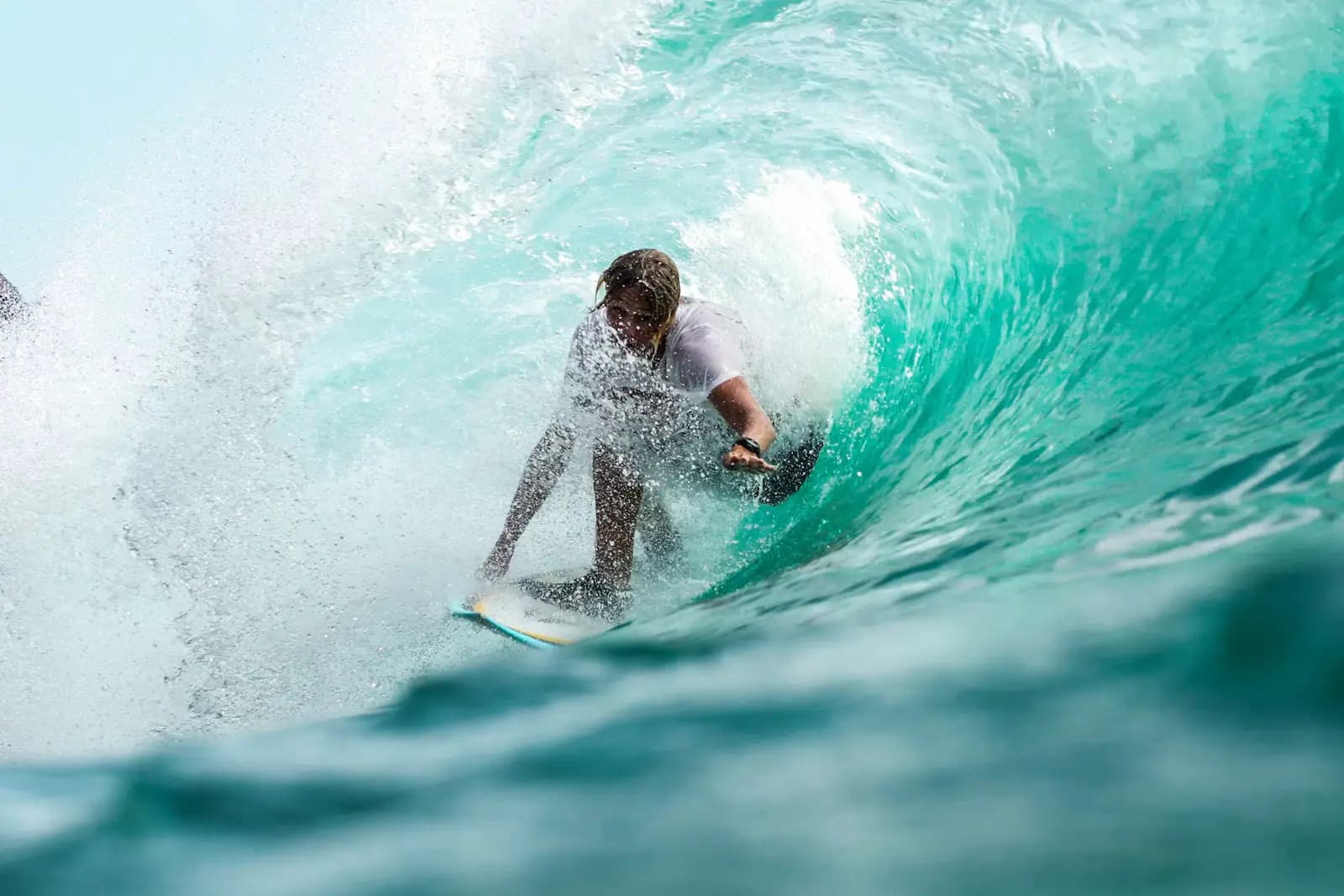
  • Heavy winter surf breaking across the mouth of a bay between two lava headlands
    Free

    Beach

    Waimea Bay

    Flat enough to swim across in July, closed by thirty-foot faces in January. The North Shore's seasonal flip at its most extreme.

    1.5–5 hoursFree, including parking. The lot is small and fills early.2.1 mi away

  • A surfer riding a fast right-hand wave peeling off a shallow reef near a harbour entrance
    Free

    Beach

    Haleʻiwa Aliʻi Beach Park

    A professional contest break at one end, a sheltered pool for small children at the other, and the coast's lifeguard base in between.

    1–4 hoursFree, including during the winter contest. Parking is free in the beach park lot.2.4 mi away

Laniākea: common questions

How close can you get to the turtles at Laniākea?

Ten feet, about three metres, and no closer — that is NOAA's published guidance for sea turtles on land and in the water, and Hawaiian green turtles are protected under federal law. Volunteers from Mālama nā Honu rope off basking animals with a red cordon that marks exactly that distance. Touching a turtle, crowding one, or getting between a turtle and the ocean counts as harassment and is an offence.

What time of day are the turtles at Laniākea Beach?

Most often between mid-morning and late afternoon, which is when green sea turtles come up to bask. Early morning and dusk are less reliable. Calm water helps, so summer is better than winter — heavy shorebreak discourages hauling out, and winter swell narrows this beach considerably. There is no guarantee on any given day; arriving to an empty beach is a normal outcome.

Is parking at Laniākea Beach dangerous?

Yes, and it is the real hazard here. The beach is on the ocean side of Kamehameha Highway while most of the parking is on the inland side, with no marked crossing, no signal and no central refuge. Cars brake and reverse unpredictably, and pedestrians have been struck — including a child who was hospitalised. Park fully clear of the carriageway, hold children's hands, and drive on if there is no safe space.

Why do sea turtles come out of the water at Laniākea?

To bask, which is unusual behaviour for sea turtles anywhere in the world. Hawaiian green turtles haul out to rest and warm up rather than only to nest, and Laniākea offers the right combination: a shallow reef flat with good limu to graze immediately offshore, and a sand beach directly behind it. Warmth, energy conservation and probable safety from tiger sharks are the working explanations.

Can you swim at Laniākea Beach?

You can in calm summer conditions, but it is not why anyone comes and there is no lifeguard. In winter the same rules apply as everywhere on this coast: heavy shorebreak, strong lateral current and no supervision, so stay out. If you want a swim near here, Haleʻiwa Beach Park a few minutes south sits behind a reef and stays usable when the rest of the North Shore is closed.