Skip to content
Search
Menu

We earn a commission if you book through this link. You pay the same price.

Rows of green crops on a flat coastal farm with steep ridged mountains rising behind

All Tours

Farm and Ranch Tours

Last updated

Farm and ranch tours on Oʻahu's North Shore: Kahuku Farms, Waialua coffee and cacao, Gunstock and Kualoa's film valley. What each costs and when to book.

Every farm you can visit on this coast exists because sugar left. The Kahuku Plantation Company milled cane at the eastern end from the 1890s until 1971. The Waialua Sugar Company held out at the western end until 1996, and its mill stack is still the tallest thing in Waialua. Between them they had shaped this entire coastline — the irrigation, the camp housing, the road network, the population — and when they shut, what remained was thousands of acres of flat, watered, sunny land with no crop and no employer.

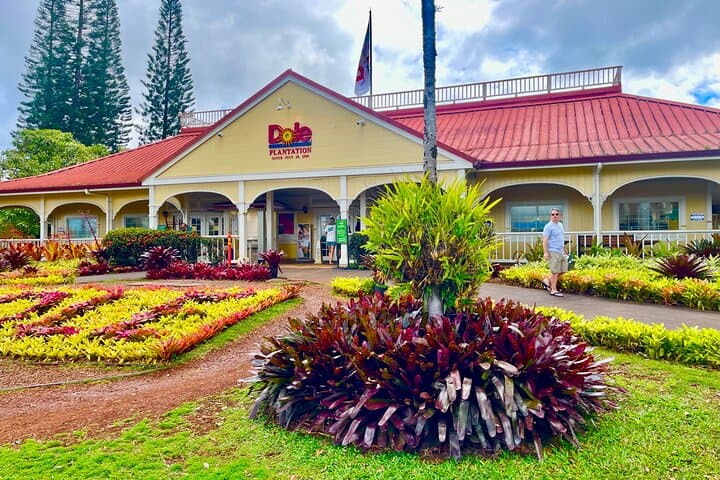
What grew back is unusually varied for a strip of coast this small, and it is the reason agritourism here is better than the phrase suggests. On the Kahuku plain there are aquaculture ponds raising shrimp and prawns, and small diversified farms growing papaya, banana, apple banana, cacao and passion fruit — Kahuku Farms is the one that opened a café and a wagon tour and let visitors in. Behind Waialua, Dole's Waialua Estate grows coffee and runs a cacao orchard of around twenty acres, which makes this one of very few places in the United States where both are grown commercially on the same property. In the old Waialua mill building, Island X Hawaii sells the coffee and shows people the milling. Up at Wahiawā, on the drive between the H-2 and Haleʻiwa, Dole Plantation turned a 1950 fruit stand into an attraction that now draws over a million visitors a year, with a hedge maze, a two-mile narrated train and a plantation garden.

The ranches are a different business. Gunstock Ranch at Lāʻie is a working 400-acre cattle operation that sells trail rides, pony rides for very small children, ATV runs and a tree-planting programme in a legacy koa and sandalwood forest. Kualoa Ranch, forty minutes further down the windward coast at Kaʻaʻawa, is 4,000 acres, one of the largest cattle ranches on the island, and has spent thirty years renting its valley to film crews — over 200 productions have shot there, including the Jurassic films, which is why the valley is marketed under that name and why the UTV tour is the busiest thing on the east side.

Two honest notes before you book. First, geography: Kualoa and Dole are both commonly sold as North Shore experiences and neither is on the North Shore. Kualoa is on the windward coast, on the long route up; Dole is in central Oʻahu, on the short one. Both are worth doing. Neither is fifteen minutes from Sunset Beach. Second, booking: the Kualoa ATV tours routinely sell out days ahead, and turning up at the gate in high season does not work. Book that one before you leave home and fit the rest of the day around it.
Our picks

The ones we would book

  • Editor's Pick

    Best off-road hours on the island

    Why we chose it

    Kualoa's UTV run through Kaʻaʻawa Valley is the strongest single booking on the windward side: two to three hours on ranch tracks through a valley with no power lines, past film locations and up to viewpoints no road reaches. Book it days ahead — this is the tour that sells out — and take the online price rather than the gate price.

    Oahu: Full or Half Day Grand Circle Island Tour
    Editor's PickFree cancellationInstant confirmation

    Plantation Tours

    Oahu: Full or Half Day Grand Circle Island Tour (opens in a new tab)

    19.5K reviews

    Choose from two exciting ways to experience Oahu's top attractions, scenic beauty, and local culture. Option 1: Dole Plantation & Haleiwa…

    6–7 hours

    Prices checked

    from $100
  • Best for Families

    Best farm day with young children

    Why we chose it

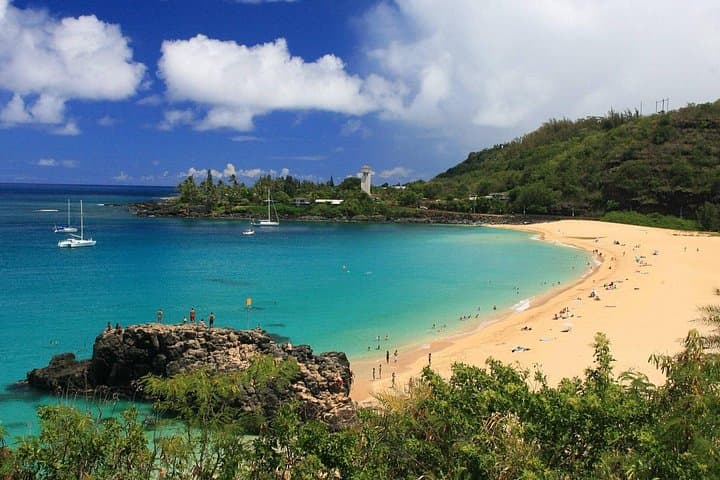
    A morning at Dole's maze and two-mile narrated train, then lunch and a wagon ride at Kahuku Farms, covers a whole day at a pace a five-year-old can manage, with restrooms and shade at both ends. It also puts you at the Kahuku end in the early afternoon, when the shrimp truck queues have thinned out.

    WAIMEA BAY
    Best for FamiliesFree cancellationInstant confirmation

    Low Supplier Cancellation Rate

    Oahu: Grand Tour Around Island with Snorkeling (opens in a new tab)

    11.1K reviews

    Come join on a circle island adventure led by some of Hawaii’s most knowledgeable local guides and experience breathtaking lookouts to…

    Full day

    Prices checked

    from $89
  • Best Value

    Best value combination ticket

    Why we chose it

    Kualoa's combination passes cost meaningfully less per activity than buying tours individually, which matters when a single UTV run already sits around the island's $109 median. Two activities plus the fishpond makes a full day on one ticket, and the ancient Molii fishpond is the most interesting thing on the property.

  • Small Group

    Best small-group farm and food day

    Why we chose it

    The small-group operators are the ones that can actually stop at the Waialua mill, a roadside stand and a working farm in the same morning — a coach cannot park at any of them. You also get to talk to the person who grew the thing, which is the entire point of an agritourism day.

  • Best Private Tour

    Best private ranch experience

    Why we chose it

    Private options at both ranches buy you pace rather than access: a ride that is not nose-to-tail behind twelve strangers, a guide who will answer questions about the cattle operation rather than the film credits, and a start time that avoids the middle of the day. Expect a vehicle or group rate rather than a per-seat price.

What replaced the cane

It is worth knowing what you are looking at when you drive past the flat land behind the beaches, because it is not empty and it is not scrub.

The Waialua plain, between Haleʻiwa and the Waiʻanae range, was the Waialua Sugar Company's until 1996. Since then it has carried coffee, cacao, seed corn, and a patchwork of leased small farms. The Waialua Estate's coffee is grown at low elevation on that plain, which is unusual — Hawaiian coffee is normally associated with the Kona slopes — and the roughly twenty-acre cacao orchard beside it produces one of the few single-estate chocolates grown on American soil.

The Kahuku plain at the other end lost its mill twenty-five years earlier, in 1971. Aquaculture took the low, brackish ground near the shore; papaya, banana and vegetables took the better land behind. The shrimp trucks on Kamehameha Highway are the visible end of that, but the farms themselves are the reason the trucks exist.

Between the two, at the Waimea end, sits a different kind of agricultural site altogether. Waimea Valley is a botanical garden and cultural reserve rather than a farm, holding a large documented plant collection along a paved path up to a waterfall, on ground with archaeological sites on it. It belongs on a farm-and-garden day even though nothing there is grown for sale.

And overlooking all of it, the old mill buildings. The Waialua Sugar Mill now houses small businesses, including the coffee and chocolate shop, a soap works and craft makers. Walking round it is free and takes twenty minutes, and it explains this coast better than any museum on the island.

Kualoa, and the film-location business

Kualoa deserves its own explanation because of what it is rather than where it is. Four thousand acres running from Kāneʻohe Bay up into Kaʻaʻawa Valley, it is a working cattle ranch that discovered in the 1980s and 1990s that Hollywood would pay well for a valley with no power lines in it. Something over 200 films and television productions have shot there — the Jurassic films most famously, which is why the valley is now sold as Jurassic Valley, along with a long list of others whose sets, props and locations are still standing or have been rebuilt for the tour.

The tours split into three broad kinds. The movie sites bus tour drives the valley floor and stops at the recognisable locations, and is the low-effort version that works for all ages. The UTV Raptor tours put you in an off-road vehicle for two or three hours on the ranch tracks, and this is the one that sells out. Horseback rides go up the valley at walking pace. There are also e-bike, zipline, jungle expedition and ocean voyage options, plus a catamaran to the fishpond, and combination tickets that are meaningfully cheaper per activity than buying separately.

The ranch also holds Molii, a large ancient Hawaiian fishpond on the shoreline — a walled, engineered aquaculture system built centuries before anyone filmed anything here. Several tours include it, and it is the most historically interesting thing on the property.

Two practical points. Booking is not optional in high season: the ATV and UTV tours regularly sell out days in advance, and the online price is lower than the walk-up. And the location is genuinely far from the North Shore — from Kaʻaʻawa it is over an hour up the coast to Haleʻiwa, so Kualoa belongs on your windward-route day, not on your Sunset Beach day.

What it all costs

What it costs

Bands, and worth re-checking before you book anything.

  • Free or near-free: walking round the Waialua Sugar Mill and its shops; walking the Green World coffee farm at Wahiawā; the grounds at Dole Plantation, where entry costs nothing and the individual attractions are ticketed.
  • Under $30 a head: Waimea Valley admission, around $26 for an adult and $18 for a child, with resident rates lower. The Dole train, maze and garden tour are each separately priced at modest amounts, and a combination ticket is cheaper than buying all three.
  • $10 to $20: a plate or a smoothie at Kahuku Farms, with the wagon tour priced on top.
  • $80 to $100 per person: Kualoa's UTV and ATV tours, which is the busiest price point on the windward side and roughly in line with the Oʻahu median tour price of about $109.
  • $100 to $180: a trail ride at Gunstock or Kualoa, depending on length and whether it is a sunset or private ride.
  • Beyond that: combination day passes at Kualoa, private ranch experiences and the tree-planting programmes at Gunstock, which include the cost of the tree.

Two savings worth knowing. Kualoa's combination tickets are substantially better value than individual tours if you are doing more than one thing, and booking online rather than at the gate is cheaper there. And a farm day is one of the few ways to spend a full day on this coast for a family of four without passing $200 — grounds at Dole, the mill at Waialua, and Waimea Valley together come to less than one adult ticket at the Polynesian Cultural Center.

Booking, seasons and the days things close

When to go

Farms keep their own hours and several are closed on days that surprise people.

  • Book Kualoa's ATV and UTV tours before you fly. They sell out days ahead in high season, and the next available slot is regularly a week out. Everything else on this list can usually be done on the day.
  • Check Kahuku Farms' opening days. It is a family farm with a café, not a seven-day attraction, and it has historically closed on some weekdays.
  • Waimea Valley generally runs daily, roughly 9am to 5pm, with the waterfall swim opening only when lifeguards judge the water safe. Heavy rain in the valley closes the swim at short notice, sometimes mid-afternoon.
  • Dole Plantation is open daily and is busiest from late morning, when the Waikīkī coaches arrive. Before 10am it is a different place.
  • Winter, roughly November to March, is the wet half of the year on this coast. Farm tracks at Kahuku and the Kualoa valley floor turn to mud, ATV tours run anyway and you will get filthy, and the Waimea swim closes more often.
  • Summer, roughly May to September, is dry, hot and dusty. Ranch rides want a morning or a sunset slot rather than the middle of the day.

One route note. Dole and Green World are on the H-2 approach through Wahiawā; Kahuku Farms, Gunstock and Kualoa are on the windward side. Trying to do both ends in one day means driving the full loop, which is the right way to see this coast but makes for a nine-hour day. Pick an end.

Book it

Everything else we track

We could not find tours matching this right now

Nothing came back for Kualoa Ranch. Operators add and retire experiences constantly, so this list changes week to week. Try a broader category, or come back in a day or two.

The farms and ranches, compared

How they compare

Drive times are from Haleʻiwa. Prices are bands and change; confirm when you book.

WhereWhat it isTime from HaleʻiwaRough costBest for
Kahuku FarmsFamily farm with café and wagon tour35–40 minCafé plate $10–18; tour extraA relaxed lunch with a farm attached
Waialua Sugar Mill / Island XCoffee and cacao shop in the old mill5–10 minFree to walk round; tastings lowTwenty minutes and a bag of coffee
Dole Plantation, WahiawāPineapple attraction: maze, train, garden20–25 min (south)Grounds free; each attraction ticketedChildren, and the drive up from Waikīkī
Green World Coffee Farm, WahiawāSmall coffee farm with a walk-through20–25 min (south)Free to walk; coffee barA quick, genuinely free stop
Gunstock Ranch, Lāʻie400-acre working cattle ranch40–45 minRides roughly $100–180Horseback, small children, tree planting
Kualoa Ranch, Kaʻaʻawa4,000 acres, film locations, ATV, ocean70–80 minATV/UTV roughly $80–100ppFilm sites and off-road, booked ahead
Waimea ValleyBotanical garden, cultural site, waterfall10 minAround $26 adult, $18 childPlants, a paved path and a swim

If you have one morning: Waialua mill, then Waimea Valley. If you have children: Dole on the way up, Kahuku Farms for lunch. If you want the one that is genuinely unlike anywhere else: Kualoa, booked well in advance, on a day you are driving the windward coast anyway.

What to wear on a farm day

What to bring

These are working properties with livestock, mud and machinery on them, not landscaped attractions.

  • Closed-toe shoes. Required for horseback at both ranches, strongly advisable for the ATV tours, and sensible anywhere with cattle. Trainers you do not love are ideal.
  • Long trousers for any ride. Stirrup leathers and saddle seams on bare legs make for a long hour.
  • A change of clothes in the car if you are doing a UTV tour at Kualoa in winter. The red mud on the valley floor is memorable and permanent.
  • Mineral sunscreen and a hat. The Kahuku and Waialua plains have no shade at all and the sun on flat, open ground is stronger than it feels in a breeze.
  • Insect repellent for the gulch sections at Kualoa and around the ponds at Kahuku.
  • Cash for farm stands and honour boxes along Kamehameha Highway, several of which are unattended.
  • A cooler bag. Farm shops on this coast sell things — coffee, chocolate, lilikoi butter, papaya — that do not enjoy an afternoon in a hot rental car.

Check weight and age limits before booking anything with an engine or a horse: ATV drivers generally need a full licence, trail rides commonly set minimum ages around seven or eight and rider weight limits in the region of 230 to 250 pounds, and pony rides at Gunstock are aimed at children roughly two to six.

On the ground

Where to go

Every place below has its own page — hours, parking, what it costs and what to expect when you get there.

  • A waterfall dropping into a deep green pool at the head of a forested valley

    Park

    Waimea Valley

    A paved three-quarter-mile walk through botanical collections to a waterfall pool you may swim in. Life jacket required, lifeguard's call.

    2–3.5 hoursPaid admission, in the mid-twenties per adult at the time of writing, with lower rates for seniors, students and children and discounts for kamaʻāina and military with ID.

  • A plate of shell-on garlic shrimp with two scoops of rice served on a paper plate
    Free

    Dining district

    Kahuku Food Trucks

    Shrimp farms that grew a kitchen, strung along two miles of a former sugar town. Order it shell-on and accept the garlic.

    1–2 hoursFree to visit; you pay for what you eat. A garlic shrimp plate with rice is a mid-range plate-lunch price rather than a snack price.

  • A wide green valley floor enclosed by steep fluted ridges under scattered cloud

    Landmark

    Kualoa Ranch

    Four thousand acres in three windward valleys, sold as a film set and older than the film industry by a very long way.

    2–6 hoursPaid, per tour. Prices vary widely between the bus tour at the low end and UTV, horseback and zipline at the high end; combination passes bundle several.

  • Outrigger canoes on a lagoon in front of thatched island houses on a green Pacific island site

    Entertainment

    Polynesian Cultural Center

    Six Pacific island villages on 42 acres at Lāʻie, largely staffed by BYU–Hawaiʻi students, running midday to the night show.

    5–9 hoursPaid, and not cheap. Tiered packages: general admission, admission plus lūʻau, admission plus the evening show, and all-in options with a guided element.

  • A small sheltered cove of calm shallow water held behind an offshore reef
    Free

    Beach

    Turtle Bay

    The coast's only large resort — and under Hawaiʻi law its best swimming cove and its coastal trails are open to everyone.

    2–6 hoursThe beaches and coastal trails are free and public. Golf, riding, dining and spa services are resort-priced.

  • A disused sugar mill with a tall brick smokestack and corrugated iron buildings under blue sky
    Free

    Neighbourhood

    Waialua

    A plantation town that lost its mill in 1996 and turned the tower into a soap factory, two miles and one world from Haleʻiwa.

    1–2 hoursFree. There is no gate, no ticket and no charge to walk the mill yard.

  • Rows of low spiky pineapple plants growing in red soil under open sky

    Entertainment

    Dole Plantation

    A 1950 fruit stand that became the busiest stop between Honolulu and Haleʻiwa, with a hedge maze and a Dole Whip queue.

    1–2.5 hoursGrounds, shop and food counters are free. The train, the maze and the garden tour are each ticketed, with combination tickets available.

Straight answers

Questions people actually ask

Is Kualoa Ranch on the North Shore?

No. Kualoa is on the windward coast at Kaʻaʻawa, roughly forty minutes north of Kāneʻohe and over an hour from Haleʻiwa. It is frequently sold as a North Shore experience because most circle-island itineraries pass it on the way up. Plan it as part of a windward-route day rather than expecting to combine it with an afternoon at Sunset Beach — that is two hours of driving you did not budget for.

Do you need to book Kualoa Ranch in advance?

For the ATV and UTV tours, yes, and well in advance — they regularly sell out days ahead in high season and walk-up availability is unreliable. Booking online is also cheaper than buying at the gate, and combination packages cost significantly less per activity than individual tours. The movie sites bus tour has more capacity but still fills at peak times.

Is Dole Plantation worth stopping at?

With children, yes; without them, it is a shop. It sits at Wahiawā on the H-2 approach, so it costs you nothing in detour if you are driving up that way. Entry to the grounds is free and the three attractions — the hedge maze, the two-mile narrated Pineapple Express train and the plantation garden — are ticketed separately, with a combination ticket cheaper. Go before 10am; the Waikīkī coaches arrive mid-morning.

Where can you see coffee and chocolate grown on Oʻahu?

On the Waialua plain behind Haleʻiwa. Dole's Waialua Estate grows coffee at low elevation there alongside a cacao orchard of around twenty acres, which makes it one of very few properties in the United States producing both. Island X Hawaii, in the old Waialua Sugar Mill, sells the coffee and chocolate and shows visitors the milling. Walking round the mill costs nothing and takes about twenty minutes.

What is there to do at Kahuku Farms?

It is a family-run farm on the Kahuku plain with a café, a farm shop and a wagon tour through the papaya, banana and cacao. The lilikoi butter on grilled bread and the açaí bowls are what people go for, and the tour is a genuine working-farm tour rather than a staged one. It is not open every day — it is a farm, not an attraction — so check the opening days before you drive out from Haleʻiwa.

How much do North Shore farm and ranch tours cost?

A wide spread. Walking the Waialua mill or the Green World coffee farm costs nothing; Waimea Valley is around $26 for an adult; a Kahuku Farms plate is $10 to $18; Kualoa's ATV and UTV tours run roughly $80 to $100 a head; trail rides at Gunstock or Kualoa sit between about $100 and $180 depending on length. Kualoa combination tickets are notably better value than buying tours one at a time.

Can you visit a working farm on the North Shore?

Yes — several, and that is what distinguishes this coast from a resort agritourism circuit. Kahuku Farms and Gunstock Ranch are both working operations that let visitors in, Kualoa is a genuine 4,000-acre cattle ranch as well as a film location, and the Waialua estate grows commercial coffee and cacao. All of them are on land that grew sugar until the Kahuku mill closed in 1971 and the Waialua mill in 1996.