Skip to content
Search
Menu

We earn a commission if you book through this link. You pay the same price.

Horses grazing in open pasture on a green hillside above a distant blue coastline

Things to Do

Horseback Riding on the North Shore

Last updated

Horseback riding on Oʻahu's North Shore: what a Hawaiʻi trail ride really is, what Gunstock and Kualoa cost, weight and age limits, and the best hour to ride.

Set expectations first, because this is the activity on Oʻahu most likely to be oversold. A trail ride in Hawaiʻi is almost always nose-to-tail: a string of horses walking a fixed route behind a wrangler, at a pace set by the least experienced rider in the group. There is no galloping. There is, on this coast, no riding along a beach at all — the north-facing shore is public beach park and conservation land, the sand is narrow, and in winter the surf comes up to the vegetation line. Anyone arriving with an image of a horse cantering through the shorebreak at Sunset Beach is going to have a slightly deflating morning.

What is genuinely on offer is better than that description makes it sound, and it is real ranch country. Two working cattle operations dominate. Gunstock Ranch sits above Lāʻie on roughly 400 acres of rolling pasture between the Koʻolau range and the sea, and on a clear morning the ride gives you a long view up the windward coast. It is also the most family-flexible ranch on the island, with short pony rides aimed at children roughly two to six, a petting zoo, sunset rides, and a Hawaiian legacy forest where the ride includes planting a koa or sandalwood tree that stays there after you leave.

Kualoa Ranch, forty minutes further down the windward coast at Kaʻaʻawa, is the big one: 4,000 acres, one of the largest working ranches on Oʻahu, running up into the Kaʻaʻawa Valley that has hosted over two hundred film and television productions. Riding there means walking up the valley floor under the Koʻolau ridgeline, which is a landscape genuinely unlike anywhere else on the island. It is also the busiest ranch on this side of the island and it books out.

Closer in, above Waimea, there has long been small-scale riding on the Pūpūkea plateau — hill country at around a thousand feet with views back down toward Waimea Bay. Operators at that scale open and close, so check what is currently running rather than following an old recommendation.

The other thing worth knowing before you book is the season. Winter rain, roughly November to March, turns the pasture at Gunstock and the valley floor at Kualoa into mud, and rides go ahead in it. Summer is dry and hot enough that the middle of the day is the wrong time to sit on a horse in full sun. Morning and late afternoon are the hours that work, in both halves of the year.

Our picks

The ones we would book

  • Editor's Pick

    Best ride for the view

    Why we chose it

    The Gunstock pasture above Lāʻie looks up the windward coast toward Kahuku, and on a clear morning that is the single best thing you see from a saddle on this island. It is a 400-acre working cattle ranch rather than a riding centre, the horses are ranch horses, and a 90-minute ride gets you properly away from the yard.

    Parasailing Experience in Waikiki, HI
    Editor's PickFree cancellationInstant confirmation

    Low Supplier Cancellation Rate

    Parasailing Experience in Waikiki, HI (opens in a new tab)

    8.9K reviews

    Experience the thrill of Oahu parasailing on this unforgettable 1-hour adventure from Waikiki. Soar up to 1,000 feet above the stunning…

    1 hour

    Prices checked

    from $44
  • Sunset

    Best sunset ride

    Why we chose it

    The late slot is the one that books out first, and for a reason: the light across the pasture in the last hour, cooler air, and a horse that has done its work for the day. Book it well ahead in summer. Take a layer — it drops several degrees once the sun goes behind the Koʻolau.

  • Best for Families

    Best ranch with small children

    Why we chose it

    Gunstock is the only operation on this coast genuinely built for under-sevens: short led pony rides for roughly the two-to-six range, a petting zoo that costs nothing, and 60-minute trail rides for older children. Book the first slot of the morning — the pasture has no shade and the midday sun is the thing that ruins it.

  • Best Private Tour

    Best private ride

    Why we chose it

    Private rides are the only way around the nose-to-tail constraint: a smaller group, a pace closer to your own, and a wrangler who can answer questions about the cattle operation rather than managing twelve strangers. Priced per group rather than per seat, so it makes sense at three or four riders, or for a nervous one.

    Waikiki Turtle Canyon Snorkel Turtles Guaranteed
    Best Private TourFree cancellationInstant confirmation

    Snorkeling

    Waikiki Turtle Canyon Snorkel Turtles Guaranteed (opens in a new tab)

    1.3K reviews

    Book our Turtle Canyon snorkel tour and experience one of Waikiki’s most popular turtle snorkeling destinations! Depart conveniently by…

    2 hours

    Prices checked

    from $79
  • Best Value

    Best value hour in the saddle

    Why we chose it

    A standard 60-minute trail ride sits at or a little above Oʻahu's roughly $109 median booking, which makes it one of the better-priced organised activities up here — a fraction of a skydive, less than a full-day cultural package. Book online rather than at the gate and carry cash for the wrangler.

What it costs

What it costs

Bands, and worth confirming directly — ranch pricing here changes seasonally and by ride type.

  • Standard 60-minute trail ride: commonly around $100 to $130 per rider.
  • 90-minute or extended ride: typically $140 to $180.
  • Sunset ride: a premium on the standard rate, frequently the most-booked slot of the day at Gunstock.
  • Pony ride for small children: a low, separate charge — a short led walk rather than a trail ride.
  • Private or semi-private ride: substantially more, and priced per group rather than per seat. Worth it for a nervous rider, a proposal, or a family that wants to go at its own pace.
  • Tree-planting rides at Gunstock: priced above a standard ride because the cost includes the tree and its placement in the legacy forest.
  • Kualoa combination tickets: pairing a ride with a UTV or movie-sites tour costs meaningfully less per activity than buying each separately.

For context, a standard ride sits at or a little above Oʻahu's median tour price of roughly $109, which makes horseback one of the more reasonably priced organised activities on this coast — a skydive is three to four times the cost, and a full-day package at the Polynesian Cultural Center is more again.

Two cost notes. Booking online in advance is usually cheaper than the gate price at the larger ranches. And gratuities for wranglers are customary in Hawaiʻi and not included in the ticket; carry some cash.

Season, mud and the right hour

When to go

Ride early or ride late. The middle of the day is the worst hour on every ranch on this coast, in every month.

  • Morning rides, generally from around 8 or 9am, give you the coolest air, the firmest ground and the clearest view up the coast before cloud builds on the Koʻolau.
  • Sunset rides are the ones people remember, and at Gunstock the westward aspect over the pasture is the reason. They book out first.
  • Midday, roughly 11am to 2pm, is full sun on open pasture with no shade. Perfectly doable, considerably less pleasant.

Seasonally:

  • Winter, roughly November to March, is the wet half. The Kaʻaʻawa valley floor at Kualoa and the pasture at Gunstock both get properly muddy, and rides go ahead in it — wear clothes you do not mind ruining. Rain here comes in bursts rather than all day.
  • Summer, roughly May to September, is dry, dusty and hot. Water, hat and sunscreen matter more than waterproofs.
  • Rides are cancelled for lightning and high wind, not for rain. Check the operator's weather policy before booking, particularly if it is your last day.

Book ahead. Kualoa's rides sell out days in advance in high season along with everything else there, and Gunstock's sunset slots go early. Turning up on spec at either ranch in July is unlikely to work.

Finally, plan the drive. Gunstock is 40 to 45 minutes from Haleʻiwa and about an hour from Waikīkī via the Likelike; Kualoa is over an hour from Haleʻiwa. Neither is a quick add-on to a North Shore beach day, and a morning ride at Kualoa effectively commits your whole day to the windward coast.

Riding with children

This is where the ranches genuinely differ, and it is worth choosing on it.

Gunstock is the one set up for small children. Pony rides aimed at roughly the two-to-six range are a led walk of a few minutes in the ranch yard, which is the right amount of horse for that age, and there is a petting zoo on site that is free to visitors and worth arriving early for. Older children who meet the minimum age — commonly seven or eight — can join a standard trail ride, and the 60-minute option is the right length. A child who has never ridden will be tired and delighted after an hour and bored and sore after two.

Kualoa's rides start at a similar minimum age but the ranch as a whole is better for children in its other activities — the movie sites bus tour, the UTV run for older teenagers, the fishpond. If you have a mixed-age group, Kualoa's combination tickets let the eight-year-old ride while the twelve-year-old does something with an engine.

Three practical notes for families. Book the earliest slot: children in full midday sun on an open pasture is the version that ends badly. Feed them beforehand — there is limited food at the ranches and the nearest alternative is the Kahuku trucks, which close in the afternoon. And be honest about experience at booking; a child who has had six lessons at home is not the same as one who has sat on a pony at a fête, and the wranglers will match the horse accordingly.

If your children are under the trail-ride minimum and you are not at Gunstock, the honest answer is to do something else. Watching a parent ride from a fence for an hour is nobody's holiday.

Book it

Everything else we track

Some links below go to Viator, our booking partner. We earn a commission on bookings made through them — at no extra cost to you, and with no influence on what we recommend.

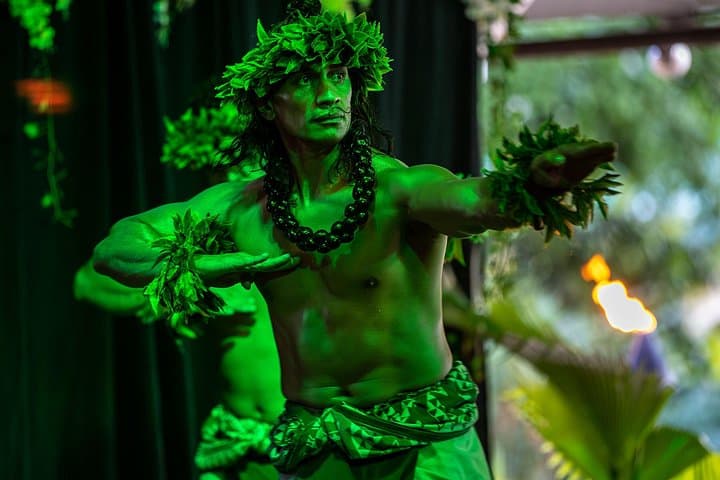
  • Roland dancing Hawaiian Kahiko
    Free cancellationLikely to sell out

    Curated Catalog

    Toa Luau at Waimea Valley, Oahu (opens in a new tab)

    3.8K reviews

    Toa Luau invites you to immerse yourself in the beauty and excitement of Polynesia on Oahu’s historic North Shore! Book any one our 3 Luau…

    3 hours

    Prices checked

    from $145
  • Oahu Shark Dive on the North Shore
    Free cancellationInstant confirmation

    Excellent Quality

    Oahu Shark Dive on the North Shore (opens in a new tab)

    3.2K reviews

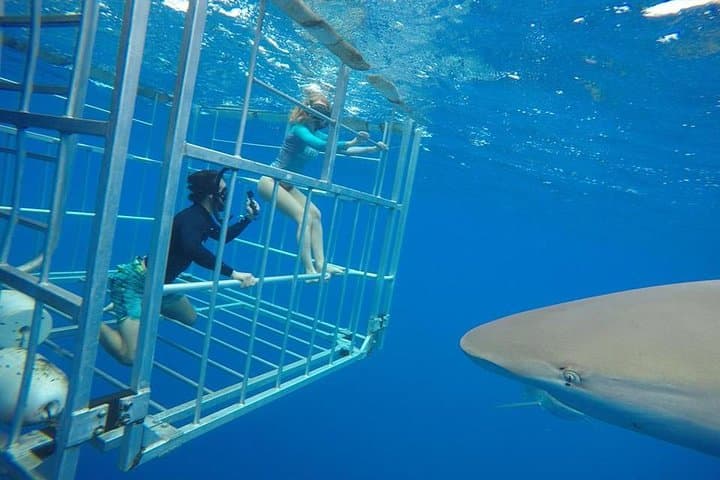
    Book the Oahu Shark Dive for a thrilling shark encounter off the North Shore. You’ll travel by boat from Haleiwa Harbor, then view sharks…

    1–2 hours

    Prices checked

    from $99.48
  • Chief's Hula Dancers
    Free cancellation

    Family-friendly Shows

    Oahu: Chief's Luau Admission (opens in a new tab)

    3.1K reviews

    Attend a luau on Oahu produced by the Original World Fire Knife Dance Champion, Chief Sielu. During this 3 to 3.5-hour evening, immerse…

    3 hours

    Prices checked

    from $144

The three places to ride, compared

How they compare

Drive times are from Haleʻiwa. Prices are bands; confirm at booking.

WhereGroundFrom HaleʻiwaRide lengthsRough priceBest for
Gunstock Ranch, Lāʻie400 acres of rolling coastal pasture40–45 min60 and 90 min; pony rides; sunsetAbout $100–180Families, small children, sunset, first-timers
Kualoa Ranch, Kaʻaʻawa4,000 acres, Kaʻaʻawa film valley70–80 minRoughly 1–2 hoursAbout $100–180The landscape, and combining with other tours
Pūpūkea hill countrySmall-scale rides above Waimea10–15 minTypically 1–2 hoursVariesStaying on the North Shore proper

The trade-off is simple. Gunstock has the widest range of ride types and is the only one of the three genuinely set up for a four-year-old. Kualoa has the most spectacular ground and the most competition for slots. Anything operating on the Pūpūkea plateau has the advantage of being ten minutes from Waimea Bay rather than an hour down the windward coast, which matters if your day is already full.

One thing none of them offer: riding on the North Shore's beaches. Beach riding on Oʻahu is not a thing at this end of the island, for reasons of land status, sand width and winter surf. If that is specifically what you want, it is not here.

What a Hawaiʻi trail ride actually involves

Before you book

The honest version, so nobody books the wrong thing.

It is nose-to-tail. Horses follow the horse in front on a set trail, led by a wrangler, at a walk. Some operators will allow a trot on a suitable stretch with an experienced group; most will not. This is a liability structure as much as a riding decision, and it is standard across the state.

You will not choose your horse. Ranches match riders to horses by weight, height and stated experience. Tell them the truth at booking — an experienced rider on a plodder is bored, and a nervous beginner on a forward horse is unsafe.

There are weight limits, and they are enforced. Published limits on Oʻahu ranches have commonly sat in the region of 230 to 250 pounds, and riders are weighed or asked to confirm. This is about the horse's back, not about you.

There are minimum ages. Trail rides typically start around seven or eight years old. Gunstock's pony rides cover the younger end, roughly two to six, and are a led walk rather than a trail ride.

It is hot, and it is dusty or muddy. No shade on the pasture at Gunstock in summer; deep mud on the valley floor at Kualoa in winter. Both are normal and neither cancels a ride.

Rides are short. Sixty to ninety minutes is standard. Two hours is a long ride here. If you ride regularly at home, book the longest option available and set your expectations for the landscape rather than the riding.

What you are paying for, then, is an hour in country you cannot otherwise get into, on an animal, with somebody who knows the ranch. Judged on that, it is worth it. Judged as riding, it is a walk.

What to wear and bring

What to bring

Ranches will turn riders away for footwear, so get this right.

  • Closed-toe shoes, always. Trainers are fine; boots with a small heel are better. Sandals, flip-flops and slip-ons are refused at every ranch on this island.
  • Long trousers. An hour in a western saddle in shorts leaves marks on the inside of your legs. This is the single most common regret on a Hawaiʻi trail ride.
  • A hat that stays on, with a chin cord if it is broad-brimmed. Helmets are usually available and are a good idea for children and for anyone who has not ridden.
  • Mineral sunscreen, applied before you mount rather than from a pocket halfway round.
  • Sunglasses — the glare off open pasture is significant.
  • A small amount of cash for the wrangler.
  • A change of shoes in the car if you are riding in winter at Kualoa. The mud is red and it stays.
  • Insect repellent for the gulch sections and around the stables.

Leave in the car: anything in your hands. Phones come out of pockets and onto the ground at a walk, and most operators would rather you did not ride with one out. Several ranches have a photographer on the trail or sell photo packages for exactly this reason.

If anyone in the party is nervous, say so at check-in rather than at the mounting block. Wranglers here place nervous riders in the middle of the string on the steadiest horse, and they are good at it — but only if they know.

On the ground

Where to go

Every place below has its own page — hours, parking, what it costs and what to expect when you get there.

  • A plate of shell-on garlic shrimp with two scoops of rice served on a paper plate
    Free

    Dining district

    Kahuku Food Trucks

    Shrimp farms that grew a kitchen, strung along two miles of a former sugar town. Order it shell-on and accept the garlic.

    1–2 hoursFree to visit; you pay for what you eat. A garlic shrimp plate with rice is a mid-range plate-lunch price rather than a snack price.

  • A wide green valley floor enclosed by steep fluted ridges under scattered cloud

    Landmark

    Kualoa Ranch

    Four thousand acres in three windward valleys, sold as a film set and older than the film industry by a very long way.

    2–6 hoursPaid, per tour. Prices vary widely between the bus tour at the low end and UTV, horseback and zipline at the high end; combination passes bundle several.

  • Outrigger canoes on a lagoon in front of thatched island houses on a green Pacific island site

    Entertainment

    Polynesian Cultural Center

    Six Pacific island villages on 42 acres at Lāʻie, largely staffed by BYU–Hawaiʻi students, running midday to the night show.

    5–9 hoursPaid, and not cheap. Tiered packages: general admission, admission plus lūʻau, admission plus the evening show, and all-in options with a guided element.

  • A small sheltered cove of calm shallow water held behind an offshore reef
    Free

    Beach

    Turtle Bay

    The coast's only large resort — and under Hawaiʻi law its best swimming cove and its coastal trails are open to everyone.

    2–6 hoursThe beaches and coastal trails are free and public. Golf, riding, dining and spa services are resort-priced.

  • A curving sandy beach backed by a dense belt of ironwood trees with a small island offshore
    Free

    Beach

    Mālaekahana Beach

    A mile of ironwood-shaded windward sand with an island you can walk to at low tide and a gate that locks at dusk.

    1.5–5 hoursFree for day use, with free parking inside the gate. Camping is permitted and charged.

  • A narrow rocky headland jutting into blue ocean with a small holed islet offshore
    Free

    Viewpoint

    Lāʻie Point State Wayside

    A lithified-dune headland at the end of a Lāʻie side street, with a hole punched clean through the islet offshore.

    5–20 minutesFree. A state wayside with a handful of parking spaces and a railing.

Straight answers

Questions people actually ask

Can you ride horses on the beach on Oʻahu's North Shore?

No. The north-facing shore here is public beach park and conservation land, the sand is narrow, and in winter the surf runs up to the vegetation line — beach riding is not offered at this end of the island. Every ride on this coast is inland: rolling cattle pasture at Gunstock above Lāʻie, the Kaʻaʻawa valley floor at Kualoa, and hill country above Waimea. Several of those have ocean views; none of them touch the sand.

How much does horseback riding cost on the North Shore?

Roughly $100 to $130 for a standard 60-minute trail ride and $140 to $180 for 90 minutes or longer, with sunset rides carrying a premium and private rides priced per group rather than per person. Pony rides for small children cost far less. Booking online is usually cheaper than the gate price, and wrangler gratuities are customary and not included. Confirm current rates when you book.

What is the difference between Gunstock Ranch and Kualoa Ranch?

Gunstock is 400 acres of coastal pasture above Lāʻie, about 40 minutes from Haleʻiwa, with the widest range of ride options on the island — 60 and 90 minute trails, sunset rides, pony rides for two to six year olds, a petting zoo and a tree-planting forest. Kualoa is 4,000 acres at Kaʻaʻawa, over an hour away, with far more dramatic ground in the Kaʻaʻawa film valley and many more non-riding activities. Gunstock for families, Kualoa for the landscape.

Is there an age or weight limit for horseback riding on Oʻahu?

Yes. Trail rides here typically set a minimum age around seven or eight, and rider weight limits have commonly sat in the region of 230 to 250 pounds — a limit set by the horse's back, and enforced. Gunstock's pony rides cover younger children, roughly two to six, as a short led walk rather than a trail ride. Limits vary between operators and change, so confirm at booking.

Do you gallop on a Hawaiʻi trail ride?

Almost never. Rides on Oʻahu are nose-to-tail: a string of horses walking a set trail behind a wrangler at the pace of the least experienced rider. A few operators allow a trot on a suitable stretch with an experienced group, but that is the exception. If you ride regularly at home, book the longest ride available and treat the ground rather than the riding as the reason to go.

What should you wear horseback riding on the North Shore?

Closed-toe shoes without exception — sandals and flip-flops are refused at every ranch here — and long trousers, which is the detail people regret skipping after an hour in a western saddle. Add a hat that stays on, mineral sunscreen applied before you mount, sunglasses for the glare off open pasture, and in winter a change of shoes in the car, because the Kualoa valley floor is deep red mud.

When is the best time of day to ride on the North Shore?

Early morning or the sunset slot. Between about 11am and 2pm you are on open pasture in full sun with no shade, which is doable and unpleasant. Mornings give the firmest ground and the clearest view up the coast before cloud builds on the Koʻolau; sunset rides get the best light and book out first. Rides go ahead in rain and are cancelled for lightning and high wind.