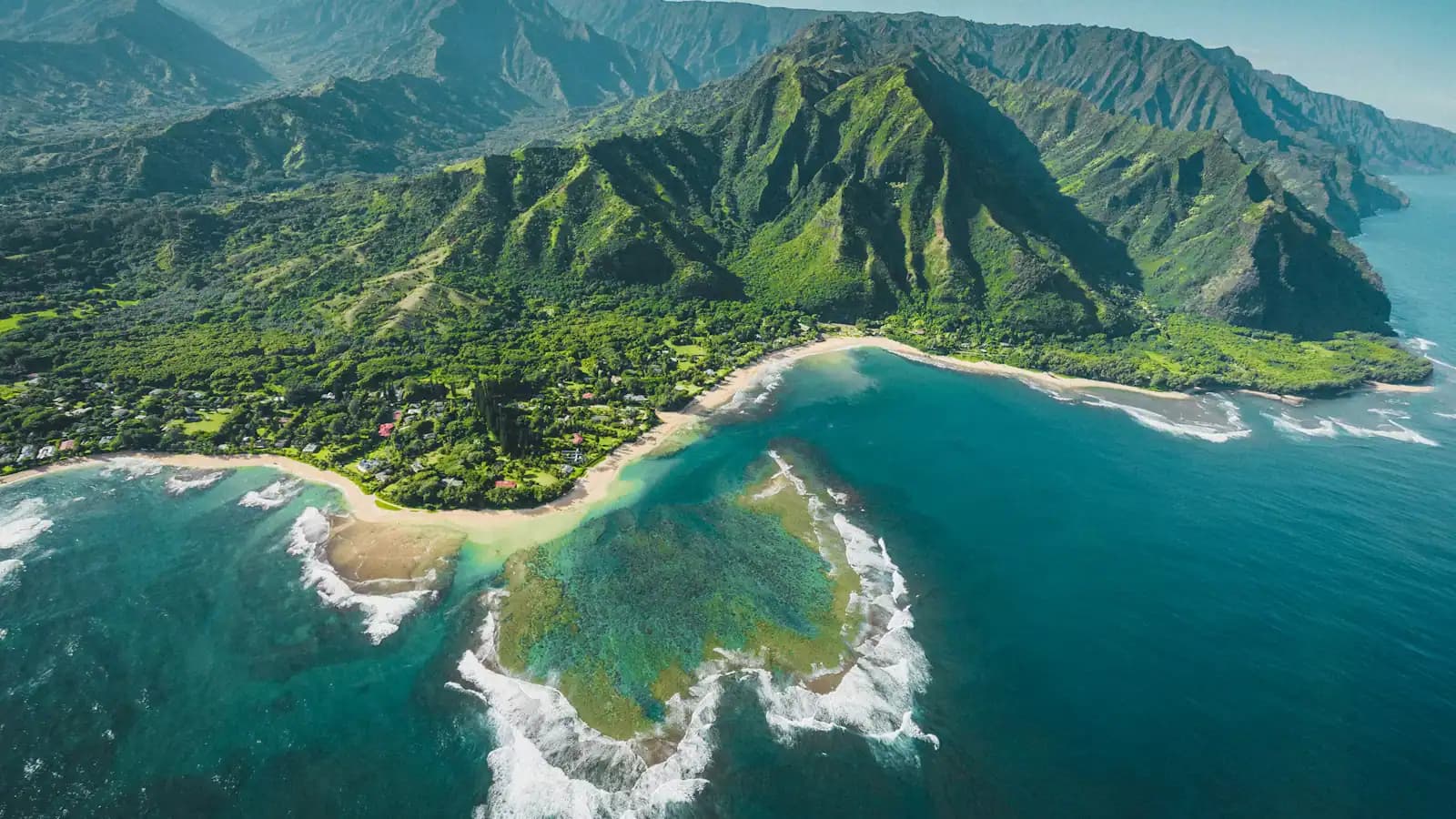
Starting from Haleʻiwa and working east, then doubling back west.
Haleʻiwa town. A few hundred yards of low wooden storefronts either side of the Anahulu Stream bridge: surf shops, board shapers, galleries. Park once at the harbour end and walk it.
Haleʻiwa Aliʻi Beach Park. Lifeguarded, sheltered in summer, and the venue for the Triple Crown's opening event in November.
Laniākea. Green sea turtles hauling out onto the sand, most reliably in the afternoon. No lot, no facilities, a dirt pull-off across a fast road, and volunteers keeping people at the ten-foot distance NOAA asks for.
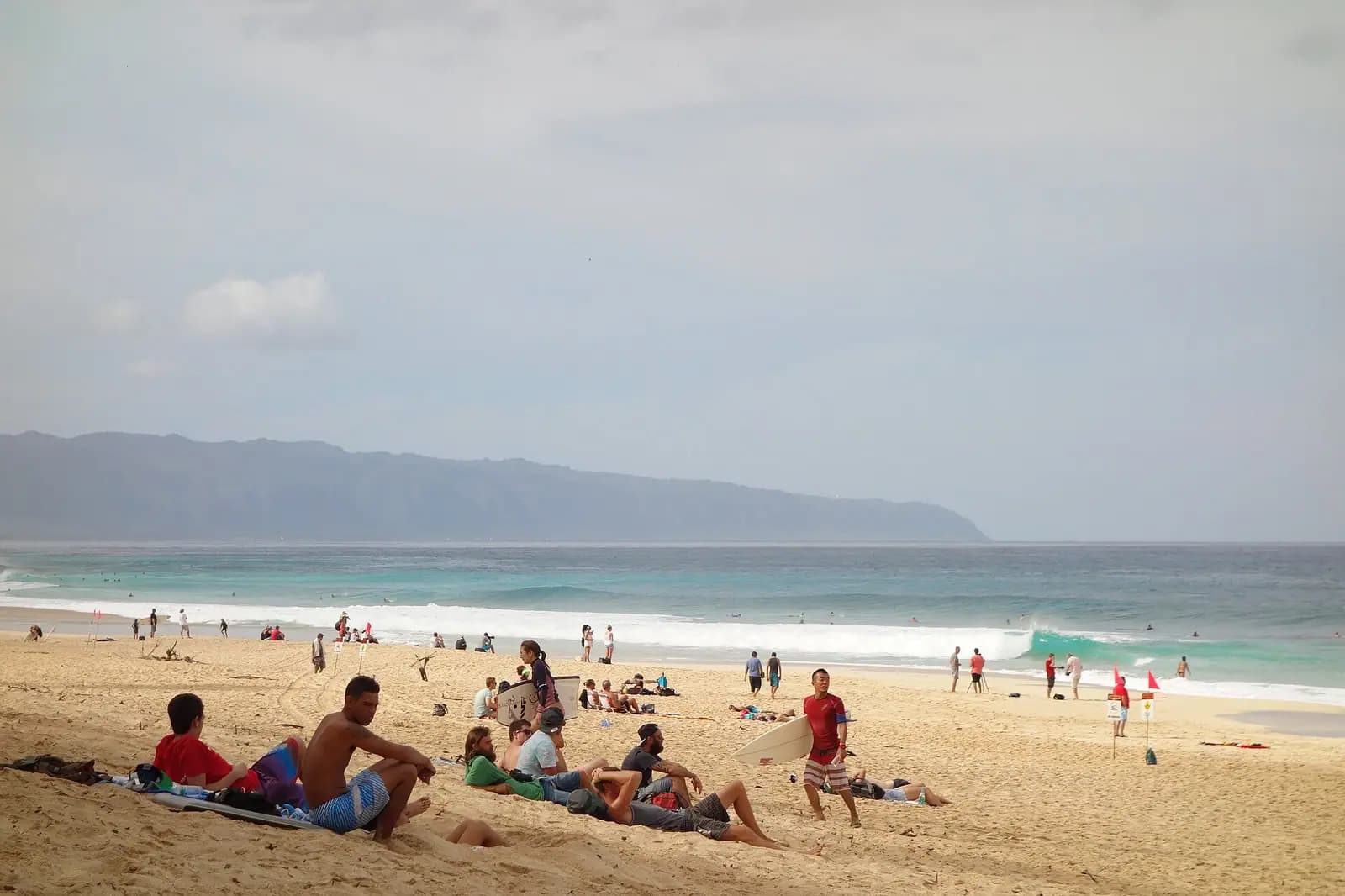
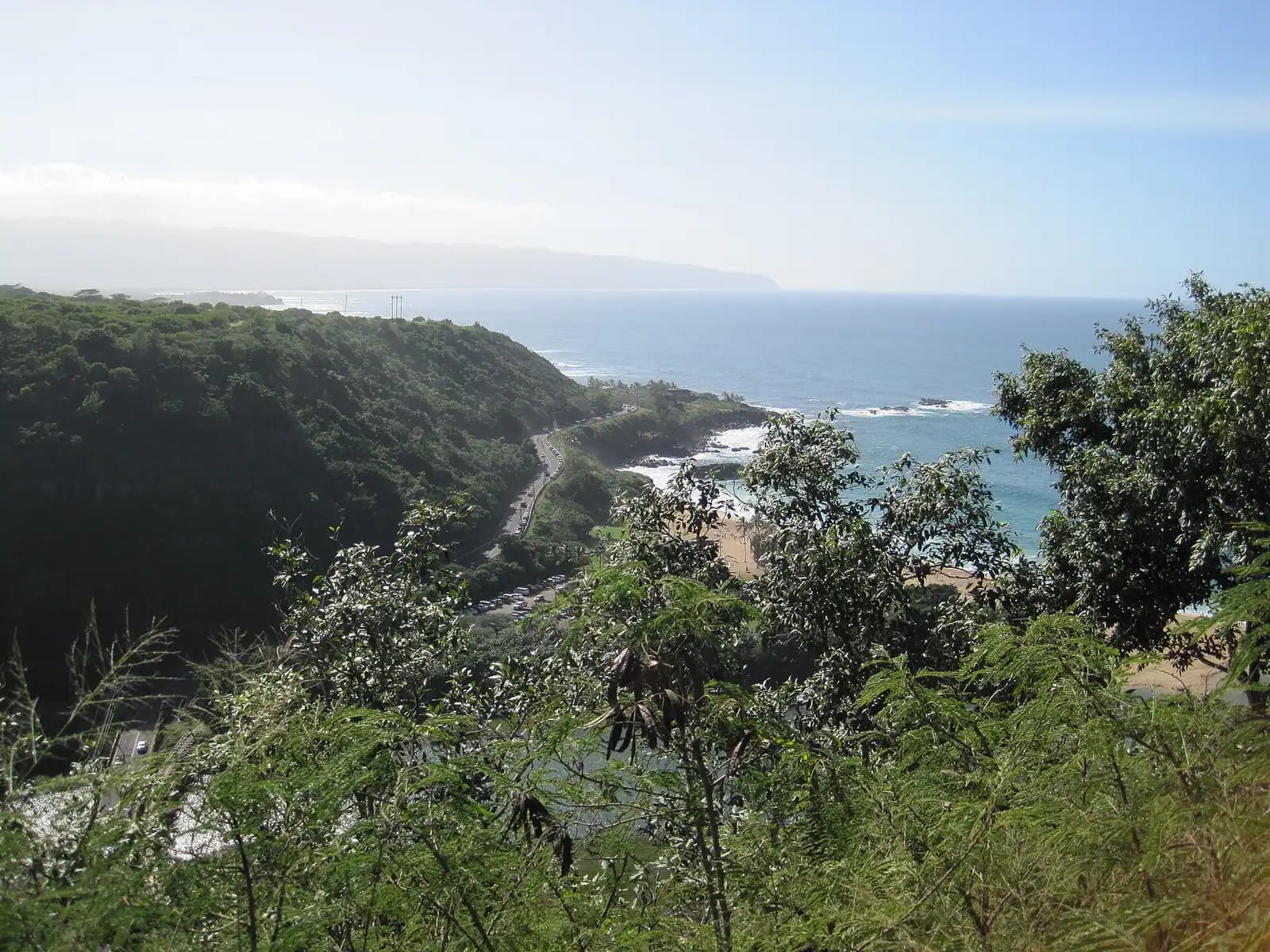
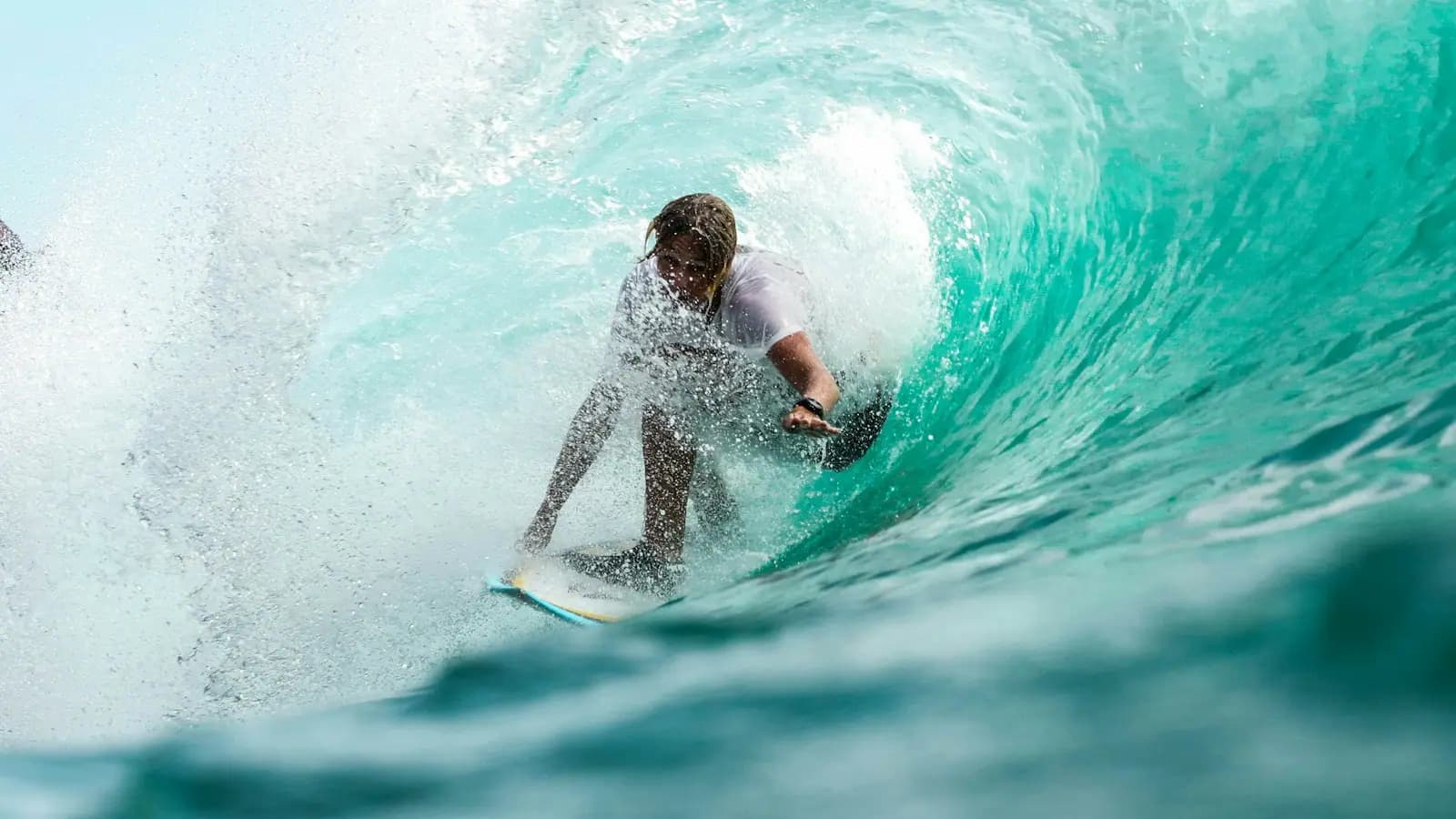
Waimea Bay Beach Park. Free lot, lifeguards, restrooms. A swimming bay with a jumping rock in summer; in winter the best free viewing gallery for big-wave surfing anywhere.
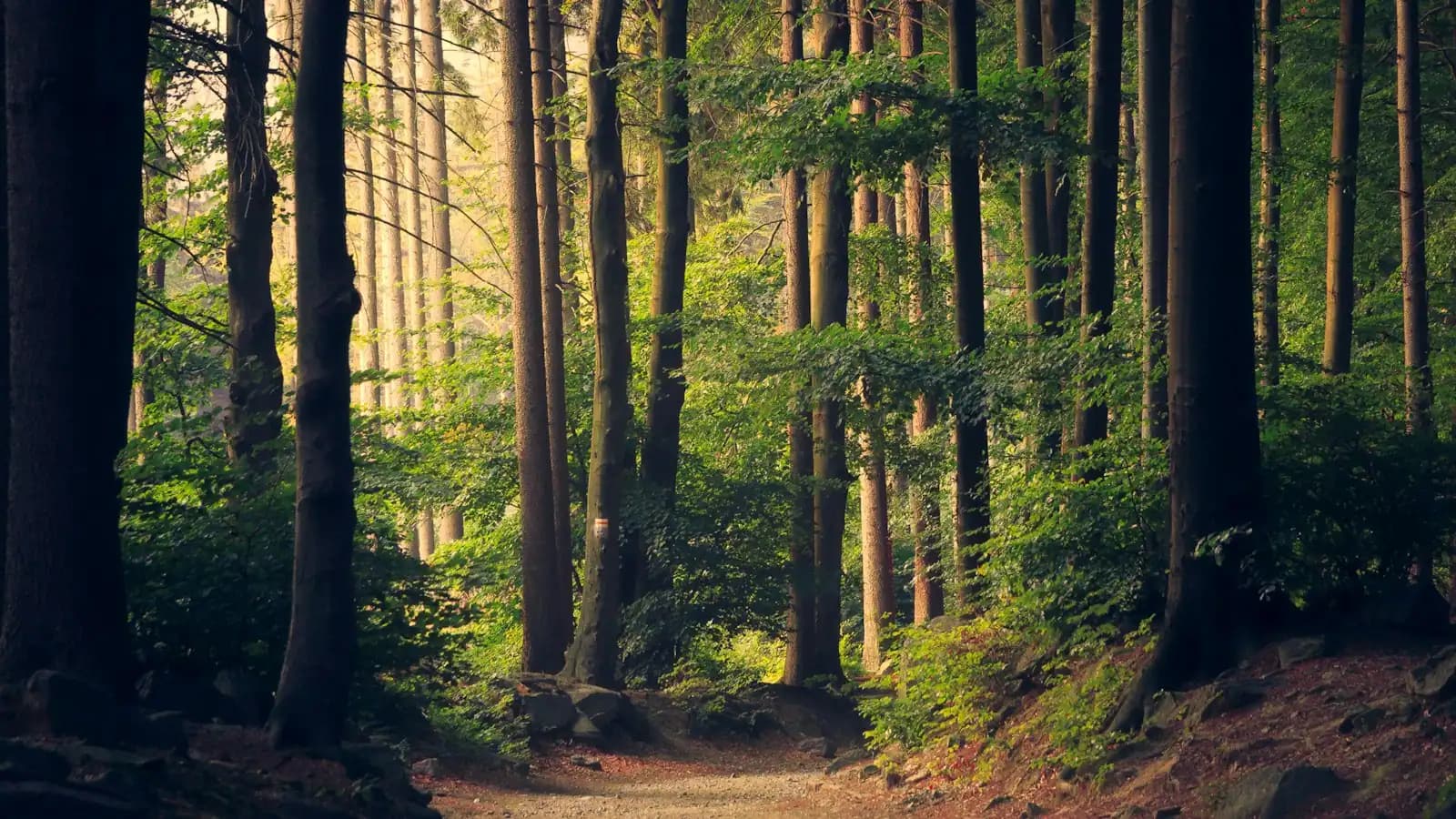
Puʻu o Mahuka Heiau State Historic Site. Up Pūpūkea Road above the bay. The largest heiau on Oʻahu, roughly two acres of stacked stone enclosures, free, with a short level path and a view down over Waimea. A sacred site still in use — stay outside the walls.
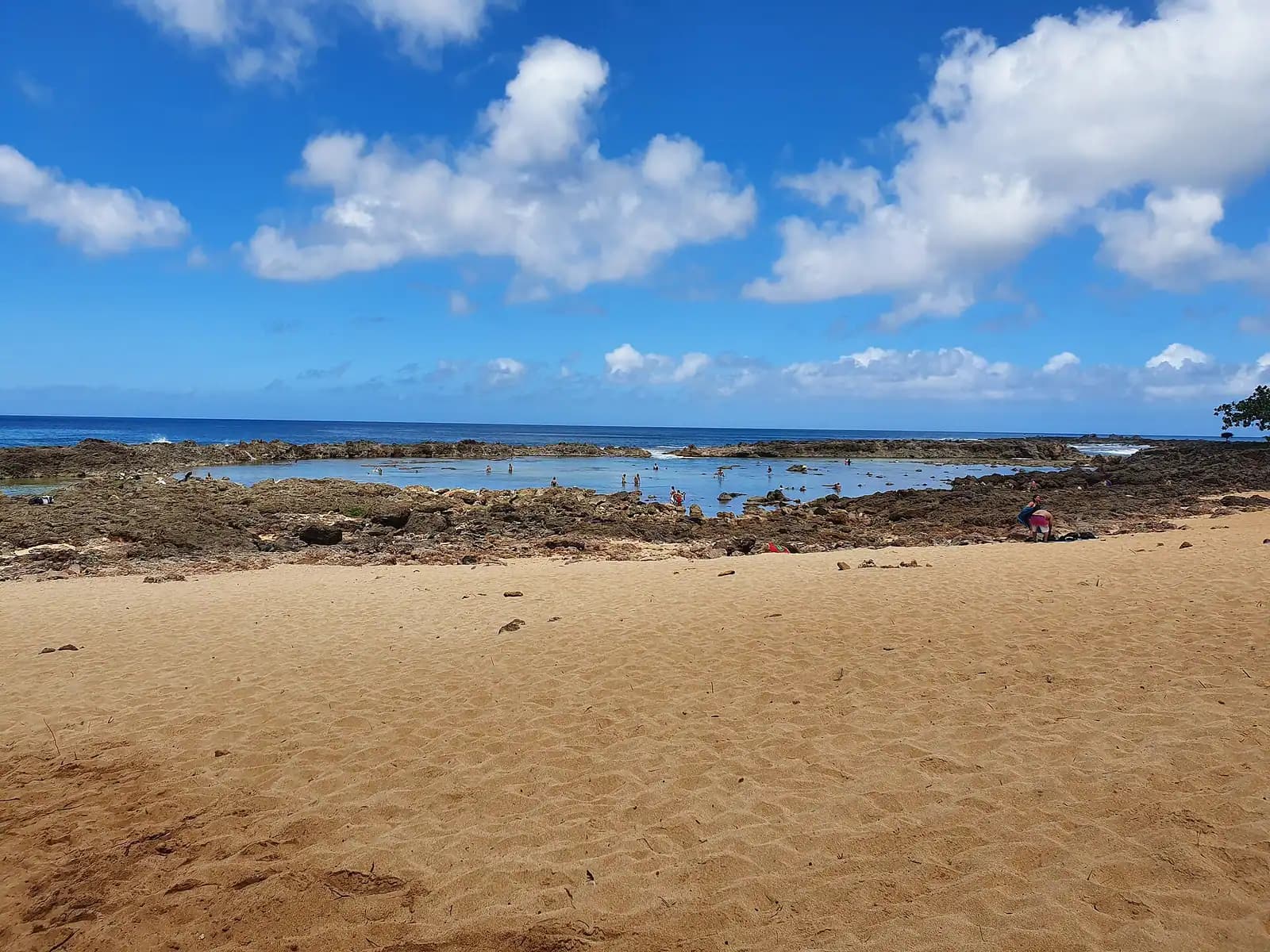
Shark's Cove and Three Tables. The Pūpūkea Marine Life Conservation District, free to enter and the best shore snorkelling on this coast from roughly May to September. Bring your own mask and water shoes.
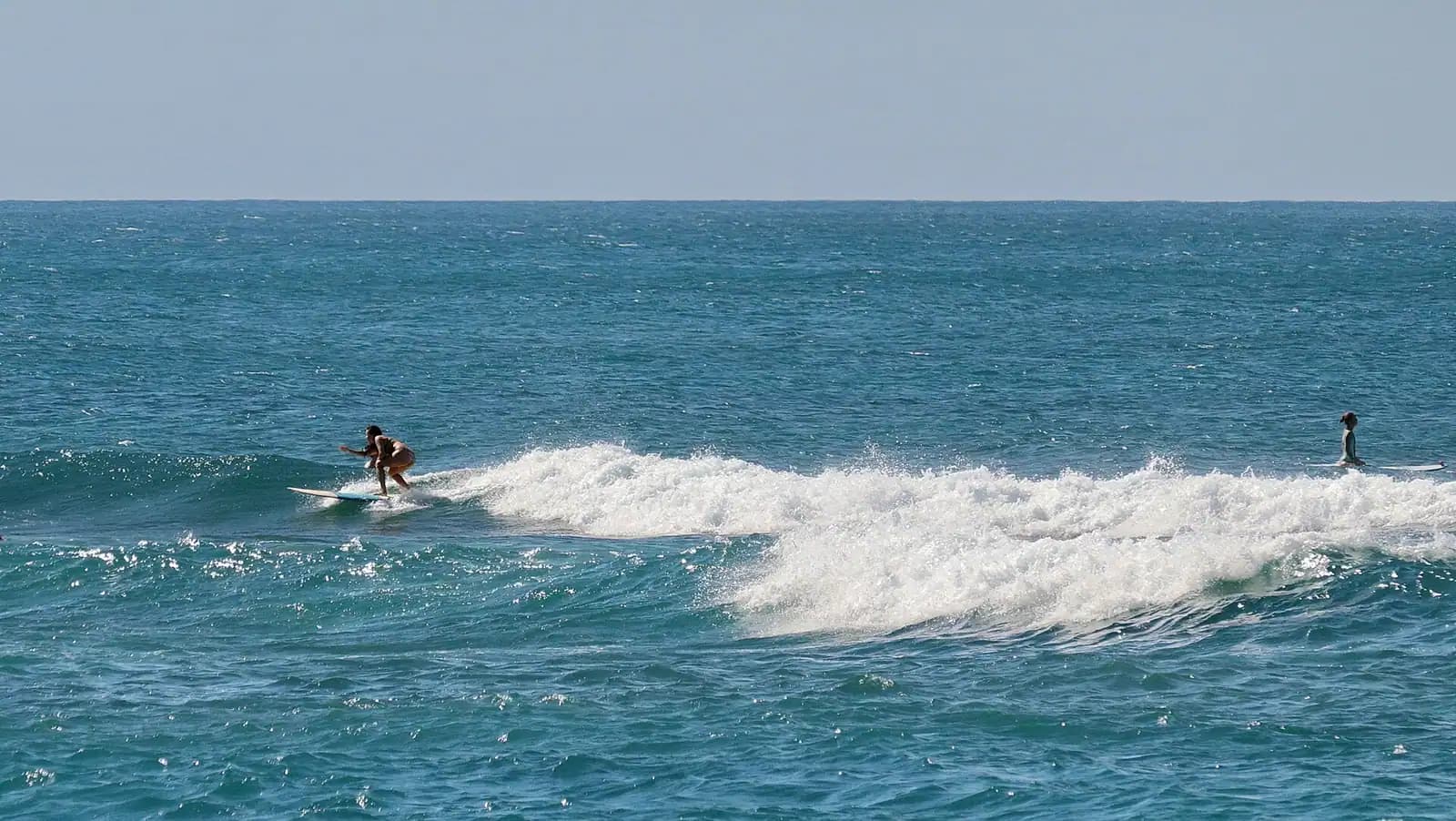
Ehukai Beach Park and Sunset Beach. Free lots, lifeguards, and in winter the two best places in the world to watch surfing from dry sand.
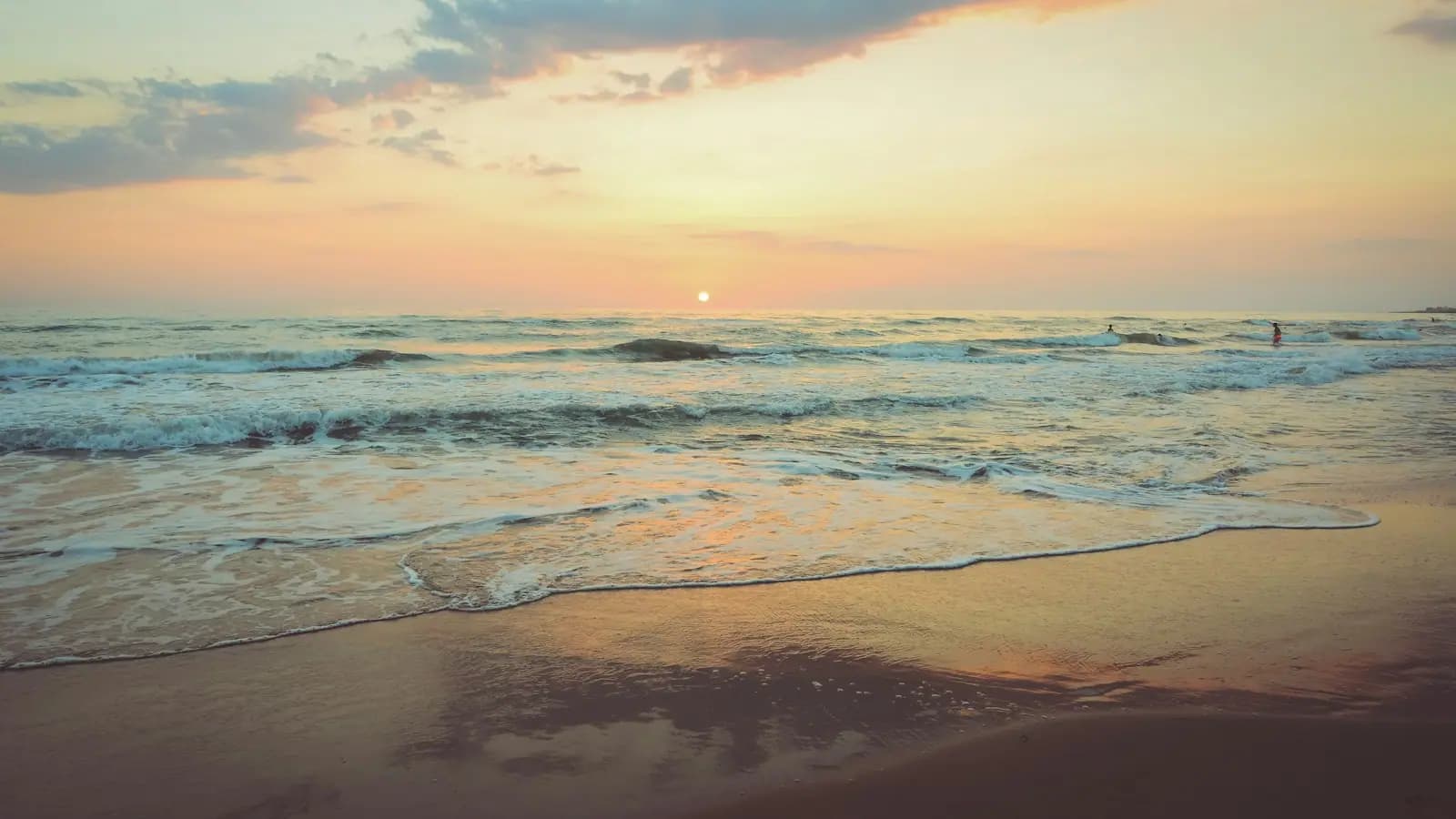
Kahuku Point, Mālaekahana and Lāʻie Point. Walking access round the northeastern corner past Turtle Bay, sheltered sand near Lāʻie, and a basalt headland with a sea arch reached through a residential street.
Then west from Haleʻiwa: Waialua's old sugar mill buildings, the Mokulēʻia beaches where nobody is, the polo fields, and the gliders over Kawaihāpai Airfield. And at the end of the road, the two-and-a-half-mile track to Kaʻena Point.