Skip to content
Search
Menu

We earn a commission if you book through this link. You pay the same price.

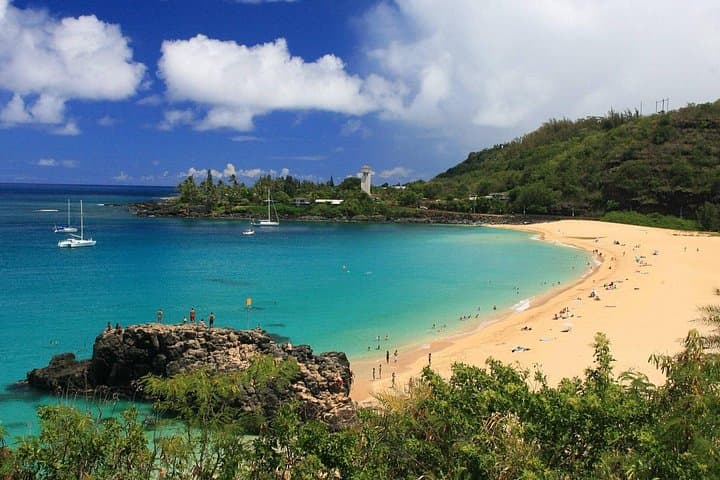
A wide sandy beach with large surf breaking offshore and ironwood trees along the back of the sand
Raita Futo from Tokyo, Japan

Beach

Sunset Beach Park

Last updated

Two miles of sand that swallows swimmers in January and lets you snorkel off it in July, with a car park that fills by nine.

Sunset Beach Park is the county access to the two-mile arc of sand that runs from Sunset Point west towards Ehukai, and it is the best single illustration of the fact that governs this entire coast: the North Shore is two different places depending on the month.

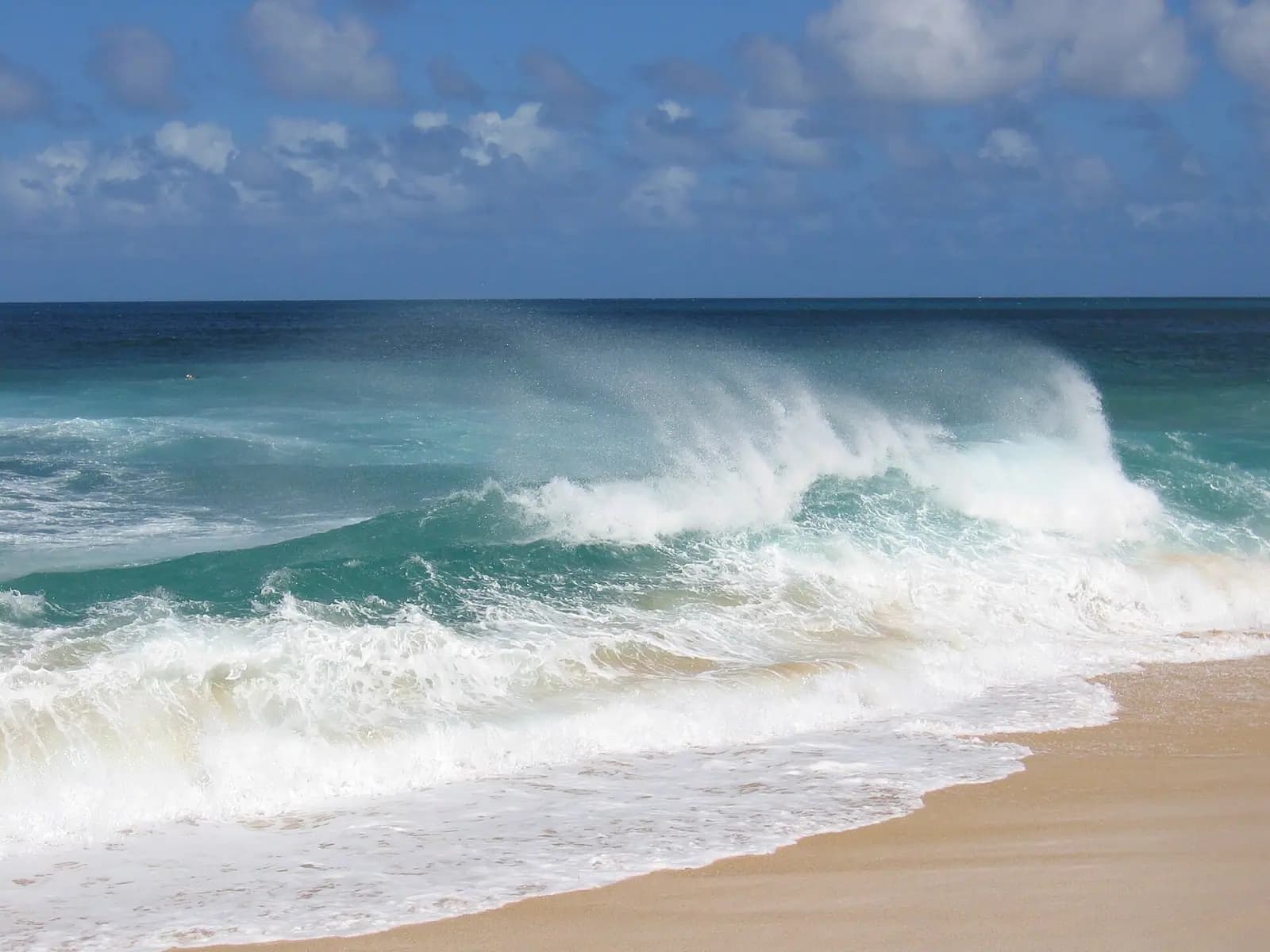
From roughly November to March, the North Pacific sends swell onto an outer reef here and Sunset produces one of the most consequential waves in the world — faces commonly in the fifteen to thirty-foot range on the biggest days, breaking well offshore and reforming inside. The water moves in ways that have no analogue at a normal beach. A powerful rip runs seaward through a channel by the reef, and it is the specific hazard that catches visitors, because the surface over it looks calmer than the whitewater either side. Lifeguards close the water. People still go in, and people drown on this coast every winter.

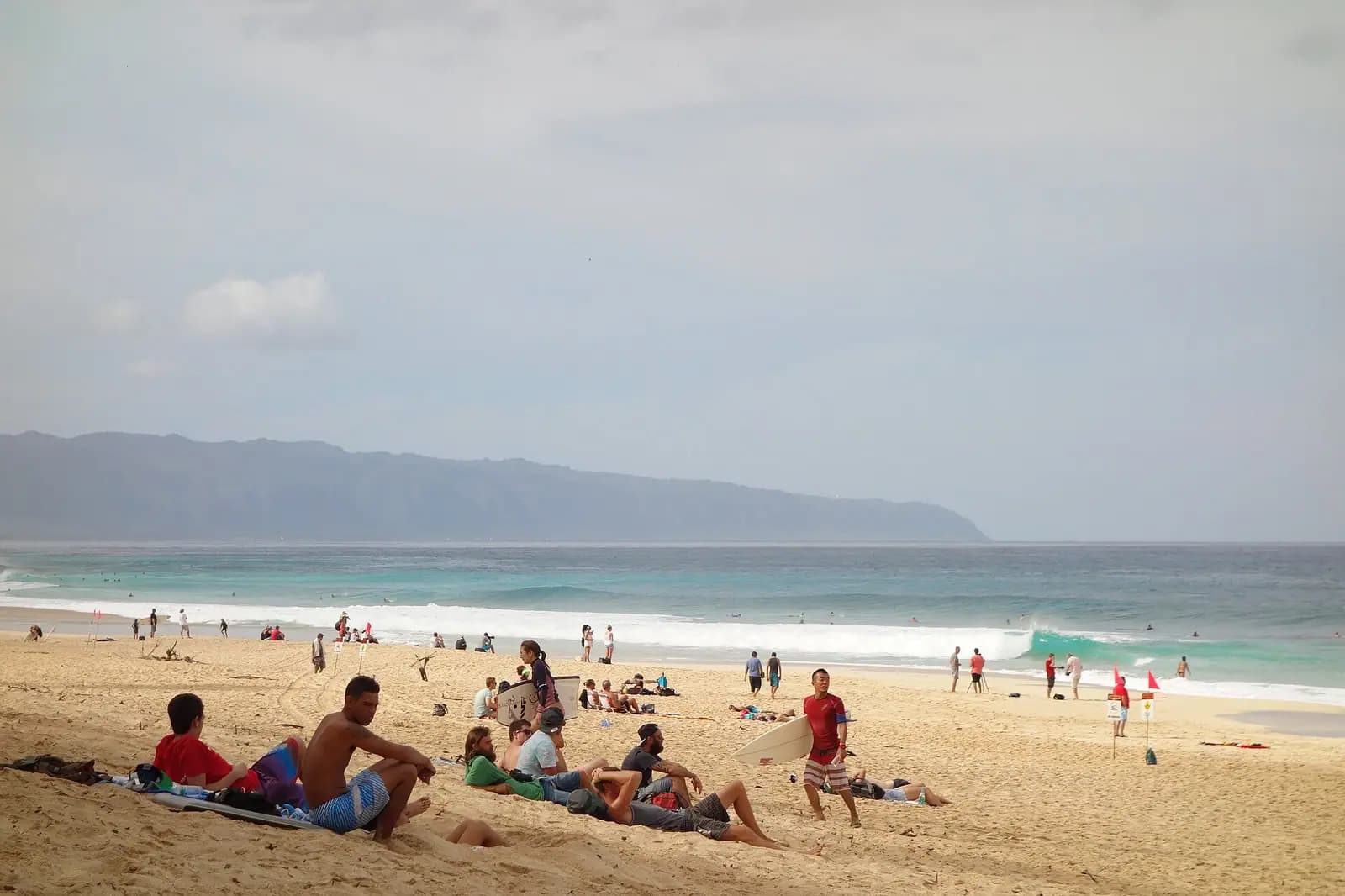
From roughly May to September the same beach is flat. Not calm — flat. The swell has switched to the south side of the island, the sand that winter stripped offshore has rebuilt into a wide, steep berm, and you can swim, snorkel the rocky patches and stand in water that will not do anything to you. The transformation is total and it happens twice a year.

The park itself is practical. There is a lifeguard tower, a small beach-front car park, and — the thing visitors miss — a much larger support park with restrooms across Kamehameha Highway, where most people should actually park. Facilities beyond that are thin: little shade, no concession, no rentals.

In November and December the Vans Triple Crown contest window brings professional surfing and its crowds to this stretch, which is spectacular to watch and impossible to park near. Ted's Bakery is a mile south.

Getting there and parking

On Kamehameha Highway between Pūpūkea and Turtle Bay, with a small beach-front lot and a larger support park lot with restrooms across the highway, which is where most people should park.

From Haleʻiwa — east about twenty minutes past Laniākea, Waimea and Pūpūkea. Longer when turtle traffic backs up at Laniākea, which is most days in the middle of the day.

From Turtle Bay — west about ten to fifteen minutes.

From Waikīkī — roughly an hour and a quarter via the H-2, Wahiawā and Haleʻiwa, plus the Haleʻiwa bottleneck.

TheBus route 60 runs along Kamehameha Highway past the beach between Haleʻiwa and Kahuku. It is slow but it works, and on a contest day it is considerably better than driving.

Roadside parking along the highway is normal here. Get fully off the tarmac — this is a fast two-lane road — and do not block driveways or the marked beach access ways between houses. If you park inland, cross the highway carefully; traffic moves quickly and this is the most dangerous part of the visit.

Leave nothing of value in the car.

The two seasons, and which one you are in

Nothing else on this page matters as much as this.

Winter, roughly November to March. North and northwest swells arrive from storms thousands of miles away and break on the outer reef. Wave faces run large and irregular — an hour of moderate surf can be followed by a set two or three times bigger, and that inconsistency is what gets people. The rip here runs out through a channel and moves faster than anyone can swim against. Lifeguards fly warning flags and close sections of water. Waves wash across the beach berm and up to the highway on the biggest days, and the shoreline erodes.

Do not enter the water in winter. Not to your knees at the shoreline, not to take a photograph, not because it looks fine from the sand. Shorebreak on a steep winter berm can knock an adult down and drag them, and this beach has a documented history of exactly that.

Summer, roughly May to September. The north swell disappears entirely. The beach is wide and the water is often glassy. Swimming is genuinely pleasant, there is snorkelling over rocky patches, and honu sometimes rest on the sand.

Spring and autumn are the transitions, and they are the least predictable. A big swell can arrive in October or April with little warning.

Check before you go. The National Weather Service posts High Surf Advisories and Warnings for the north shores of Oʻahu and the lifeguards' flags on the beach are the authority on the day. If the tower says out, the answer is out.

Parking, and the lot most people miss

There are two lots and the one you want is probably not the one you tried.

The beach-front lot on the seaward side of Kamehameha Highway is small — a few dozen spaces — and it fills early, from around nine in season and earlier on a contest day or a big-swell weekend.

Sunset Beach Support Park, across the highway inland, is the larger facility, with restrooms, a field and considerably more parking. This is the practical answer, and it is the one visitors overlook because it does not look like a beach car park.

Roadside parking exists along Kamehameha Highway on this stretch and it is how everyone else does it. Two rules: get fully off the tarmac, because this is a fast two-lane highway, and do not block a driveway or a beach right-of-way between the houses.

Crossing the highway. If you park inland you are walking across a road where vehicles do not always do the speed limit. Do it at a marked crossing where one exists, and hold children's hands. This is a genuinely more dangerous part of the visit than it sounds.

Vehicle break-ins happen along this coast. Leave nothing visible, leave nothing in the boot, and consider leaving the car unlocked with nothing in it, which is what a number of residents do.

Contest days — during the November–December window — make all of the above impossible. If a contest is running, park in Haleʻiwa or Pūpūkea and take the shuttle if one is operating, or come another day.

Watching the contests, if you time it right

This beach is a professional surfing venue, and the winter contest period is either the best or the worst reason to come, depending on what you want.

The Vans Triple Crown of Surfing has historically run its first leg here at Sunset, with subsequent legs at Haleʻiwa and Pipeline. The format, the sponsors and the venue list have changed over the years, so check the current season's schedule rather than relying on what you remember.

What matters practically is the holding period. Contests are not run on fixed dates. Organisers hold a window — typically several weeks across November and December — and call the event on with a day or two of notice when the swell arrives. That means:

  • You cannot plan a trip around watching a specific heat. You can plan a trip into the window and hope.
  • When a contest is called on, the coast fills. Kamehameha Highway becomes a car park, the beach lots are shut to general parking, and the drive from Waikīkī can take two hours.
  • When it is not running, this is a quiet beach in big surf, which is arguably the better spectacle: you get the waves, the North Shore's own surfers and none of the scaffolding.

If you do come for a contest: arrive very early, bring shade and water, expect to sit on sand all day, and accept that the best view is often from the sand well back rather than at the water's edge.

What is and is not here

Sunset Beach Park is a county beach park, not a resort beach. Set expectations accordingly.

Here:

  • A lifeguard tower on the beach. Read the flags. Ask the guards — they will tell you plainly whether to go in, and they are the best source of information on this coast.
  • Restrooms at the support park across the highway.
  • Outdoor showers for rinsing off.
  • A grass field at the support park, useful for children and for eating lunch off the sand.

Not here:

  • No concession, no café, no rentals. Nothing is for sale at this beach.
  • Very little shade. A strip of ironwood in places, and otherwise nothing. Bring your own.
  • No boardwalk or beach matting, and the berm can be a steep drop in some seasons.

Bring: water, shade, reef shoes if you plan to be in the rocky areas in summer, and food. The nearest supplies are Foodland at Pūpūkea, a few minutes west, and Ted's Bakery a mile south, both of which close earlier than you expect.

Turtles haul out on this sand. If a honu is resting, federal guidance is to stay at least ten feet back, and volunteers will rope off a resting turtle. Do not crowd it for a photograph.

The sunset, which does live up to it

The beach faces broadly northwest, which on Oʻahu is an unusually good aspect: you get the sun going down over open ocean with nothing between you and the horizon, and no buildings, no hotel towers and almost no development in the frame.

Autumn and winter push the sunset further round to the southwest and produce the more dramatic skies, because that is when there is weather in the atmosphere to catch light. Summer sunsets are later and cleaner.

Three practical notes. The sun sets quickly at this latitude — the gap between "that looks nice" and full dark is shorter than people from higher latitudes expect, generally under half an hour of usable light after the sun touches the water. Bring a torch if you are walking back to a car parked on the highway shoulder. And the mosquitoes come out of the ironwoods at dusk.

The wider truth is that you are spoilt for choice along this coast and Sunset is simply the most convenient: Waimea Bay, Mokulēʻia, Haleʻiwa harbour and the whole run of highway between them all deliver the same horizon. Pick whichever you are nearest when the light starts going, rather than driving to a specific beach for it.

Vog — volcanic haze blown up from Kīlauea on Hawaiʻi Island — occasionally drifts across the state and, perversely, produces the most saturated sunsets of the year while making the air worse to breathe.

Tours that visit Sunset Beach Park

Operators run these trips past Sunset Beach Park, or stop there as part of a longer route. We list what the booking data supports — not everything that mentions the name.

Some links below go to Viator, our booking partner. We earn a commission on bookings made through them — at no extra cost to you, and with no influence on what we recommend.

  • Oahu: Full or Half Day Grand Circle Island Tour
    Free cancellationInstant confirmation

    Plantation Tours

    Oahu: Full or Half Day Grand Circle Island Tour (opens in a new tab)

    19.5K reviews

    Choose from two exciting ways to experience Oahu's top attractions, scenic beauty, and local culture. Option 1: Dole Plantation & Haleiwa…

    6–7 hours

    Prices checked

    from $100
  • Parasailing Experience in Waikiki, HI
    Free cancellationInstant confirmation

    Low Supplier Cancellation Rate

    Parasailing Experience in Waikiki, HI (opens in a new tab)

    8.9K reviews

    Experience the thrill of Oahu parasailing on this unforgettable 1-hour adventure from Waikiki. Soar up to 1,000 feet above the stunning…

    1 hour

    Prices checked

    from $44
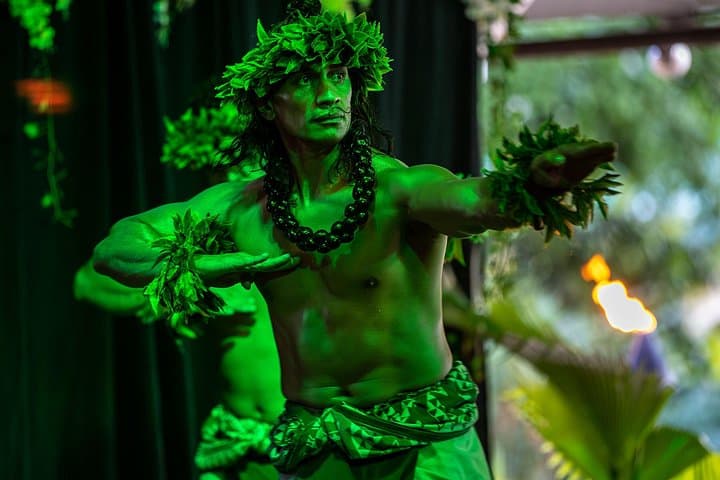
  • Roland dancing Hawaiian Kahiko
    Free cancellationLikely to sell out

    Curated Catalog

    Toa Luau at Waimea Valley, Oahu (opens in a new tab)

    3.8K reviews

    Toa Luau invites you to immerse yourself in the beauty and excitement of Polynesia on Oahu’s historic North Shore! Book any one our 3 Luau…

    3 hours

    Prices checked

    from $145
  • WAIMEA BAY
    Free cancellationInstant confirmation

    Low Supplier Cancellation Rate

    Oahu: Grand Tour Around Island with Snorkeling (opens in a new tab)

    11.1K reviews

    Come join on a circle island adventure led by some of Hawaii’s most knowledgeable local guides and experience breathtaking lookouts to…

    Full day

    Prices checked

    from $89

Near Sunset Beach Park

Straight-line distances, so allow more on the road — the island is long and has one main parkway.

  • Low sun dropping towards the ocean at the end of a long open beach
    Free

    Beach

    Sunset Beach

    Two miles of sand the winter ocean removes and the summer ocean puts back, with the coast's most notorious rip running through it.

    1–4 hoursFree, with a free lot that is larger and more reliable than anything else on this stretch.260 ft away

  • A slice of layered cream pie with a dark chocolate band and a white coconut layer beneath

    Dining district

    Ted's Bakery

    A roadside bakery counter near Sunset Beach whose chocolate haupia pie is the most exported thing on this coast.

    20–45 minutesCounter service. A slice of pie is a few dollars; a plate lunch is a cheap, large meal by any standard. Whole pies are sold to take away.0.5 mi away

  • A wide, near-empty beach backed by ironwood trees on a calm summer afternoon
    Free

    Beach

    ʻEhukai Beach Park

    The small county park you stand in to watch Pipeline — and, for four months of the year, an ordinary swimming beach almost nobody visits.

    1–4 hoursFree. Parking is free too, but the lot is very small and fills at dawn whenever there is surf.1 mi away

  • A surfer inside the barrel of a hollow wave breaking over shallow reef
    Free

    Water feature

    Banzai Pipeline

    A hollow left breaking over shallow lava a short paddle offshore: the most dangerous wave in surfing, and a free grandstand in December.

    1–3 hoursFree to watch from ʻEhukai Beach Park. Parking is free but there is very little of it.1 mi away

Sunset Beach Park: common questions

Can you swim at Sunset Beach?

In summer, yes. From roughly May to September the north swell disappears, the sand rebuilds into a wide berm and the water is often glassy and genuinely pleasant. From roughly November to March, no. Winter surf here runs to very large faces breaking on an outer reef, a powerful rip runs seaward through a channel, and lifeguards close the water. People drown on this coast every winter. Read the flags and ask the tower.

Where do you park at Sunset Beach Park?

Two lots. The small beach-front lot on the seaward side of Kamehameha Highway fills from around nine in season. The one most visitors miss is Sunset Beach Support Park inland across the highway, which is larger and has the restrooms. Roadside parking along the highway is normal — get fully off the tarmac and do not block driveways or the marked beach accesses between the houses.

When is the Vans Triple Crown at Sunset Beach?

The contest period falls across November and December, but events are not run on fixed dates. Organisers hold a window of several weeks and call an event on with a day or two of notice when the swell arrives, so you can plan a trip into the window but not around a specific heat. When a contest is called on, the coast fills, beach parking closes to the public and the drive from Waikīkī can double. Check the current season's schedule.

How big do the waves get at Sunset Beach?

Faces commonly in the fifteen to thirty-foot range on the biggest winter days, breaking on an outer reef well offshore and reforming inside. The number matters less than the inconsistency: an hour of moderate surf can be followed by a set two or three times larger, which is what catches people standing at the water's edge. Waves wash up the berm to the highway on the largest days.

Is Sunset Beach good for watching the sunset?

Yes, and unusually so — it faces broadly northwest over open ocean with no buildings, hotel towers or development in the frame. Autumn and winter give the more dramatic skies. Two practical notes: the light goes fast at this latitude, generally under half an hour of usable time after the sun touches the water, and mosquitoes come out of the ironwoods at dusk. Bring a torch if you parked on the highway shoulder.