Free
Beach
Waimea Bay
Flat enough to swim across in July, closed by thirty-foot faces in January. The North Shore's seasonal flip at its most extreme.
1.5–5 hoursFree, including parking. The lot is small and fills early.

Plan your trip
Driving Oʻahu's North Shore: two routes up from Waikīkī, which car parks fill first, TheBus route 60, rideshare after dark and the etiquette locals notice.
North Oʻahu is one road. Kamehameha Highway, signed Route 83 along this coast, carries every vehicle from Haleʻiwa round Kahuku Point to Lāʻie and on down the windward side, and there is no parallel route. When a truck stalls, when there is a crash, or when the police close a lane for a high-surf rescue, there is no detour — there is a queue. Understanding that one fact explains almost everything else about moving around up here.
It also explains the two things visitors complain about. The first is the Haleʻiwa queue: a short signalised stretch of town that every vehicle heading to this coast funnels through, which on a summer weekend or a contest day can add half an hour in each direction. The Joseph P. Leong Highway bypass now carries through traffic around the town centre, which has helped, but the coast road beyond it is still two lanes and still the only option. The second is parking, and the parking story on the North Shore is not price — almost every lot here is free — it is capacity. There are perhaps six proper car parks on the whole Seven Mile Miracle and they fill before mid-morning in summer, and before eight on a big winter swell.
You need a car. That is the honest answer for almost every itinerary, and the reason is a map rather than a preference. Everything worth stopping for is strung over roughly thirty miles with gaps too long to walk, and the car is where your towels, water and dry clothes live. Pick it up at Honolulu's airport, because there is no meaningful rental counter on the North Shore itself. Take the smallest car you can live with — the lots at Waimea, Laniākea and Sunset are tight and the roadside parking tighter.
The alternatives exist and are worth stating properly rather than dismissing. TheBus route 60 runs from Honolulu up the windward side through Kāneʻohe to Kahuku and Haleʻiwa; residents commute on it daily and it is real transport. It is also roughly two to three hours each way from town, and the stops are on the highway rather than at the sand. Rideshare works around Haleʻiwa, Pūpūkea and Turtle Bay in daylight and thins badly at night, because there are not many drivers living on this coast. A guided van is a legitimate choice rather than a compromise, especially for a first visit without a car.
Two pieces of advice sit above everything else on this page. Drive up one way and back the other — the freeway route through Wahiawā and the coast route through Kualoa and Lāʻie show you two different islands for the price of one. And plan the last stop of your day for before the light goes, because the drive back down is unlit two-lane road whichever way you take it.
Almost every car park on this coast is free and almost all of them are too small. That is the whole story.
Waimea Bay Beach Park has the one proper lot on the Seven Mile Miracle, with lifeguards and restrooms. It fills before ten in summer and earlier on a big winter swell. When it is full, cars spill onto the highway shoulder, which is both a ticketing risk and the reason the queue through the bay exists.
Laniākea has no formal lot at all, only a dirt pull-off on the mountain side of a fast two-lane road, from which people cross on foot to reach the turtles. If the pull-off is full, keep driving.
Ehukai Beach Park, for Pipeline, has a modest lot behind the beach that is gone by mid-morning through the surf season. Sunset Beach has a lot plus roadside space that empties and fills in waves as surfers come and go, so it is worth a second pass.
Shark's Cove parks across the road from the reef, with restrooms, sharing the lot with the food trucks. In summer it is the busiest small lot on the coast.
Haleʻiwa town has small lots behind the shops and a larger one at the harbour end. Park once and walk; it is a few hundred yards end to end.
The ticketed places — Waimea Valley, the Polynesian Cultural Center, Dole Plantation, Kualoa Ranch — all include parking, which makes them the easy days. Turtle Bay marks public beach-access stalls, because every beach in Hawaiʻi is public; there are not many and they go early.
One rule everywhere: leave nothing visible in the car. Break-ins at beach lots and trailheads are a known problem here, and moving a bag to the boot in the car park is not hiding it.
Oʻahu's public bus does reach this coast and it is genuine transport rather than a novelty. Route 60 runs between Honolulu and the North Shore by way of the windward coast — Kāneʻohe, Kaʻaʻawa, Lāʻie, Kahuku, Turtle Bay — and on to Haleʻiwa, which is exactly the road every car takes. Residents commute on it daily.
What it is good for: reaching Haleʻiwa town without a car, getting to Lāʻie and the Polynesian Cultural Center from the windward side, and moving along the coast between Haleʻiwa and Kahuku if you are already up here and do not want to drive.
What it is not good for: visiting six beaches. Journey times from town run to two or three hours each way depending where you start and whether you transfer, the stops are on the highway rather than at the sand, and frequencies are what you would expect on a rural route. A day that involves the bus is a day with one or two destinations in it.
Fares and the HOLO card. Single adult fares are low — recently around three dollars with a HOLO card, marginally more in cash — and the card gives a transfer window on one tap, plus daily and monthly caps. Buy one before you start rather than feeding coins on the highway. It also covers the Skyline rail across the leeward plain, though the rail has nothing to do with this coast: there has never been a passenger railway to Haleʻiwa, and the old Oʻahu Railway alignment along the Waialua coast is now a dirt track.
Practical notes. Surfboards are not welcome on TheBus, luggage rules are restrictive, and the last services back are earlier than visitors expect. Check the current timetable for the day you travel rather than assuming a headway.
Local tips
Three logistical facts that shape a day up here more than any of them should.
Fuel is limited and dear north of Haleʻiwa. There are a handful of stations on the whole coast and they price like the end of a supply line. Fill up in Wahiawā or in Honolulu before you come, and keep the tank above half if you are staying — a detour for petrol from Pūpūkea is a real chunk of an afternoon.
Groceries are the same story. There is a supermarket at Pūpūkea and small stores elsewhere, and they cost what an island thirty miles from the nearest big-box store costs. If you are here for a week, do the main shop on the way in.
Kitchens close early. This is the adjustment that surprises everybody staying on the coast. Most places stop serving well before nine and Haleʻiwa is quiet by then. Outside the resort at Turtle Bay there is very little that will feed you at half past eight. Eat at six, or keep something in the fridge.
The last-stop rule. Plan the final stop of the day for before sunset. The highway is unlit for long stretches in both directions, the beach lots empty out, rideshare thins, and the drive back down over the top through Wahiawā or along the windward coast is an hour of dark two-lane road when you are tired and salty. Sunset is the natural end of a North Shore day, not the middle of one.
Two more things to carry. Water, because there is nowhere to buy it between stops on the western end. And cash in small notes, because some of the food trucks and roadside stands do not take cards.
Local tips
It is a mixed picture, and worth sorting before you drive an hour to find out.
The most usable places are the ticketed ones. Waimea Valley's main route to the falls is a paved, gently graded path through the botanical collection, which makes it the best long walk on this coast for a wheelchair, a walker or a pushchair, and the garden runs a shuttle for visitors who need it. The Polynesian Cultural Center at Lāʻie is a large, level, purpose-built site with accessible paths, seating and restrooms throughout. Dole Plantation's train and gardens are level. Kualoa Ranch's bus tours load from flat ground, although the ATV and horseback products are not adapted.
The beaches are harder. Waimea Bay, Haleʻiwa Beach Park and Sunset Beach have paved lots, restrooms and short approaches, but the last stretch to the water is soft sand at all of them. Beach-wheelchair provision on Oʻahu is arranged through the city's Ocean Safety programme and individual lifeguard towers rather than as an island-wide scheme, so call ahead rather than assuming one will be waiting.
Not suitable for most mobility needs. Shark's Cove and Three Tables are reached over sharp, uneven lava in any season. Laniākea has no path, no facilities and a highway crossing. The track to Kaʻena Point is two and a half miles of rutted, unshaded former railbed each way. The climb to the Ehukai pillboxes is a steep, root-laced trail.
Puʻu o Mahuka Heiau is a short level path from a small lot with firm ground — one of the few free sites here that works for limited mobility.
Transport. TheBus vehicles are accessible, but the stops here are highway-side with no pavement in places. A pre-booked private transfer with a specified vehicle is the more reliable answer.
Book it
We could not find tours matching this right now
Nothing came back for North Shore tour. Operators add and retire experiences constantly, so this list changes week to week. Try a broader category, or come back in a day or two.
How they compare
From Waikīkī or the airport there are two ways onto this coast, and they are not interchangeable.
| The freeway route | The windward coast route | |
|---|---|---|
| The roads | H-1 to H-2, then Kamehameha Highway (Route 99) through Wahiawā | Kamehameha Highway (Route 83) up the east side through Kāneʻohe |
| To Haleʻiwa | About 33 miles, roughly 55 minutes | About 47 miles, roughly 95 minutes |
| What you pass | Dole Plantation and the old pineapple fields | Byōdō-In Temple, Kualoa, Kaʻaʻawa, Lāʻie, Kahuku |
| The driving | Freeway, then two lanes with no shoulder from Wahiawā down | Two lanes almost throughout, slow, the Koʻolau wall alongside |
| Queues where | H-1 and H-2 in commuter peaks; Wahiawā | Kāneʻohe in the morning; Lāʻie at school time |
| Use it for | Getting there fast, and for Dole | The drive itself, and the Lāʻie end |
Do one each way. It costs nothing but the order you see things in. Up the coast in the morning with one stop — Byōdō-In early, or Kualoa if you have booked something — then the Seven Mile Miracle in the middle of the day, then back over the top through Wahiawā. The reverse puts you at Kualoa in better afternoon light.
The western dead end. Farrington Highway, Route 930, runs west from Haleʻiwa through Waialua to Mokulēʻia and the airfield, and then simply stops short of Kaʻena Point. An identically named Farrington Highway stops on the leeward side at Keawaʻula. No road joins them. Crossing means about two and a half miles on foot through the Kaʻena Point reserve, and no hire-car agreement covers the unpaved section.
Before you book
Kamehameha Highway is a residential street that happens to be famous. The driver behind you at seven in the morning is going to work.
Use the pull-offs. If a car is close behind you, let it past at the next legal pull-off — not at the next curve, and not by speeding up. Leading a convoy at twenty-five miles an hour while looking at the ocean is the single most common visitor mistake up here.
Never stop in the traffic lane. Not for a turtle, not for a whale, not for a wave. The shoulder at Laniākea is where the highway backs up for a mile and where pedestrians end up crossing two lanes of moving traffic.
Do not park across driveways or on the grass verge in front of somebody's house at Pūpūkea, Sunset or Kahuku. Cars are ticketed and towed on this coast.
Watch for people crossing everywhere, especially around Laniākea, Shark's Cove and Ehukai, where the lot is on the opposite side from the beach and people cross carrying boards and children.
Slow down through Lāʻie and Kahuku. They are towns with schools, not scenery.
Take your rubbish with you. Bins at the beach parks are few and overflowing bins are a real local grievance.
And the one that costs money: the highway between Wahiawā and Haleʻiwa and the coast road both have long stretches where the limit is lower than the road feels. Speed enforcement on this island is routine.
On the ground
Every place below has its own page — hours, parking, what it costs and what to expect when you get there.
Beach
Flat enough to swim across in July, closed by thirty-foot faces in January. The North Shore's seasonal flip at its most extreme.
1.5–5 hoursFree, including parking. The lot is small and fills early.
Beach
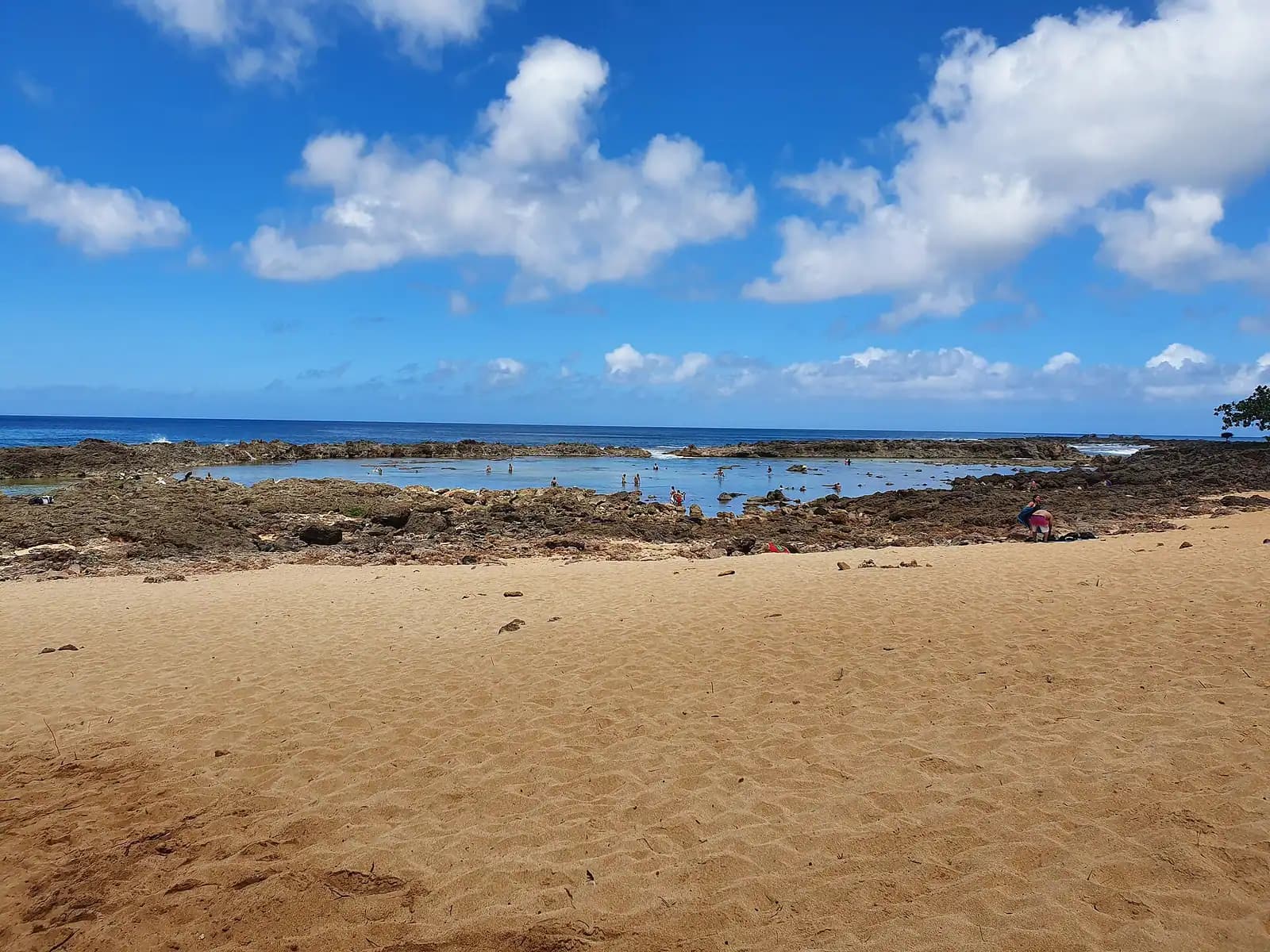
The best shore snorkelling on Oʻahu for four months of the year, and one of the most dangerous places on the island for the other four.
1.5–4 hoursFree, with free parking in the beach park lot and along the highway.
Nature preserve
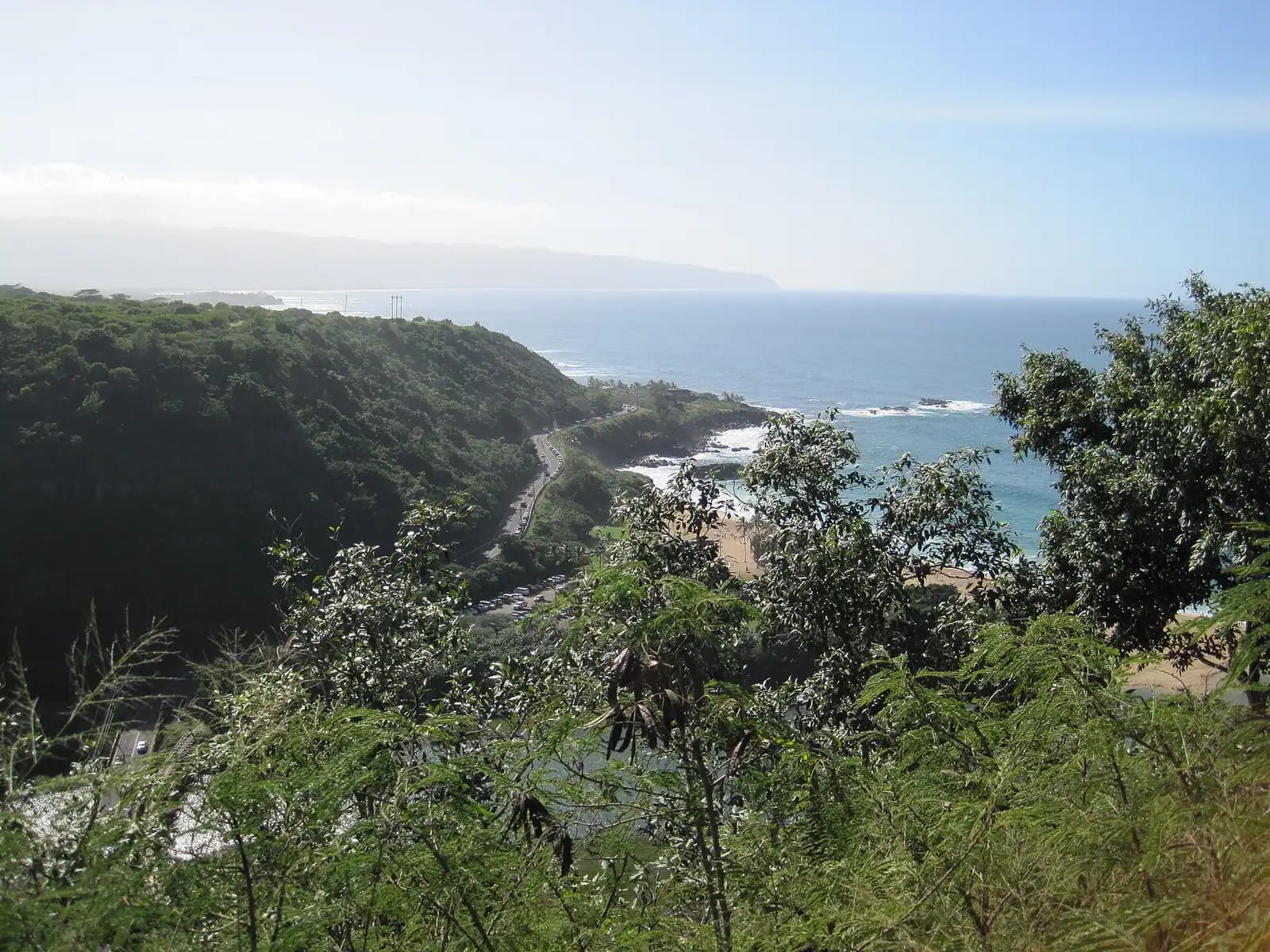
Five miles on foot along an old railbed to the island's northwestern tip, where albatross nest behind a predator-proof fence.
2.5–4 hoursFree. No permit required for day hiking to the point from either trailhead.
Beach
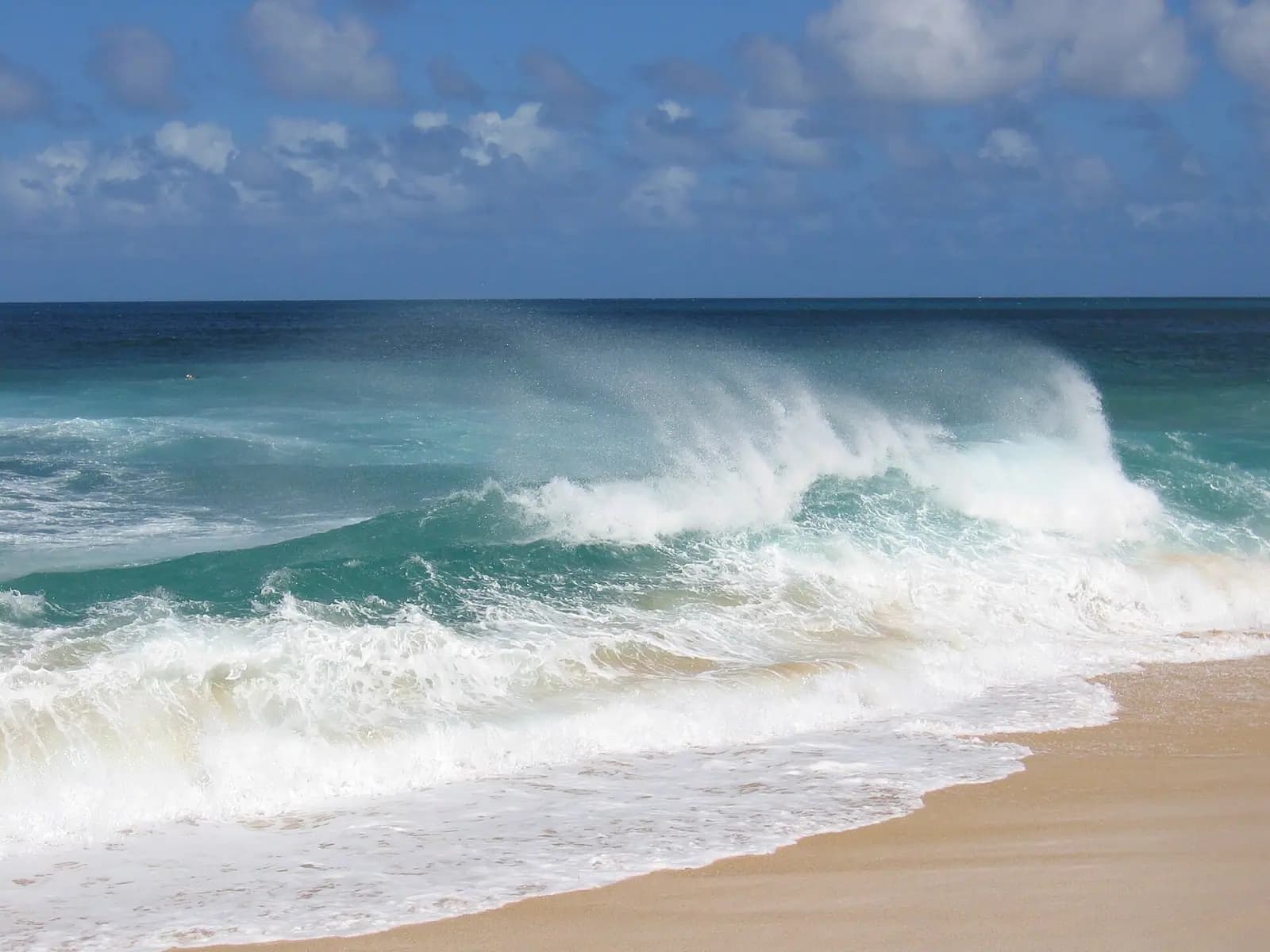
Two miles of sand the winter ocean removes and the summer ocean puts back, with the coast's most notorious rip running through it.
1–4 hoursFree, with a free lot that is larger and more reliable than anything else on this stretch.
Neighbourhood
The coast's only real town, and the traffic jam that decides your whole day. Shave ice, surf shops, galleries, and everything shut by nine.
1–3 hoursFree to visit. Parking is free in the shop lots and on the street.

Dining district
Shrimp farms that grew a kitchen, strung along two miles of a former sugar town. Order it shell-on and accept the garlic.
1–2 hoursFree to visit; you pay for what you eat. A garlic shrimp plate with rice is a mid-range plate-lunch price rather than a snack price.
Wildlife
Green sea turtles haul out on this sand most days: federally protected, roped off by volunteers, ten feet away from you at the closest.
0.5–1 hoursFree. Parking is free, informal and genuinely hazardous.

Beach
The coast's only large resort — and under Hawaiʻi law its best swimming cove and its coastal trails are open to everyone.
2–6 hoursThe beaches and coastal trails are free and public. Golf, riding, dining and spa services are resort-priced.

Landmark
A 1968 concrete replica of an eleventh-century Uji temple, set against the Koʻolau pali inside a working cemetery.
1–1.5 hoursA modest per-person admission, charged at a booth on the way in, with reduced rates commonly offered for children and seniors.

Entertainment
A 1950 fruit stand that became the busiest stop between Honolulu and Haleʻiwa, with a hedge maze and a Dole Whip queue.
1–2.5 hoursGrounds, shop and food counters are free. The train, the maze and the garden tour are each ticketed, with combination tickets available.
Straight answers
For almost every itinerary, yes. Everything worth stopping for is strung over thirty miles of one two-lane highway with gaps too long to walk, and there is no rental counter on the coast itself — pick the car up at Honolulu's airport. The exceptions are a booked tour, or a stay in Haleʻiwa town where you can walk the shops and the beach park. TheBus route 60 works but takes two to three hours each way from Honolulu.
Two ways. The fast route is H-1 to H-2, then Kamehameha Highway down through Wahiawā past Dole Plantation to Haleʻiwa: about 33 miles and roughly 55 minutes when the freeway behaves. The scenic route follows Kamehameha Highway up the windward coast through Kāneʻohe, Kualoa and Lāʻie, about 47 miles and around 95 minutes. Most people should do one each way. TheBus route 60 covers the windward road.
Almost everywhere, yes — the problem is capacity, not price. Waimea Bay, Ehukai, Sunset, Haleʻiwa Beach Park and Shark's Cove all have free lots that fill before mid-morning in summer and earlier on a big winter swell. Laniākea has no lot at all, only a dirt pull-off across a fast highway. The ticketed sites — Waimea Valley, the Polynesian Cultural Center, Dole Plantation, Kualoa Ranch — include parking with entry.
Yes. TheBus route 60 runs from Honolulu up the windward coast through Kāneʻohe, Lāʻie, Kahuku and Turtle Bay to Haleʻiwa, and residents use it daily. Plan two to three hours each way depending on where you start and whether you transfer. Fares are low — recently around three dollars with a HOLO card, slightly more in cash — and the card gives a transfer window on one tap. Stops are on the highway, not at the sand.
Localised and predictable. Haleʻiwa is the constraint: a short signalised stretch every vehicle on this coast funnels through, which on a summer weekend or a contest day can add half an hour in each direction. The Joseph P. Leong Highway bypass takes through traffic around the town centre and has helped. The other choke point is Laniākea, where cars stopping on the shoulder to look at turtles back the highway up.
In daylight, around Haleʻiwa, Pūpūkea and Turtle Bay, generally yes. After dark it thins badly, because there are not many drivers living on this coast and most have come up from town. A wait outside a Kahuku food truck at nine at night can be long, expensive or unanswered. Book the return before dinner rather than after, and use a pre-booked local transfer for airport runs, groups with board bags or late flights.
No. Farrington Highway runs west from Haleʻiwa through Waialua to Mokulēʻia and the airfield, then stops short of Kaʻena Point. An identically named Farrington Highway stops on the leeward side at Keawaʻula. Nothing joins them. Crossing means walking about two and a half miles each way along an old railbed through the Kaʻena Point reserve, and no hire-car agreement covers the unpaved section at either end.
Between 6:30 and 7:00am if you want to park at Waimea Bay. The lots on the Seven Mile Miracle fill before mid-morning in summer and before eight on a big winter swell, and leaving at nine means arriving to full car parks and a queue through Haleʻiwa. Starting early also puts you on the water before the trade winds build, and leaves enough day to be unhurried. Plan the last stop for before dark.
Keep exploring

Guide hub
The North Shore is roughly thirty miles of coast along the top edge of Oʻahu, from the polo fields and the airfield at Mokulēʻia, round Kahuku…

Plan your trip
There are two North Shores, and which one you book decides what kind of holiday you have. This is not a matter of degree, like a rainy season being…
Guide hub
The North Shore's named places are almost all natural, almost all free, and almost all strung in a line along one road. There is no historic…

Guide hub
Oʻahu sells more bookable experiences than any other Hawaiian island — well over a thousand products in the market — and almost all of them are sold…
Things to do
There are two kinds of day trip on this coast and they want opposite things. One is the drive up from Waikīkī — an hour each way, a day to spend…
Things to do
Haleʻiwa is the only place on this coast that behaves like a town, and everything about it is a second act. The name means house of the ʻiwa, the…
Read next
Guide
About a hundred miles, three and a half hours of driving and no road around Kaʻena Point. Which direction you choose decides which side of the car the ocean is on.
9 min readNalani Kahale
Guide
Thirty-five miles and about an hour of driving, and almost everybody gets it wrong by arriving at eleven. The whole day turns on leaving early enough to beat the Haleʻiwa bottleneck.
8 min readNalani Kahale
Guide
One large resort, a thin and legally complicated rental market, two campgrounds and a coast where dinner stops at seven. Staying up here is a decision, not a default.
9 min readNalani Kahale
Guide
About the same number of people live along this coast as fill a single Waikīkī hotel block, and several million visitors a year drive past their houses. Most of what follows is about that.
9 min readMalia Fonoti