Plantation Tours
Oahu: Full or Half Day Grand Circle Island Tour (opens in a new tab)
Choose from two exciting ways to experience Oahu's top attractions, scenic beauty, and local culture. Option 1: Dole Plantation & Haleiwa…
6–7 hours
Prices checked

Nature preserve
Last updated
A seabird sanctuary seven hundred feet off Mālaekahana that you can walk to, in the right two hours of the day.
Mokuʻauia is the island most visitors to Oʻahu never realise they can walk to. It sits in Lāʻie Bay about seven hundred feet off the sand at Mālaekahana, separated by a limestone reef shelf that at low tide carries perhaps a metre of water over it. Twice a day, for a window of a couple of hours either side of low water, you can wade across. The rest of the time you cannot, and people who misjudge that end up in trouble.
The English name comes from goats that were grazed on it. The Hawaiian name is Mokuʻauia, and in local tradition the island is connected to the same moʻo — the giant lizard — whose story runs up and down this coast, its remains scattered as the islets off Lāʻie.
What is on it is the reason it is protected. Mokuʻauia is a declared Hawaiʻi State Seabird Sanctuary, and its dunes are honeycombed with the burrows of ʻuaʻu kani, wedge-tailed shearwaters, which dig into soft sand to nest. A burrow roof is a few inches of sand and it collapses under a foot, with whatever is inside it. That single fact governs where you may and may not walk once you are over there. The beaches are open; the interior dunes are not.
The far side, facing away from Oʻahu, holds a small sheltered cove of extremely fine sand that is the thing people come for, along with the odd sensation of standing on an island with nobody else on it, looking back at the Koʻolau range from half a mile out.
Three things to take seriously: the tide, the reef underfoot, and the burrows. Get those right and this is one of the better hours you will spend on this island. Get the tide wrong and you are swimming back across a channel with a current in it.
On foot from Mālaekahana, at low tide only. There is no boat service, no dock and no other access.
Park at the Kalanai Point day-use lot of Mālaekahana State Recreation Area on Kamehameha Highway between Lāʻie and Kahuku, walk down to the beach, and the island is the low green shape about seven hundred feet offshore. The crossing is a wade over a limestone reef shelf, taking ten to fifteen minutes at a careful pace.
Check a tide table before you set out. The window is roughly two hours either side of low water and it shifts by about fifty minutes a day.
Wear reef shoes. The bottom is sharp limestone with urchins.
Do not cross if surf is breaking on the reef, if the tide is rising towards high, or if anyone in the group cannot swim confidently. Water pushing over the shelf returns seaward through gaps in it, and that flow will take you off your feet.
Note the Mālaekahana gate hours posted at the entrance — they change seasonally and the lot is locked overnight, so build the crossing and the return into that window as well as into the tide.
Check a tide table before you plan the day. Not when you arrive — before. The crossing window is roughly two hours either side of low water, and low water moves by about fifty minutes each day, so the right hour today is the wrong hour on Thursday.
What the crossing is actually like at low tide in calm summer conditions: about seven hundred feet of wading over a flat limestone shelf, in water that varies from ankle-deep on the shallowest line to roughly waist or chest deep in the dips. It takes ten to fifteen minutes at a careful pace. There is no marked route; locals take a line that keeps to the shallower shelf rather than heading straight across.
Reef shoes are not optional. The bottom is sharp limestone with sea urchins in the crevices and the occasional sharp coral head. Bare feet here means cuts, and cuts in tropical salt water become infected readily. Slippers float away.
Do not cross if:
Come back early. Give yourself a comfortable margin before the water rises. Being on the wrong side of a deepening channel at dusk is how a nice afternoon becomes a rescue.
There is no lifeguard, on the beach or the island, and no facilities on Mokuʻauia at all.
Mokuʻauia is a State Seabird Sanctuary and the protection is not decorative.
ʻUaʻu kani, wedge-tailed shearwaters, nest here in burrows dug into the soft sand of the dunes. The tunnels run a few feet back with a chamber at the end, the roof is thin, and an adult's weight collapses it. A collapsed burrow usually means a dead chick or a trapped adult. Other native seabirds use the island too.
The rule that follows is simple and absolute:
Nesting is concentrated in the warmer months, when adults return to the burrows, but the burrows themselves are there year-round and a collapse out of season still destroys the nest site.
If you want to be certain about current access terms — landing, group sizes, whether any part is closed seasonally — check with Hawaiʻi's Division of Forestry and Wildlife rather than assuming. Sanctuary rules on these islets are revised as recovery work progresses.
Mokuʻauia is small — you can walk its shoreline in twenty minutes — and low, a limestone platform with a sand cap and coastal scrub.
Three beaches are usable. The one facing Oʻahu, where you arrive, is the busiest and the least interesting. Walking round to the far side gets you a small sheltered cove with notably fine sand and, in summer, calm clear water; this is the one people describe. The third is more exposed and takes surf.
The vegetation is low coastal scrub — naupaka, beach heliotrope, pōhuehue vine running over the sand. In the right months there are shearwaters visible on the ground or wheeling offshore at dusk. Shorebirds work the tideline: kōlea, the Pacific golden plover, which spends winters in Hawaiʻi and summers in Alaska, and ʻūlili, the wandering tattler.
Looking back at Oʻahu is the actual payoff: the whole windward wall of the Koʻolau from half a mile offshore, with Lāʻie and Kahuku in front of it and, on a clear day, the line of the coast running away towards Kualoa.
Bring water. There is none, and no shade to speak of on the beaches. Bring a hat. Bring your rubbish back.
Allow an hour or two on the island, plus the crossings, plus a comfortable margin on the tide.
An honest filter, because this is not a walk for everyone.
Do it if: you have checked the tide, you have reef shoes, you can swim confidently, the sea is flat, you are travelling light and you have time in hand. Summer, from roughly May to September, is the season when all of that lines up most reliably.
Do not do it if: you have small children who cannot swim, you are carrying a camera or a phone you care about, there is any surf on the reef, the tide is rising, or you are in a hurry. There is no shame in walking down to the water, looking at it, and having a swim at Mālaekahana instead.
The good compromise: Mālaekahana itself is an excellent beach with real shade, restrooms and calm swimming, and you can see Mokuʻauia perfectly well from the sand. Plenty of people plan the crossing, arrive, look at the state of the water and stay put. That is a correct decision, not a failed one.
If you want to be on the water rather than in it, kayak and SUP hire operates elsewhere on this coast and paddling out is a legitimate alternative — though the same sanctuary rules apply on landing and the same surf conditions apply to getting back.
Nobody is checking up on you out there. That is the appeal and it is also the risk.
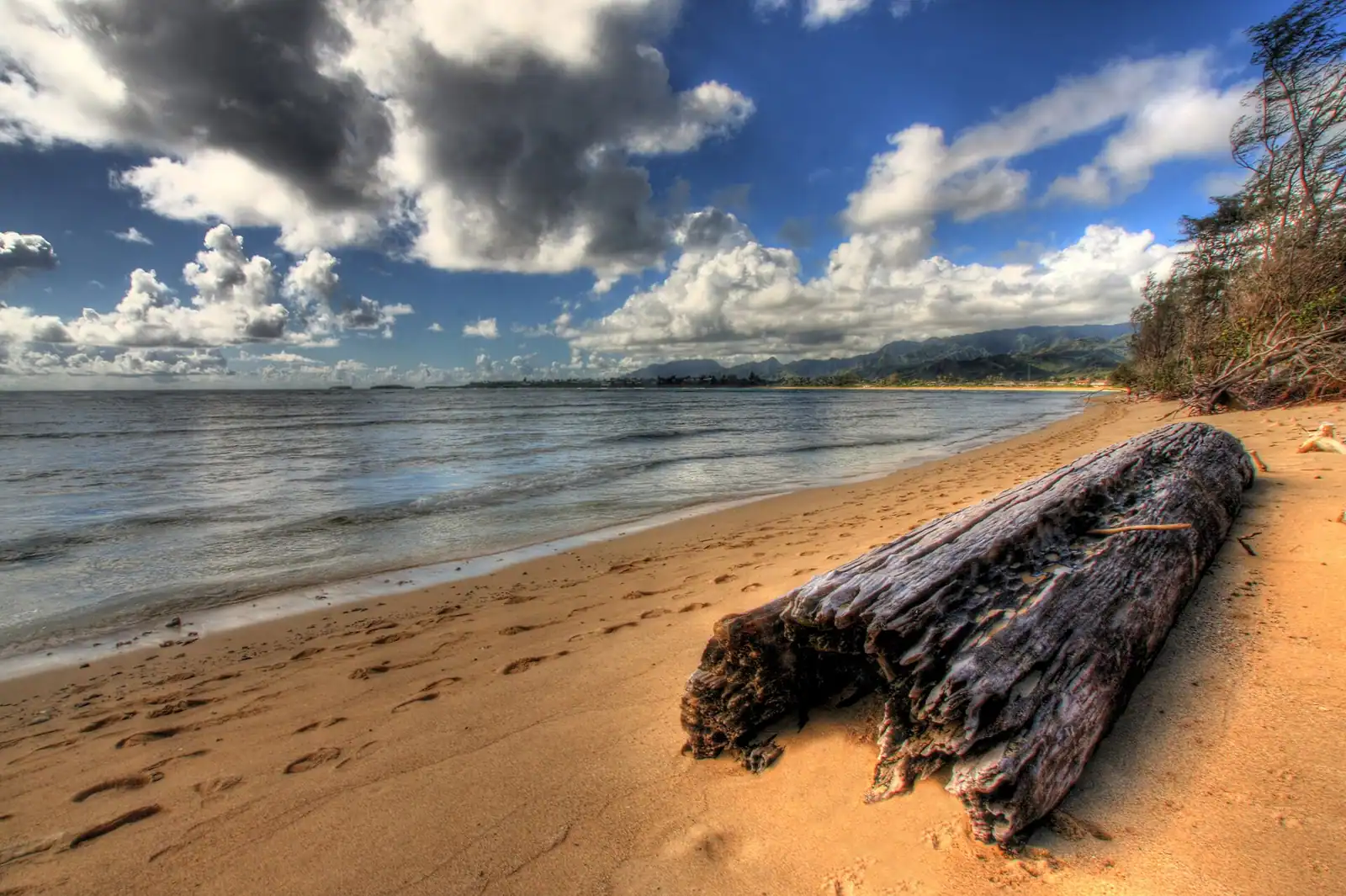
Operators run these trips past Goat Island, or stop there as part of a longer route. We list what the booking data supports — not everything that mentions the name.
Some links below go to Viator, our booking partner. We earn a commission on bookings made through them — at no extra cost to you, and with no influence on what we recommend.

Plantation Tours
Choose from two exciting ways to experience Oahu's top attractions, scenic beauty, and local culture. Option 1: Dole Plantation & Haleiwa…
6–7 hours
Prices checked

Low Supplier Cancellation Rate
Experience the thrill of Oahu parasailing on this unforgettable 1-hour adventure from Waikiki. Soar up to 1,000 feet above the stunning…
1 hour
Prices checked

Curated Catalog
Toa Luau invites you to immerse yourself in the beauty and excitement of Polynesia on Oahu’s historic North Shore! Book any one our 3 Luau…
3 hours
Prices checked

Snorkeling
Book our Turtle Canyon snorkel tour and experience one of Waikiki’s most popular turtle snorkeling destinations! Depart conveniently by…
2 hours
Prices checked

Low Supplier Cancellation Rate
Come join on a circle island adventure led by some of Hawaii’s most knowledgeable local guides and experience breathtaking lookouts to…
Full day
Prices checked

Culture
Step into the vibrant heart of Hawai‘i and experience a luau like no other—where culture, history, and celebration come alive under the…
4 hours
Prices checked
Straight-line distances, so allow more on the road — the island is long and has one main parkway.

Beach
A mile of ironwood-shaded windward sand with an island you can walk to at low tide and a gate that locks at dusk.
1.5–5 hoursFree for day use, with free parking inside the gate. Camping is permitted and charged.0.3 mi away

Viewpoint
A lithified-dune headland at the end of a Lāʻie side street, with a hole punched clean through the islet offshore.
5–20 minutesFree. A state wayside with a handful of parking spaces and a railing.1.3 mi away

Entertainment
Six Pacific island villages on 42 acres at Lāʻie, largely staffed by BYU–Hawaiʻi students, running midday to the night show.
5–9 hoursPaid, and not cheap. Tiered packages: general admission, admission plus lūʻau, admission plus the evening show, and all-in options with a guided element.1.5 mi away

Trail
The northernmost tip of Oʻahu, an hour's walk from the only resort on this coast and almost always empty.
1.5–2.5 hoursFree. Public shoreline access and public parking at Turtle Bay are a legal requirement in Hawaiʻi, not a courtesy.5.7 mi away
Where this place fits into a day, and the pages that plan one.

Guide hub
The North Shore is roughly thirty miles of coast along the top edge of Oʻahu, from the polo fields and the airfield at Mokulēʻia, round Kahuku…

Guide hub
The North Shore's named places are almost all natural, almost all free, and almost all strung in a line along one road. There is no historic…

Guide hub
Seven miles of sand run from Haleʻiwa town to Sunset Point, and a single two-lane road threads the whole of it. Kamehameha Highway is the North…

Budget
Most destinations make you hunt for the free things. On the North Shore you have to hunt for the paid ones. There are four ticketed gates on this…

Things to do
Start with what this coast is not. The photograph you have seen of turquoise water and two green islets is Kailua, on the windward side, roughly an…

Guide
About the same number of people live along this coast as fill a single Waikīkī hotel block, and several million visitors a year drive past their houses. Most of what follows is about that.
9 min readMalia Fonoti

Guide
In July the North Shore is one of the best family coasts in Hawaiʻi. In January it is a place to watch from behind a rope. Planning the right one is the whole job.
9 min readNalani Kahale

Guide
About a hundred miles, three and a half hours of driving and no road around Kaʻena Point. Which direction you choose decides which side of the car the ocean is on.
9 min readNalani Kahale
Yes, at low tide. Mokuʻauia sits about seven hundred feet off Mālaekahana and the crossing is a wade over a limestone reef shelf, taking ten to fifteen minutes in water from ankle to roughly chest deep. The window is about two hours either side of low water and it shifts by around fifty minutes each day, so check a tide table before you plan the day rather than when you arrive. Reef shoes are essential.
In calm summer conditions at low tide, with reef shoes and competent swimmers, it is a reasonable undertaking. It is not safe when surf is breaking on the reef, because water pushing over the shelf returns seaward through the gaps and that flow will take you off your feet, and it is not safe on a rising tide, because your route back will be deeper than your route out. There is no lifeguard on either side.
It is a declared Hawaiʻi State Seabird Sanctuary. Wedge-tailed shearwaters — ʻuaʻu kani — nest in burrows dug into the soft dune sand, and a burrow roof is only a few inches thick. An adult's footstep collapses it and kills whatever is inside. Stay on the beaches, keep out of the dunes and vegetation, bring no dogs, and take all your rubbish back: food waste attracts the rats that seabird recovery work here has fought to control.
Not much, which is the appeal. A low limestone platform with a sand cap, coastal scrub, and three beaches — the one facing Oʻahu where you land, a sheltered cove of very fine sand on the far side that is what people come for, and a third more exposed stretch. Shorebirds work the tideline and shearwaters nest in the dunes. There is no water, no shade and no facility of any kind. Bring everything, take everything.
Only strong swimmers, and only in flat summer conditions at low water. The crossing reaches roughly waist or chest depth on an adult in places, over sharp limestone with urchins, with no lifeguard on either side and no easy exit. Mālaekahana itself has a sand-bottomed swimming area, real shade under the ironwoods, restrooms and a clear view of the island — for most families that is the better afternoon and it is not a consolation prize.