Families arrive on the North Shore with one of two experiences ahead of them, and the difference is the month.
From roughly May to September this is an excellent coast for children: Waimea Bay is a sandy-bottomed swimming beach with a lifeguard, Shark's Cove becomes a set of shallow rock pools full of fish, and Malaekahana is a long protected stretch where nothing much happens. From roughly November to March the same beaches take swell that closes them, the shorebreak injures adults, and the honest answer to "can the children swim here" is no.
Neither season is bad. They just require completely different days.
Summer, roughly May to September
This is the beach version and it needs very little arranging.
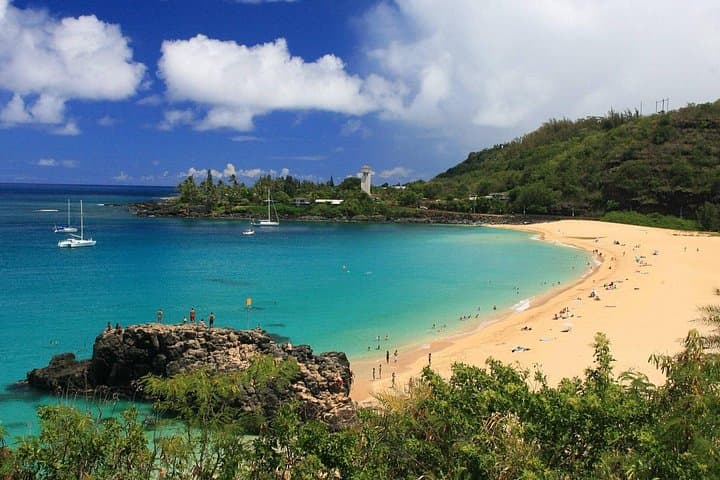
Waimea Bay is the default. Sand bottom, lifeguard tower, a proper car park that fills by mid-morning, and in calm summer conditions the water is gentle. There is reef along the edges worth a mask. The rock at the south end is what teenagers jump off; small children should be nowhere near it.
Shark's Cove and Three Tables at Pūpūkea are the best snorkelling on the coast in summer, with inner pools that are shallow, clear and contained by rock. Two things make it work with children: reef booties, because the entries are lava and urchins live in the cracks, and a flotation vest rather than a noodle. There is no lifeguard here, so an adult in the water per child, and stick to the inner pools.
Haleʻiwa Beach Park is the safe fallback in any conditions, protected by the harbour and the reef, with grass, shade, bathrooms and a playground area. Not dramatic. Extremely useful.
Malaekahana, near Lāʻie, is a long ironwood-backed beach with camping, generally calm, and quiet even in August.
Winter, roughly November to March
Take the beaches off the list and the coast is still a good day — arguably a better one, because the alternatives are indoors-adjacent and the surf itself is the show.
Waimea Valley is the winter anchor. A botanical garden and cultural site up the valley from the bay, with a paved path most of the way, planting laid out by Pacific region, reconstructed cultural sites and a waterfall at the top. Swimming in the pool is allowed when the lifeguards there open it, and everybody who swims wears a life vest, which is provided. Buggies manage the main path. Allow two to three hours.
Watching the surf is genuinely exciting for children and costs nothing. Waimea Bay and the Ehukai stretch at Pipeline both have somewhere to stand well back. On a contest day there is a commentary, a crowd and a beach full of people who know what they are looking at.
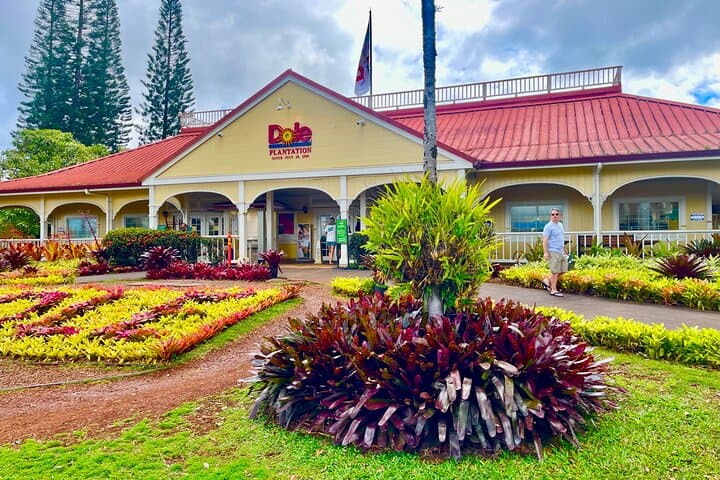
Dole Plantation at Wahiawā, on the H-2 route, has the garden maze, the train and a great deal of pineapple. It is unashamedly a tourist attraction and children do not mind that at all.
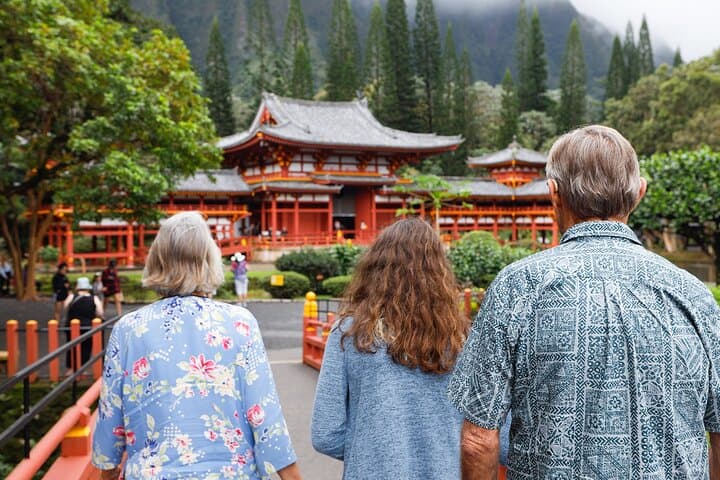
The Polynesian Cultural Center at Lāʻie is a full paid day with island villages, demonstrations, canoe pageant and an evening show. It is run by Brigham Young University–Hawaiʻi and is closed Sundays and, in recent calendars, Wednesdays too, so check its current schedule rather than turning up. Plan a whole day and do not try to combine it with the North Shore beaches.
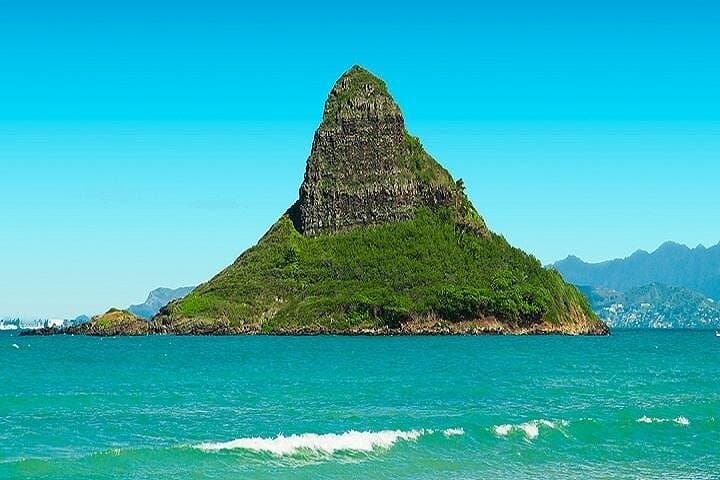
Kualoa Ranch, on the windward drive up, runs horseback, ATV and film-location tours with minimum ages that vary by activity. Book ahead; it sells out.
Which beach, at a glance
| Beach | Summer | Winter | Shade | Bathrooms | Food nearby |
|---|---|---|---|---|---|
| Haleʻiwa Beach Park | Calm | Usually calm | Trees, grass | Yes | Haleʻiwa town |
| Waimea Bay | Good, lifeguarded | Watch only | Little | Yes | Trucks, Waimea Valley |
| Shark's Cove | Excellent snorkel | Dangerous | Very little | Across the road | Pūpūkea centre |
| Sunset Beach | Gentle | Watch only | Ironwoods | Yes | Ted's Bakery |
| Malaekahana | Calm, protected | Often usable | Ironwoods | Yes | Kahuku |
| Turtle Bay coves | Calm | Most reliable winter swim | Some | Resort access | Resort |
| Laniākea | Turtle viewing | Turtle viewing | None | None | None |
Laniākea is on that table as a warning as much as a recommendation. It has no car park and no bathrooms, and reaching it means crossing a live two-lane highway on foot. Hold hands from the car door to the sand.
The practical things that decide the day
Shade is scarce. The North Shore's beach parks have ironwoods and not much else. Bring an umbrella or a pop-up, or plan to be off the sand between eleven and two.
Sunscreen. Hawaiʻi restricts the sale of sunscreens containing oxybenzone and octinoxate. Bring a mineral sunscreen, and for children a rash guard does more than any bottle.
Bathrooms exist at the county beach parks and at Waimea Valley, Dole Plantation and the Haleʻiwa shopping centres. Between those, nothing.
Food stops early. By seven in the evening much of the coast has closed. Eat the main meal in the middle of the day. Shave ice in Haleʻiwa is the reliable bribe and the queue at Matsumoto moves faster than it looks.
The drive. An hour from Waikīkī on a good run, and considerably more once the single-lane highway through Haleʻiwa fills up. Children who were fine at the start of the day are not fine in a stationary car at four in the afternoon. Leave the coast by four.
Hawaiʻi child restraint law applies to rental cars and to tour vehicles, and seats should be arranged when you book rather than argued about in a car park.
A summer day that works
| Time | What |
|---|---|
| 7:00 a.m. | Leave Waikīkī |
| 8:15 a.m. | Laniākea for honu, ten minutes, ten feet back |
| 9:00 a.m. | Waimea Bay — park while the lot is open, swim the calm morning water |
| 11:30 a.m. | Pūpūkea shopping centre for lunch and a break from the sun |
| 12:30 p.m. | Shark's Cove inner pools with booties and vests |
| 2:00 p.m. | Kahuku shrimp stands, queue gone |
| 3:30 p.m. | Shave ice in Haleʻiwa |
| 4:00 p.m. | Driving south |
A winter day that works
| Time | What |
|---|---|
| 7:30 a.m. | Leave Waikīkī |
| 8:45 a.m. | Dole Plantation — maze and train before the coaches |
| 10:15 a.m. | Waimea Valley — the walk up, the cultural sites, the falls |
| 1:00 p.m. | Lunch in Haleʻiwa |
| 2:30 p.m. | Stand on the sand at Waimea Bay or Ehukai and watch the surf |
| 3:30 p.m. | Haleʻiwa Beach Park for a safe paddle if anyone still needs to get wet |
| 4:30 p.m. | Driving south |
What to skip with small children
The Kaʻena Point walk, which is two and a half miles each way with no shade and no water. Puʻu o Mahuka Heiau, which is a sacred site and not somewhere for children to run. Any unguarded beach in winter. And any plan that tries to fit the Polynesian Cultural Center and the North Shore beaches into one day, which produces a long drive and two rushed halves.
Water rules for families on this coast
Lifeguarded beaches only, and ask the lifeguard. "Is this safe for a seven-year-old today?" gets a straight answer, including which beach further along is the better idea.
Never turn your back on the ocean. The shorebreak at Waimea and along the Ehukai stretch dumps into very shallow water and is a recognised cause of serious neck and spinal injuries on Oʻahu. Standing in knee-deep water facing the beach is the exact posture that causes them.
Flotation, not confidence. A vest on any child who is not a strong swimmer, at every site, including the rock pools.
One adult in the water per child at unguarded sites such as Shark's Cove and Three Tables.
If the surf report has a number in it, the answer is no. Winter swell here closes beaches. That is not caution, it is the reason the lifeguards are there.
When it rains
North Shore rain comes in squalls off the ocean and usually passes. A wet morning at Pūpūkea is often dry by eleven, so do not abandon the day on a forecast.
If it settles in, the coast has real answers. Waimea Valley is a good walk in light rain and the waterfall does not mind. Haleʻiwa has galleries, surf shops with decades of boards on the walls and shave ice, which children will eat in any weather. Dole Plantation has indoor space and the train. The Polynesian Cultural Center runs largely under cover and through it.
The two things that do not work in heavy rain are the Kaʻena Point walk, which turns the red clay to grease, and anything involving an unguarded beach, because run-off reduces visibility and the water quality drops after heavy rain across the island.
Last updated
Opening hours, ordinances and prices move with the season. We re-check this guide rather than rewrite it, and the date above is the last time someone did. How we research and correct.