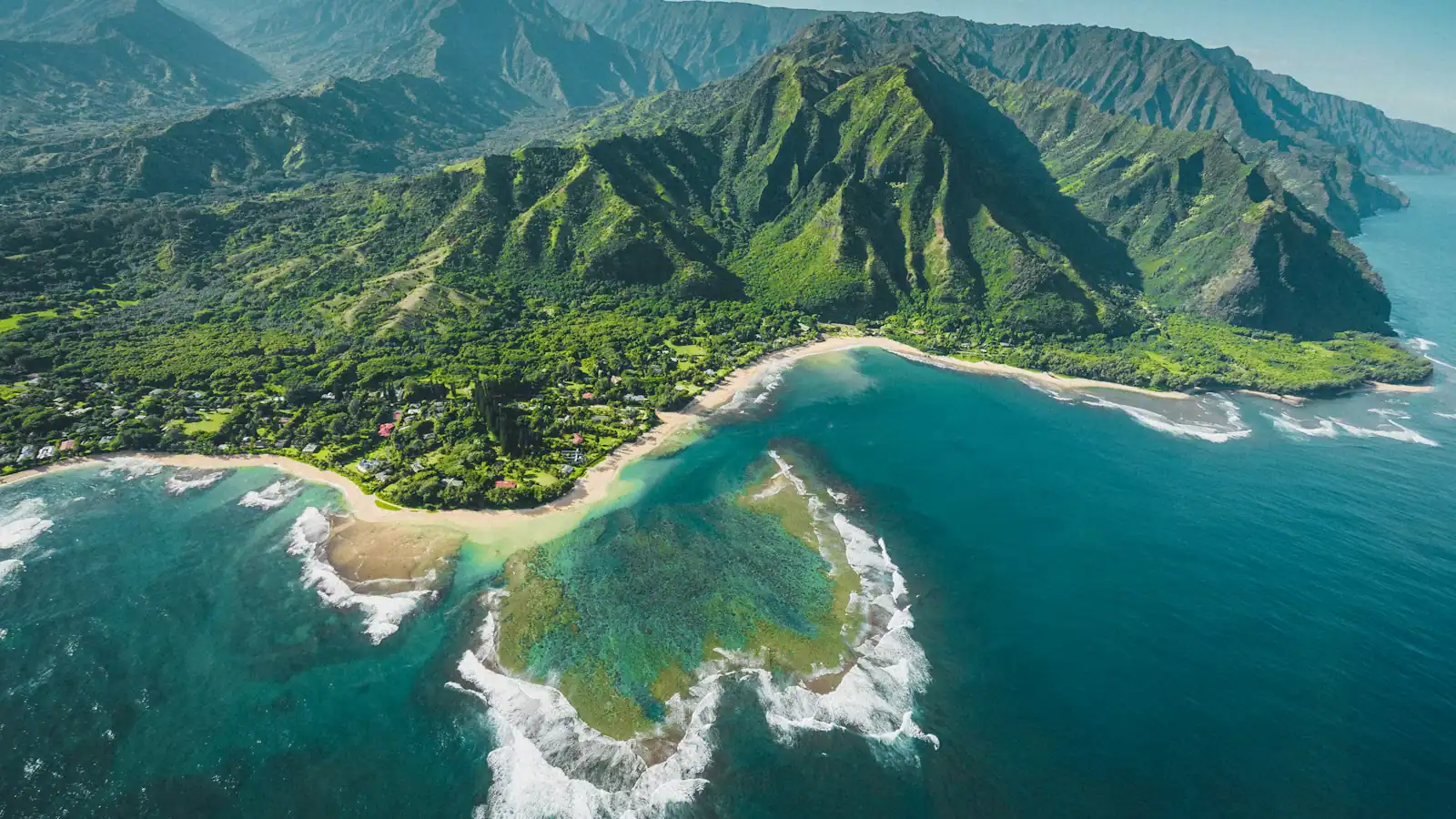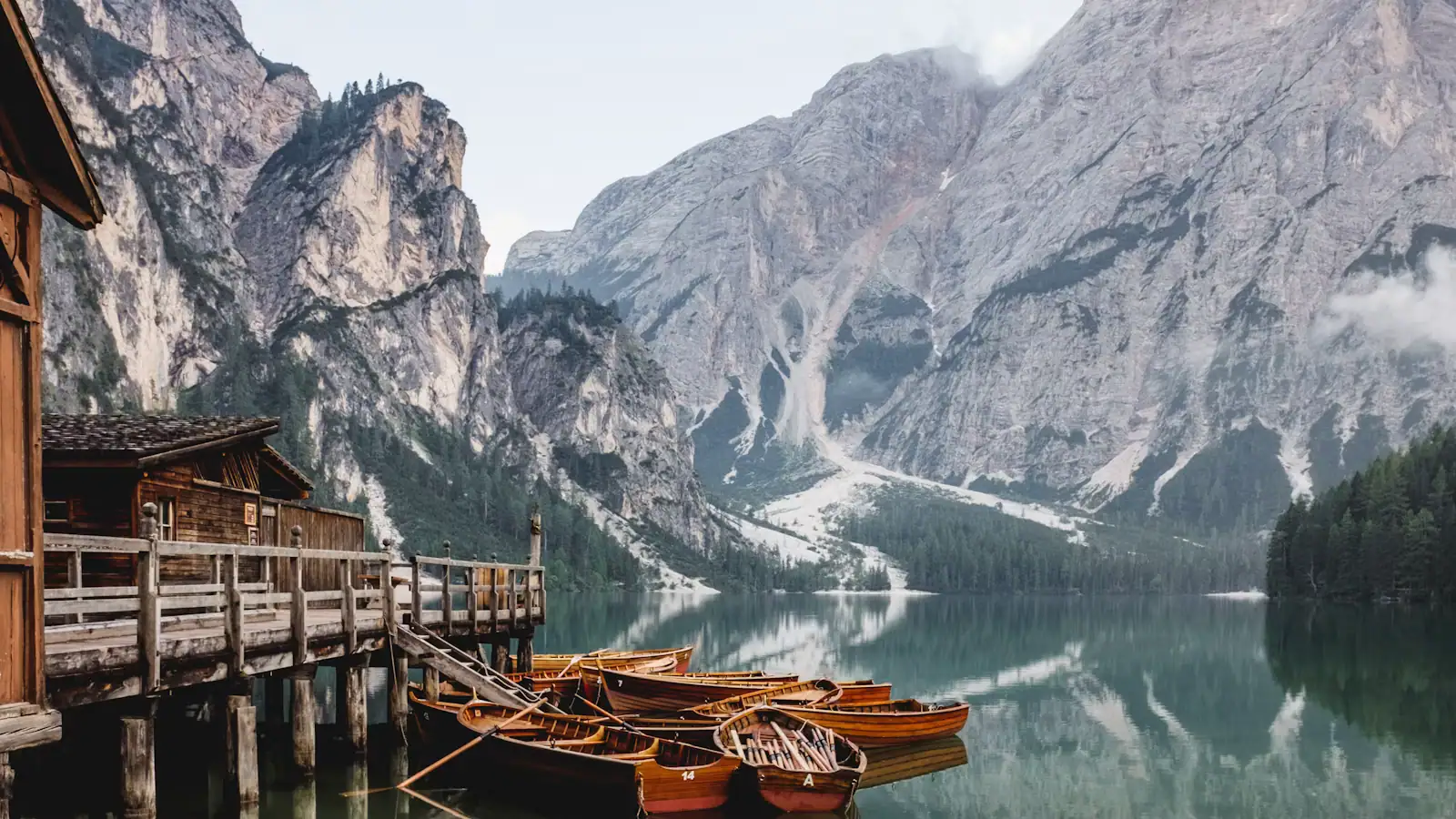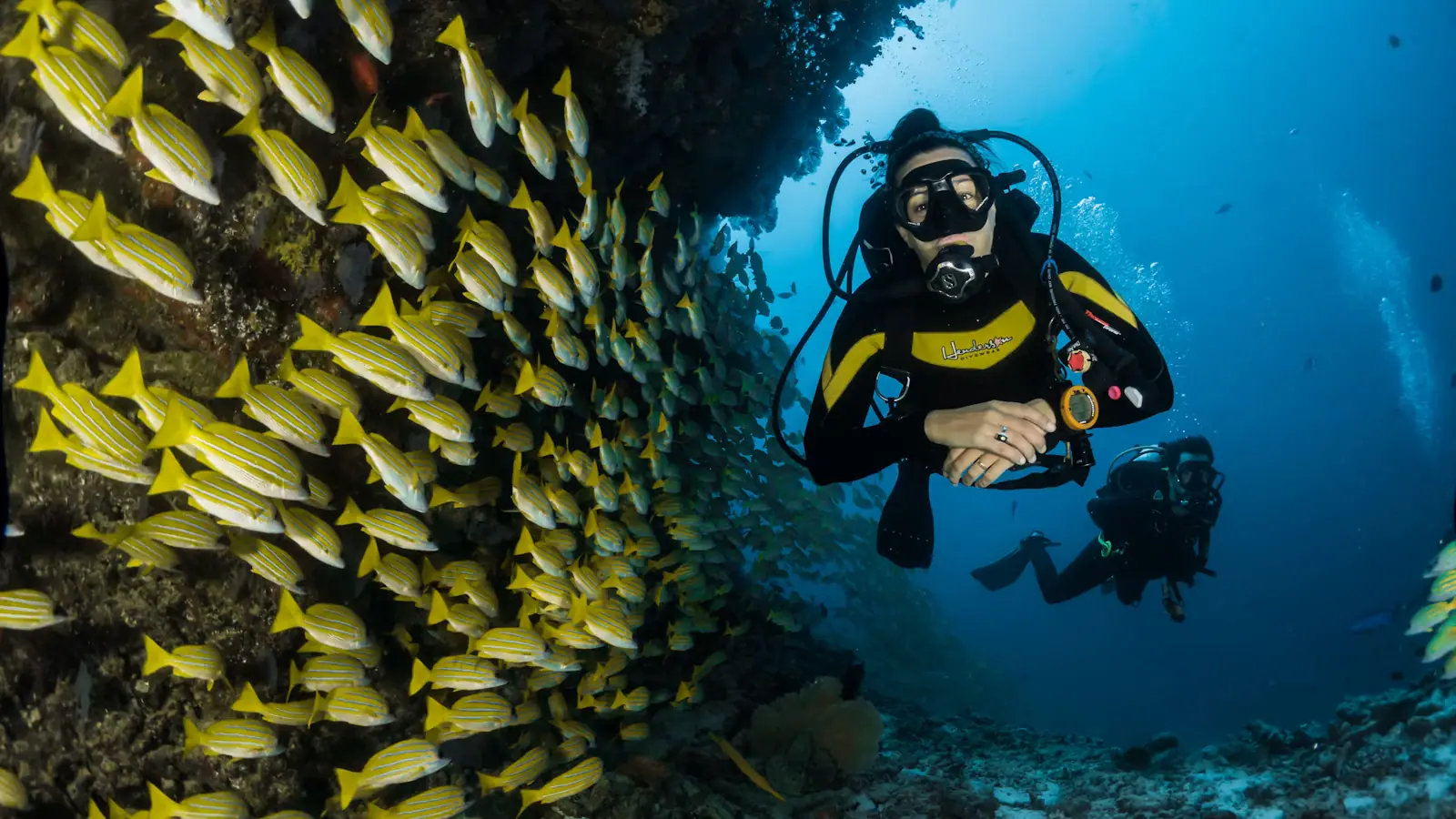
Shark's Cove sits on the Pūpūkea shelf between Waimea Bay and Sunset Beach, across the highway from a shopping centre and a fire station, with a car park that holds far fewer cars than the place deserves. There are no sharks in the name's honest sense — the story is about the shape of the rock — and there is no lifeguard tower.
In summer it is the best shore snorkel on this side of Oʻahu. In winter it is one of the most dangerous pieces of water a visitor can walk into. Both of those sentences are true of the same twenty metres of shoreline.
The season is the entire safety story
From roughly May to September, North Pacific swell has gone and the shelf lies still. The cove becomes a series of shallow, connected pools inside a lava rim, protected from what little swell there is, with visibility that is often excellent before the wind comes up.
From roughly November to March, the same rim takes the full weight of winter surf. Water surges across the shelf, drains back through gaps in the rock, and moves boulders. Hawaiʻi's Division of Aquatic Resources has noted wave activity in these months mobilising boulders even at depth here. There is no tower and no flag to tell you. People have drowned at Shark's Cove and at Three Tables next door.
April and October are the coin-toss months. Check the day's High Surf products for the north shore of Oʻahu and, if there is any doubt, drive to Haleʻiwa instead.
What you are actually swimming in
Shark's Cove is the most visited part of the Pūpūkea Marine Life Conservation District, a state-designated protected area that also takes in Three Tables and the Waimea end of the shelf. Protection has been in place here for decades and it shows: fish densities inside the district are visibly higher than on comparable unprotected reef, and the fish are not shy.
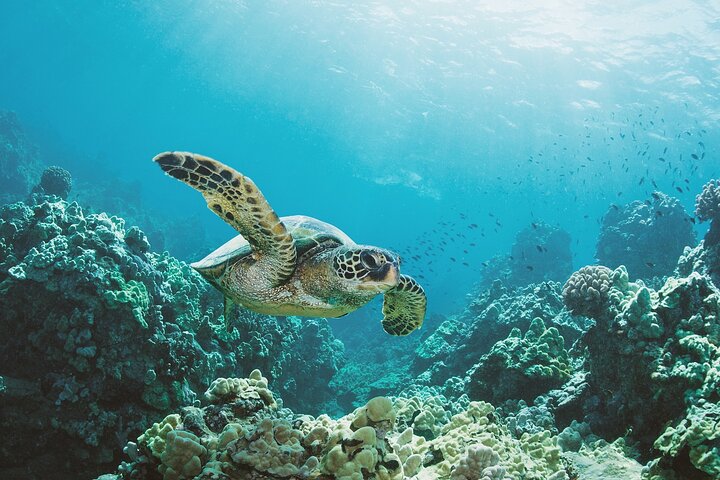
Expect manini and other surgeonfish in numbers, several butterflyfish, wrasses, the occasional humuhumunukunukuāpuaʻa, eels in the rock, and honu moving through. Summer mornings in the outer pools have the best of it.
Taking anything is prohibited. No fishing, no collecting, nothing removed — not a shell, not a piece of coral, not a rock. That is the point of the district and it is enforced.
The entries, described properly
There are three ways in and they are not equivalent.
The main sandy-bottomed channel at the south end. The usual entry. Lava rock either side, a shallow floor, and it still requires you to time your steps between the small sets that come through even on calm days. Go in slowly, sit down if you need to, and get your fins on in the water rather than on the rock.
Over the rim at the north end. Locals do it. It involves stepping across sharp, wet, uneven lava with urchins in the cracks. Do not make this your first entry anywhere, and do not make it your exit if the water has come up while you were out.
Three Tables, a few hundred metres south. Three flat lava slabs breaking the surface at low tide, with sand between them and easier walking in. In genuinely calm summer conditions it is the gentler option and often less crowded. In anything else it is worse, because the slabs create surge.
Gear that matters here
| Item | Why it matters at Pūpūkea |
|---|---|
| Reef-safe sunscreen | Hawaiʻi law restricts the sale of sunscreens containing oxybenzone and octinoxate; a rash guard does the job better anyway |
| Water shoes or reef booties | The entry is lava. Bare feet and urchin spines are the most common injury here |
| A flotation belt or vest | Buoyancy is the single most effective safety addition at an unguarded site |
| Defogged mask | Rinse and defog on shore. Fixing a leaking mask in surge is how people panic |
| Nothing loose | Gopro straps, dangling lanyards and camera floats snag on rock |
Gear rental is available in Haleʻiwa and at the Pūpūkea shopping centre across the road. Renting locally is better than carrying a set up from Waikīkī, and a guided shore snorkel is worth considering for anyone who is not a confident open-water swimmer.
The rules people break without meaning to
- Do not stand on coral. It is a living animal and it takes decades to recover. If the water is too shallow to swim, it is too shallow to be there.
- Ten feet from a honu. Green sea turtles are protected under federal and state law. If one swims towards you, hold still and let it pass.
- Do not chase or corner anything. A fish backed into a hole is not a photograph.
- Take nothing. Including dead coral, which is habitat.
- Do not feed the fish. It changes behaviour and damages the site.
A realistic timetable for a summer snorkel
| Time | What is happening |
|---|---|
| 8:00 a.m. | Arrive. Parking is available. The water is at its flattest and clearest |
| 8:30 a.m. | In the water. Wind is light, so the surface is readable |
| 10:00 a.m. | Out. The car park is filling and so is the cove |
| 10:30 a.m. | Trade wind builds through late morning; surface chop reduces visibility |
| Afternoon | Still swimmable in calm summer conditions, but noticeably busier and murkier |
Parking is the other constraint. The lot on the highway side is small and there is limited roadside space. Do not park in front of the residential driveways above the cove.
Honest alternatives
If the surf is up, or if the car park is full, or if you have children who are not strong swimmers, the North Shore has other answers.
Waimea Bay in summer. Sandy-bottomed, lifeguarded, and there is reef along the edges of the bay worth a look.
Turtle Bay's sheltered coves. Small, protected, and the most reliable snorkelling on the coast when a north swell is running.
Haleʻiwa Beach Park. Not much reef, but it is calm, lifeguarded and safe, which on a marginal day is the right trade.
The other side of the island. Hanauma Bay on the southeast corner requires an advance reservation and is a different proposition entirely, but in a big north swell it is calm. It is not ours, and we would rather say so than pretend the North Shore is snorkellable in January.
A word about sharks
The name is about the rock formation, not a hazard rating. Shark encounters on Oʻahu are rare, and the actual risks at Pūpūkea are the ones this guide has spent its length on: surge, surf, entry over lava, urchins and swimming somewhere unguarded when the ocean has changed its mind.
There is no lifeguard here
Shark's Cove and Three Tables have no permanent lifeguard tower. Nobody is watching, nobody will notice you go under, and the nearest staffed tower is at Waimea Bay or Sunset.
Honolulu Ocean Safety's standing advice in high surf is to swim only at beaches with a permanent tower. That advice exists because of places exactly like this one.
Practical consequences: never snorkel here alone, agree where you will surface and regroup, keep somebody on shore who is actually watching, and get out at the first set that reaches further up the rock than the last one did. A rising swell here does not announce itself gradually. One set arrives that is bigger than the ones before it, and the exit you used on the way in stops being usable.
If the ocean is pushing water over the rim of the cove, the answer for today is no.
Snorkelling here with children
In flat summer conditions the inner pools are genuinely good for children: shallow, clear, contained by rock and full of fish that ignore people.
Three things make it work. Buoyancy first — a flotation vest, not just a noodle, for anyone under about twelve or any adult who is not comfortable. Reef booties second, because the injury that ends a family's snorkel is a foot on an urchin at the entry. One adult per child third, in the water rather than on the rock.
Do the inner pools and stop there. The outer edge of the cove connects to open ocean and there is no reason to take a child near it.
If it is winter, or if the surf report has a number in it, take them to Waimea Bay or Haleʻiwa Beach Park and come back in July.
Last updated
Opening hours, ordinances and prices move with the season. We re-check this guide rather than rewrite it, and the date above is the last time someone did. How we research and correct.