Skip to content
Search
Menu

We earn a commission if you book through this link. You pay the same price.

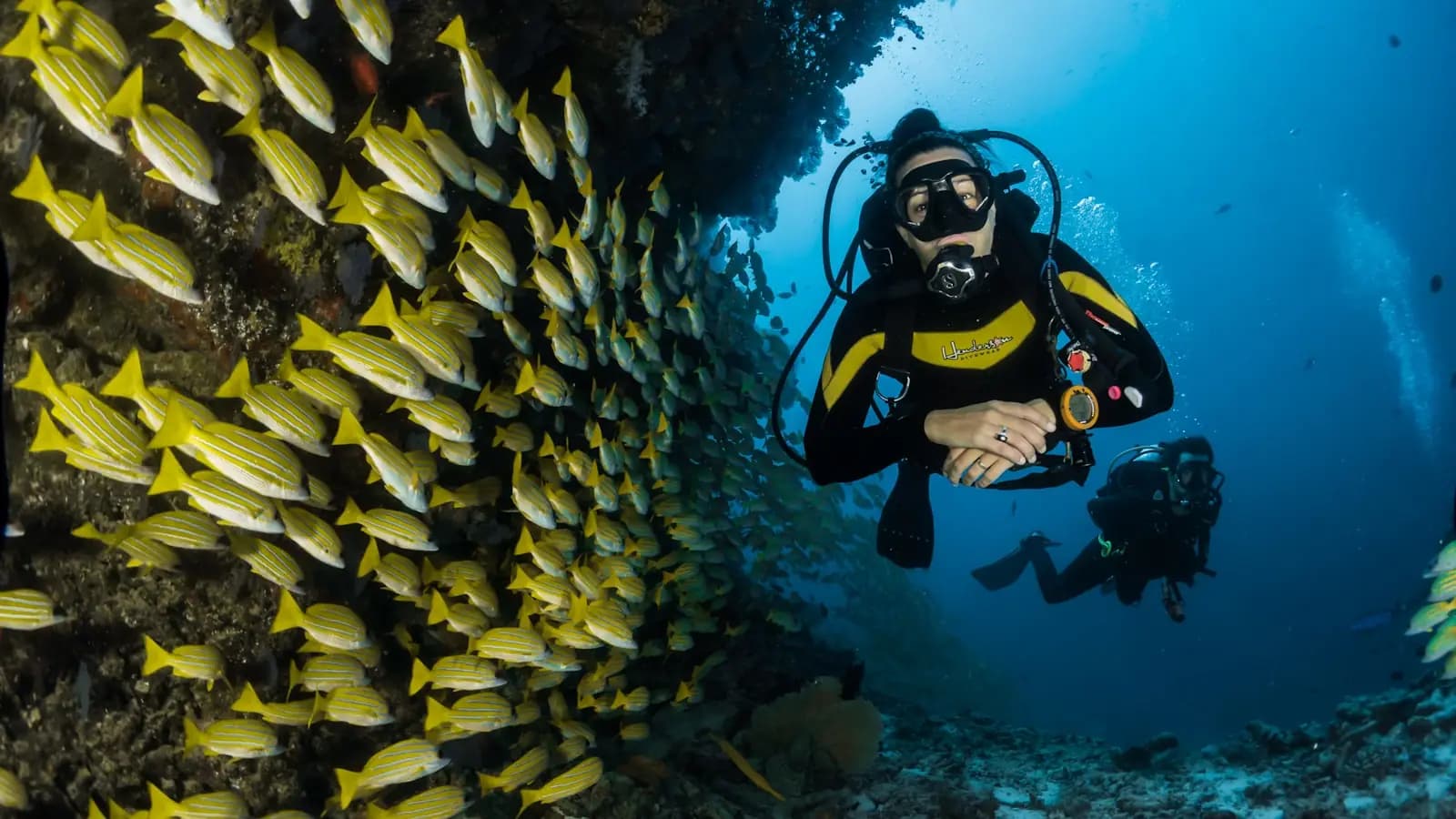
Shoaling reef fish grazing over shallow lava rock in protected nearshore water
Syced

Nature preserve

Pūpūkea Marine Life Conservation District

Last updated

A hundred-odd acres of protected reef over Shark's Cove, Three Tables and Waimea Bay, and why the fish here are not frightened of you.

Photo: SycedCC0

Most visitors snorkel the Pūpūkea Marine Life Conservation District without ever hearing its name. It is the legal wrapper around three places they have heard of: Shark's Cove, Three Tables and Waimea Bay, roughly a hundred acres of nearshore water on Oʻahu's North Shore held under state protection by the Division of Aquatic Resources.

The protection is old by Hawaiian standards — designated in the 1980s and enlarged in the early 2000s to take in Waimea Bay — and its effects are visible within thirty seconds of putting your face in the water. Fish inside an MLCD are not fished, so they do not behave like fish that are. Uhu graze within arm's reach and keep grazing. Shoals of manini hold their shape when you swim through them. Moray eels sit out in the open in daylight. Snorkellers who have been elsewhere on Oʻahu notice the difference immediately, and the reason is regulatory rather than geographical.

The rules are simple enough to remember. Taking marine life is prohibited: no fishing at Shark's Cove or Three Tables, no spear gun even carried through, no collecting of fish, invertebrates, ʻopihi or shells. Damaging or removing coral is prohibited, and so is taking rock or sand. Feeding fish is not what this place is for. A narrow set of traditional uses survives — limited shore fishing and seasonal akule and ʻōpelu fishing in part of Waimea Bay, and some limu gathering — which is the compromise that made the district acceptable to the community that lives here.

Commercial operators need permits. The whole stretch also falls inside the North Shore Ocean Recreation Management Area, and a tour that brings you here without authorisation is breaking a different set of rules than the one about touching coral.

The community stewardship group Mālama Pūpūkea-Waimea works this coastline alongside the state, and if someone in a volunteer shirt asks you to move off a reef flat, that is why.

Getting there and parking

The district is a stretch of water rather than a site with an entrance. Access is from the three shore points it covers: Waimea Bay Beach Park at the south end, the small roadside pull-ins for Three Tables, and Pūpūkea Beach Park at Shark's Cove by the Pūpūkea Road junction. All three sit within about a mile and a half of each other on Kamehameha Highway.

From Waikīkī, allow an hour via H-1, H-2 and Kamehameha Highway, plus whatever Haleʻiwa town adds. TheBus route 60 runs the length of the district and stops at all three.

Parking is free at each of the three, and limited at all of them. Shark's Cove and Waimea fill first; the Three Tables pull-ins are the quietest and the most awkward.

What you may not do here

These are state rules, not etiquette, and they apply across the whole district.

  • No fishing at Shark's Cove or Three Tables. Not line, not net, not trap.
  • No spear guns, including carrying one through the area in transit.
  • No taking of marine life. Fish, invertebrates, ʻopihi, sea urchins, octopus — none of it.
  • No collecting shells, live or empty.
  • No damaging or removing coral, which includes standing on it, kneeling on it and breaking a piece off for a photograph.
  • No taking rock or sand.

Two things visitors do without thinking that are worth naming. Standing on the reef flat to adjust a mask is coral damage, and the bottom is close enough here that it happens constantly. And a bucket of "just shells" taken from the tide pools at the south end of Shark's Cove is a violation, however small it feels.

What remains lawful is narrow and specific: limited shore fishing and seasonal akule and ʻōpelu fishing in a defined part of Waimea Bay, and limited gathering of limu. These are traditional practices with a long local history, and they are not an argument that the general prohibitions are soft.

What protection actually changed

A marine reserve does two things that show up quickly at snorkelling depth.

The first is abundance. Herbivorous fish — uhu, manini, kala — are among the first to recover when fishing stops, and they are the species that keep algae off coral. A reef with a working herbivore population looks different: less turf algae, more clean rock, more coral holding its own.

The second is behaviour. Fish in fished areas are wary of humans at a distance that makes them hard to watch. Inside an MLCD, within a generation or two of fish, that distance collapses. This is why people describe the snorkelling at Shark's Cove as unusually good even when they cannot name a single species they saw: it is not necessarily richer than reefs elsewhere on the island, but you get to be near it.

Honesty about the limits matters too. A hundred acres is small. The district is bounded on all sides by unprotected water, it takes very heavy visitor pressure for its size, and it does not stop land-based runoff, sunscreen chemicals, or bleaching driven by warm water. Protection has made a real and visible difference; it has not made this reef invulnerable.

Three places, one rulebook

The district covers a stretch of coast that visitors experience as three separate destinations.

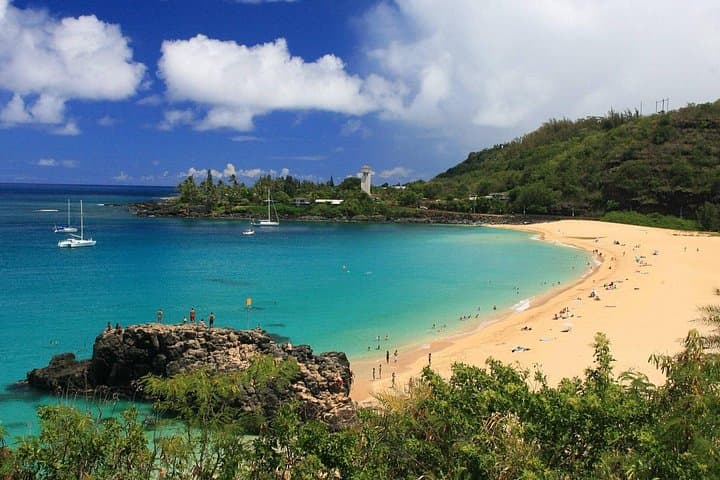
  • Waimea Bay — the sandy bay at the south end. Swimming and bodyboarding in summer; a big-wave venue in winter. This is where the limited traditional fishing exceptions apply.
  • Three Tables — the small sandy beach north of the bay, named for the flat reef tables that break the surface at low tide. Easiest water entry of the three, and the usual choice for a first snorkel or a shore dive.
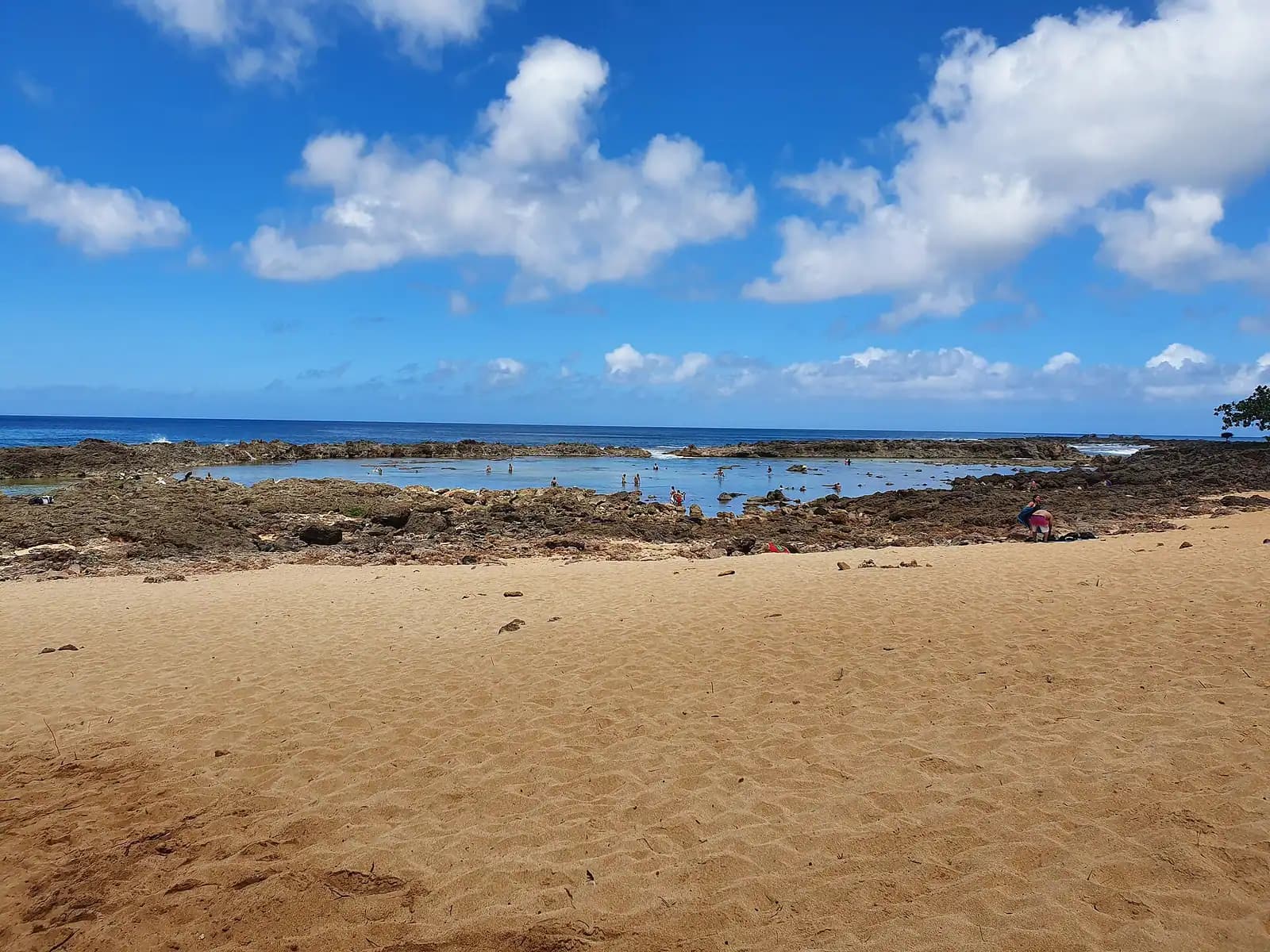
  • Shark's Cove — the lava-rimmed basin at Pūpūkea. The best snorkelling of the three in summer, and the most dangerous of the three in winter.

All three are inside the same protected district and all three are governed by the same prohibitions. All three also share the coast's single most important fact: they are calm and usable from roughly May to September, and from roughly November to March they take direct North Pacific swell. The rules about taking fish apply year-round. The reason you will not be snorkelling in January is the ocean.

Snorkelling here without damaging it

  • Never stand on the bottom. If you need to rest, float on your back or head for sand. This is the single highest-impact habit a snorkeller can change.
  • Wear a rash guard instead of reapplying sunscreen at the water's edge. If you do use sunscreen, apply it well before you arrive and choose a mineral formulation.
  • Keep a body length from turtles, on land and in the water. Green sea turtles are federally protected and the guidance is ten feet.
  • Do not feed anything. Fish fed by visitors change where they live and what they eat, and the effect propagates.
  • Take your rubbish, and take somebody else's. Reef-flat litter is mostly single-use plastic left by people who did not mean to.
  • Listen to volunteers. Mālama Pūpūkea-Waimea works this shoreline; they are not rangers, they are neighbours, and they are usually right.
  • Book with permitted operators. Commercial activity inside the district and the wider ocean recreation management area requires authorisation. An operator who cannot answer that question is telling you something.

Tours that visit Pūpūkea MLCD

Operators run these trips past Pūpūkea MLCD, or stop there as part of a longer route. We list what the booking data supports — not everything that mentions the name.

Some links below go to Viator, our booking partner. We earn a commission on bookings made through them — at no extra cost to you, and with no influence on what we recommend.

  • Oahu: Full or Half Day Grand Circle Island Tour
    Free cancellationInstant confirmation

    Plantation Tours

    Oahu: Full or Half Day Grand Circle Island Tour (opens in a new tab)

    19.5K reviews

    Choose from two exciting ways to experience Oahu's top attractions, scenic beauty, and local culture. Option 1: Dole Plantation & Haleiwa…

    6–7 hours

    Prices checked

    from $100
  • Parasailing Experience in Waikiki, HI
    Free cancellationInstant confirmation

    Low Supplier Cancellation Rate

    Parasailing Experience in Waikiki, HI (opens in a new tab)

    8.9K reviews

    Experience the thrill of Oahu parasailing on this unforgettable 1-hour adventure from Waikiki. Soar up to 1,000 feet above the stunning…

    1 hour

    Prices checked

    from $44
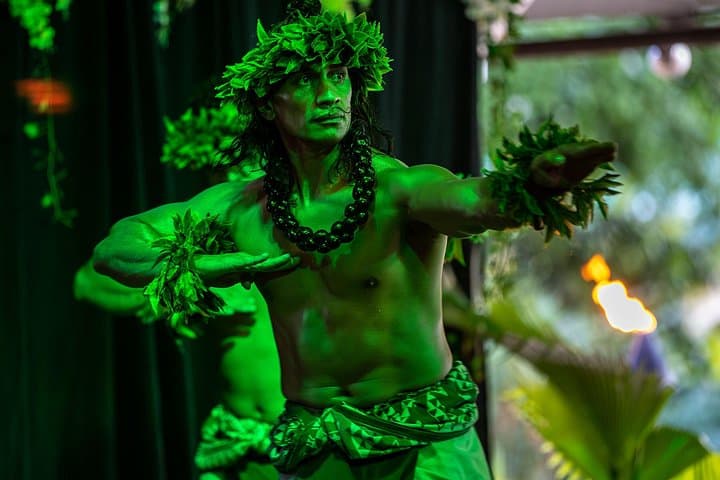
  • Roland dancing Hawaiian Kahiko
    Free cancellationLikely to sell out

    Curated Catalog

    Toa Luau at Waimea Valley, Oahu (opens in a new tab)

    3.8K reviews

    Toa Luau invites you to immerse yourself in the beauty and excitement of Polynesia on Oahu’s historic North Shore! Book any one our 3 Luau…

    3 hours

    Prices checked

    from $145
  • WAIMEA BAY
    Free cancellationInstant confirmation

    Low Supplier Cancellation Rate

    Oahu: Grand Tour Around Island with Snorkeling (opens in a new tab)

    11.1K reviews

    Come join on a circle island adventure led by some of Hawaii’s most knowledgeable local guides and experience breathtaking lookouts to…

    Full day

    Prices checked

    from $89

Near Pūpūkea MLCD

Straight-line distances, so allow more on the road — the island is long and has one main parkway.

  • Reef fish moving over shallow lava structure in very clear water close to shore
    Free

    Beach

    Shark's Cove

    The best shore snorkelling on Oʻahu for four months of the year, and one of the most dangerous places on the island for the other four.

    1.5–4 hoursFree, with free parking in the beach park lot and along the highway.0.2 mi away

  • Flat reef slabs breaking the surface of shallow clear water off a small sand beach
    Free

    Beach

    Three Tables Beach

    Sand underfoot instead of a lava scramble, half the crowd of Shark's Cove, and three flat reef slabs that surface at low tide.

    1–3 hoursFree, with free roadside parking and no facilities.550 ft away

  • Heavy winter surf breaking across the mouth of a bay between two lava headlands
    Free

    Beach

    Waimea Bay

    Flat enough to swim across in July, closed by thirty-foot faces in January. The North Shore's seasonal flip at its most extreme.

    1.5–5 hoursFree, including parking. The lot is small and fills early.0.4 mi away

  • The low stacked stone walls of Puʻu o Mahuka Heiau laid out on open ground above the coast
    Free

    Historic site

    Puʻu o Mahuka Heiau State Historic Site

    The largest heiau on Oʻahu, on the bluff above Waimea Bay. A sacred site that is still in use, not a lookout with a car park.

    20–45 minutesFree. There is no entrance fee and no charge to park.1 mi away

Pūpūkea MLCD: common questions

What is the Pūpūkea Marine Life Conservation District?

A state-protected area of around a hundred acres of nearshore water on Oʻahu's North Shore, covering Shark's Cove, Three Tables and Waimea Bay. It was designated in the 1980s and enlarged in the early 2000s to include the bay. Inside it, taking marine life is prohibited and the reef itself is protected. It is administered by the Hawaiʻi Division of Aquatic Resources, with community stewardship from the group Mālama Pūpūkea-Waimea.

Can you fish at Shark's Cove or Three Tables?

No. Fishing is prohibited at both, as is carrying a spear gun through the area even without using it. Collecting fish, invertebrates, ʻopihi and shells is prohibited throughout the district, and so is damaging or removing coral, rock or sand. A narrow exception survives in part of Waimea Bay, where limited shore fishing and seasonal akule and ʻōpelu fishing remain lawful, along with some limu gathering.

Can you take shells home from the North Shore tide pools?

Not from inside the Pūpūkea district, which includes the shallow pools at the south end of Shark's Cove where children are most likely to fill a bucket. Collecting shells, live or empty, is prohibited along with all other marine life. It is a small rule that is easy to break accidentally, and the reason it exists is that this stretch of reef receives an enormous number of visitors for its size.

Why is the snorkelling better inside the conservation district?

Because the fish have not been fished. Protection produces two visible changes: more herbivores like uhu and manini, which keep algae off the coral, and much shorter flight distances, so fish carry on grazing while you watch instead of scattering. That second effect is what most people actually notice. It is behaviour rather than scenery, and it is the direct result of decades of the rules being enforced.