Plantation Tours
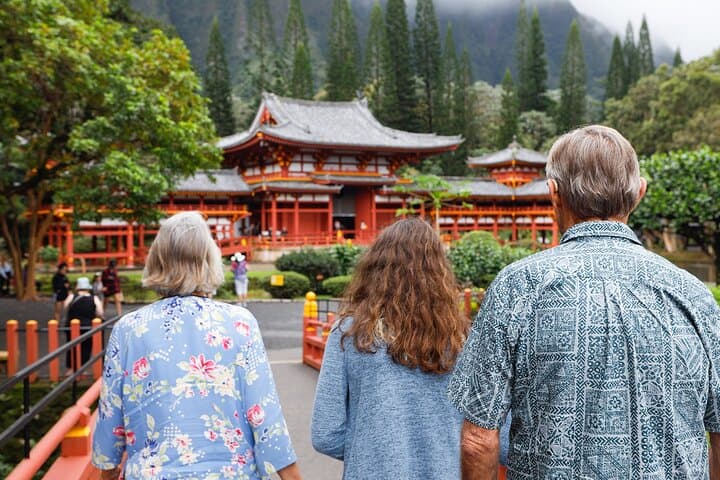
Oahu: Full or Half Day Grand Circle Island Tour (opens in a new tab)
Choose from two exciting ways to experience Oahu's top attractions, scenic beauty, and local culture. Option 1: Dole Plantation & Haleiwa…
6–7 hours
Prices checked

Beach
Last updated
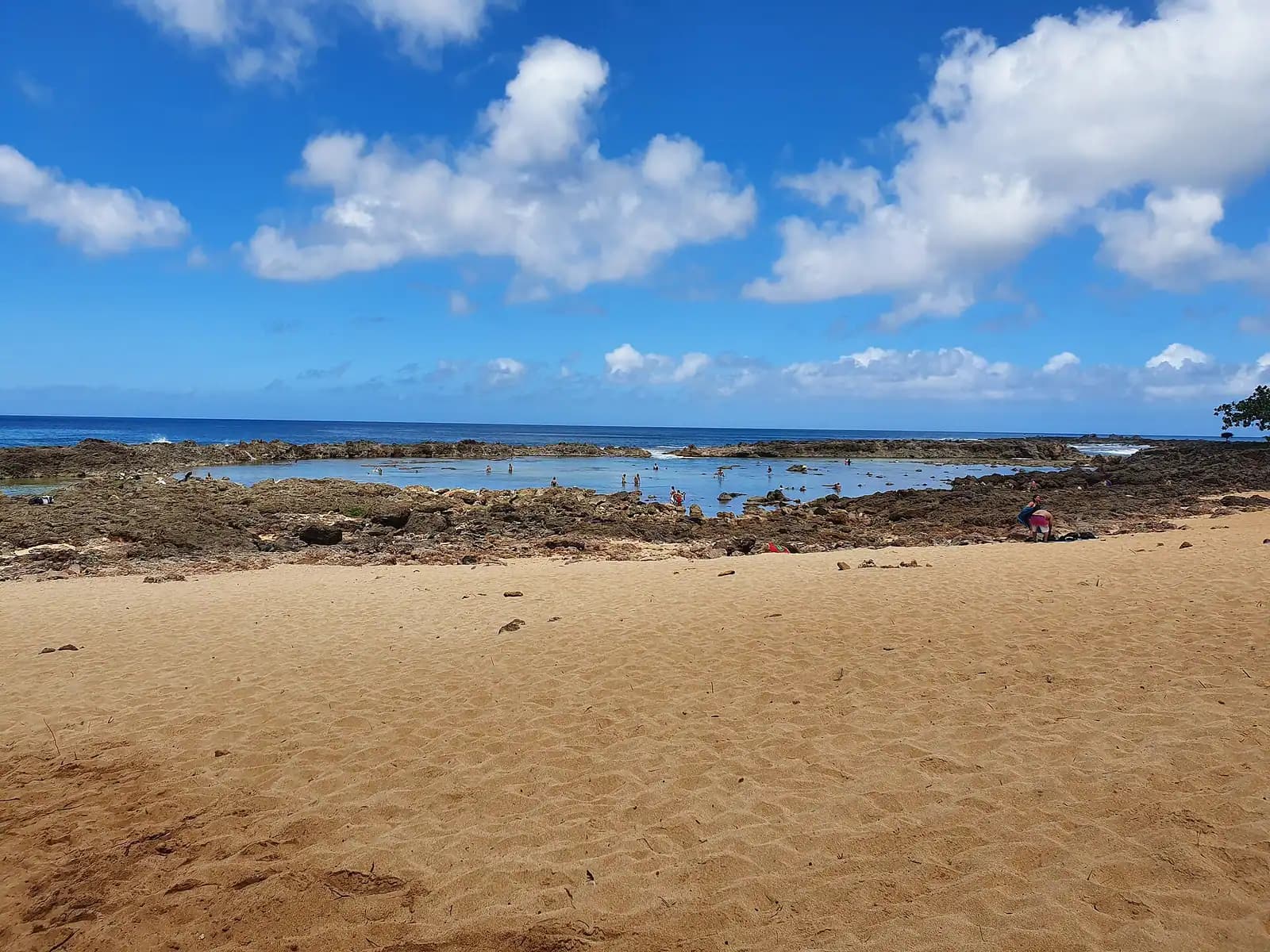
Sand underfoot instead of a lava scramble, half the crowd of Shark's Cove, and three flat reef slabs that surface at low tide.
Photo: Ken-ichi UedaCC BY 4.0
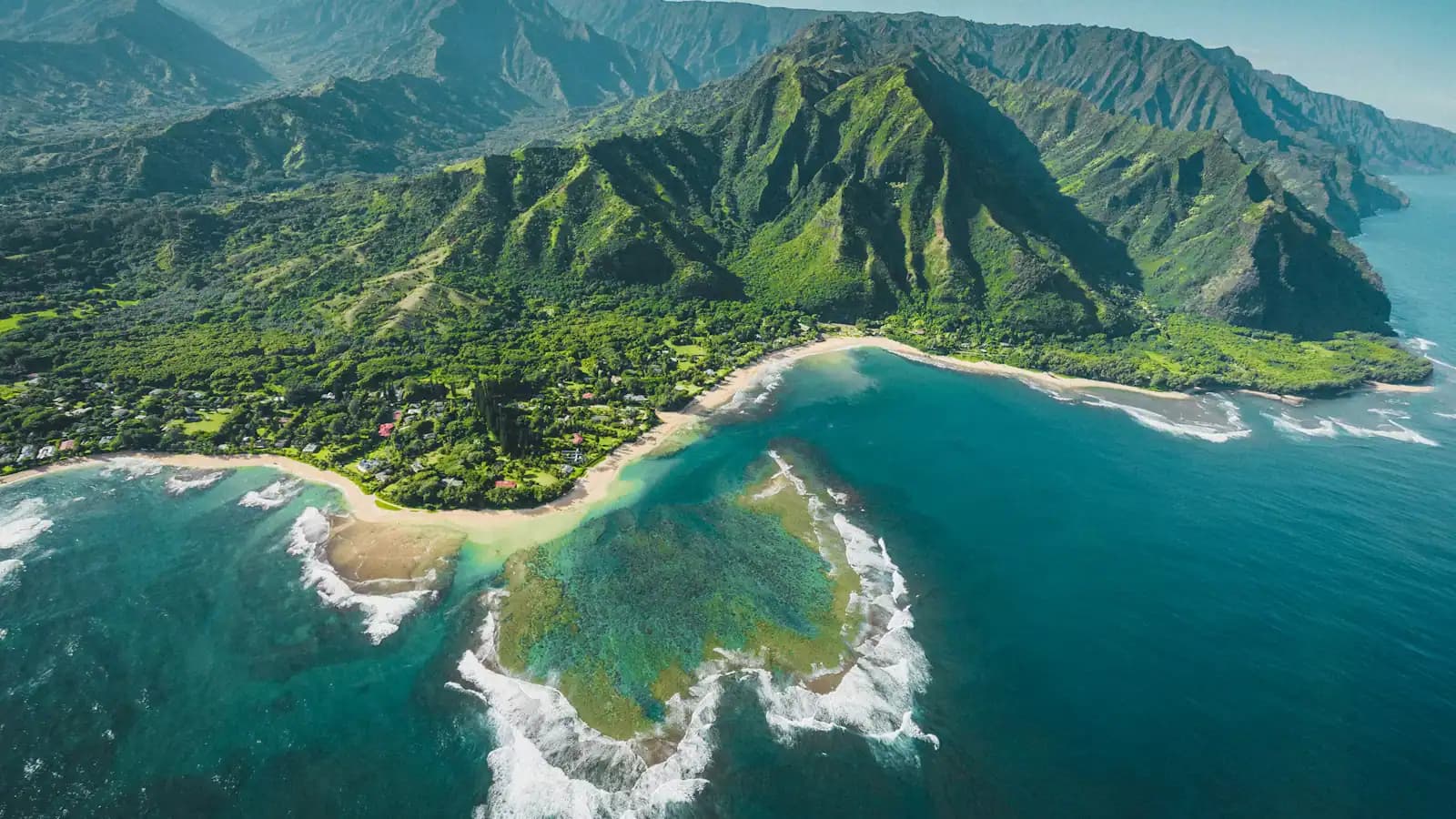
Three Tables is the part of Pūpūkea Beach Park that people drive past on their way to Shark's Cove, and for a certain kind of visitor it is the better stop. The name is literal: three broad, flat slabs of reef sit a short swim offshore and break the surface at low tide, looking exactly like tables laid out in the water. At high water they disappear, which is one reason the place reads differently depending on when you arrive.
What makes it worth choosing over its more famous neighbour a few hundred metres north is the entry. Shark's Cove has no sand — everything underfoot is lava, and a good proportion of visitors there spend the first ten minutes negotiating rock. Three Tables has an actual beach. You walk in. For a nervous snorkeller, a child, or anyone who would rather not start the morning balancing on wet basalt, that difference matters more than the marginally better fish life in the cove.
Beyond the tables the bottom drops into shore-diving depth, with ledges, arches and small caverns that make this a standard training and shore-entry site for Oʻahu dive operators in summer. Free-divers work the same structure. Closer in, between and around the slabs, the water is shallow enough for an ordinary snorkel and full of the same protected fish as the rest of the district — this is all inside the Pūpūkea Marine Life Conservation District, so nothing gets taken.
And then the same sentence that governs every page on this coast: this is a summer place. From roughly November to March North Pacific swell breaks across these reef tables and through the channels between them, and the sand entry that makes Three Tables friendly in July becomes the shorebreak that makes it dangerous in January. The rock does not move. The ocean does.
Three Tables sits on the ocean side of Kamehameha Highway between Waimea Bay and the Pūpūkea Road junction, within Pūpūkea Beach Park but with no lot of its own. Small roadside pull-ins serve it, with short paths down to the sand. There is no sign; look for the parked cars and the reef slabs offshore.
From Waimea Bay it is barely a minute north. From Shark's Cove it is a couple of minutes south.
From Waikīkī, allow an hour via H-1, H-2 and Kamehameha Highway in light traffic, plus the Haleʻiwa bottleneck on a weekend. TheBus route 60 stops on the highway along this stretch.
Park with all four wheels clear of the carriageway and leave nothing visible in the car.
Roughly May to September the water here is usually flat and clear, the tables sit in calm shallows, and this is a straightforward, pleasant snorkel from a sand beach.
Roughly November to March swell breaks directly over the reef tables and surges through the channels between them. The specific danger at Three Tables is not open-water size, it is what the reef does to a wave: water piles onto the slabs, pours off them, and sets up currents running between and around rock that is close enough to the surface to hit. Add a shorebreak on a narrow winter beach and you have a place that looks more benign than Shark's Cove and is not meaningfully safer.
Signs to stop and reconsider:
There is no permanent lifeguard tower at Three Tables itself; the nearest staffed towers are at Waimea Bay to the south and Pūpūkea. In practical terms, in winter this is unpatrolled water beside a road. Treat it accordingly.
People drown on the North Shore every winter, and the ones who do are rarely the ones who went out in obviously enormous surf.
Oʻahu dive shops use this as a shore-entry site through the summer, which is a reasonable signal: it is accessible enough to walk gear into, and there is enough down there to justify the trip.
They are five minutes apart, inside the same protected district, and they suit different people.
| Three Tables | Shark's Cove | |
|---|---|---|
| Entry | Sand beach, walk in | Lava shelf, scramble |
| Crowds | Modest | Heavy through the middle of the day |
| Fish life | Good | Better, and closer |
| Structure | Reef slabs, then ledges offshore | Basin, channels, caverns |
| With small children | Easier | The south-end tide pools only |
| Facilities | Minimal; nearest are at Pūpūkea | Restrooms, showers, food across the road |
Choose Three Tables if you want to walk into the water rather than climb into it, if Shark's Cove's lot is full, or if you have turned up at eleven on a July morning and want somewhere with room.
Choose Shark's Cove if the snorkelling itself is the point and you do not mind the rock.
Do both — they are close enough that a morning covering the two, with Waimea Bay at the end of it, is the most efficient way to spend a calm summer day on this stretch.
Access is from small roadside pull-ins on the ocean side of Kamehameha Highway between Waimea Bay and the Pūpūkea Road junction, with a short path down to the sand. There is no dedicated car park and no sign announcing the beach; the pull-ins are the whole arrangement, which is part of why it stays quieter.
There are no restrooms, showers or drinking water at Three Tables itself. The nearest are at Pūpūkea Beach Park by Shark's Cove, a few minutes north, or at Waimea Bay to the south. Food is the row of trucks at Pūpūkea or, further up the coast, Ted's Bakery.
Two habits worth adopting. Do not leave anything visible in a parked car on this coast — break-ins at North Shore pull-ins are frequent. And park with the wheels fully off the carriageway; Kamehameha Highway is a two-lane road carrying a great deal more traffic than it was built for, and a car sticking out into it is the reason the police periodically clamp down on roadside parking along this stretch.
Operators run these trips past Three Tables, or stop there as part of a longer route. We list what the booking data supports — not everything that mentions the name.
Some links below go to Viator, our booking partner. We earn a commission on bookings made through them — at no extra cost to you, and with no influence on what we recommend.

Plantation Tours
Choose from two exciting ways to experience Oahu's top attractions, scenic beauty, and local culture. Option 1: Dole Plantation & Haleiwa…
6–7 hours
Prices checked

Low Supplier Cancellation Rate
Experience the thrill of Oahu parasailing on this unforgettable 1-hour adventure from Waikiki. Soar up to 1,000 feet above the stunning…
1 hour
Prices checked

Curated Catalog
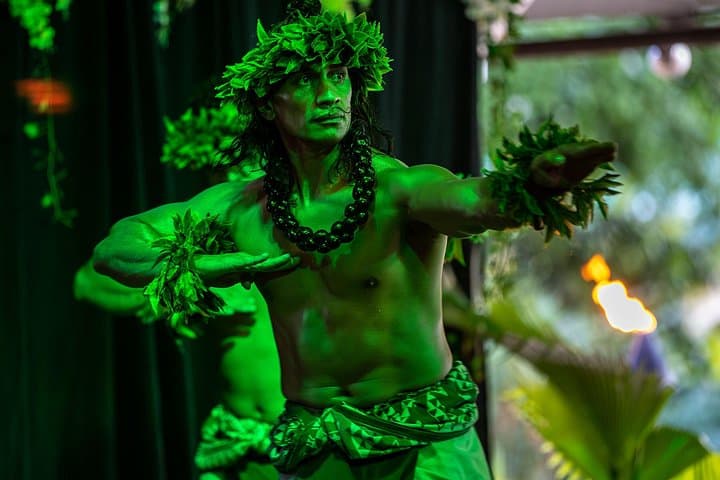
Toa Luau invites you to immerse yourself in the beauty and excitement of Polynesia on Oahu’s historic North Shore! Book any one our 3 Luau…
3 hours
Prices checked

Snorkeling
Book our Turtle Canyon snorkel tour and experience one of Waikiki’s most popular turtle snorkeling destinations! Depart conveniently by…
2 hours
Prices checked

Low Supplier Cancellation Rate
Come join on a circle island adventure led by some of Hawaii’s most knowledgeable local guides and experience breathtaking lookouts to…
Full day
Prices checked

Culture
Step into the vibrant heart of Hawai‘i and experience a luau like no other—where culture, history, and celebration come alive under the…
4 hours
Prices checked
Straight-line distances, so allow more on the road — the island is long and has one main parkway.

Beach
The best shore snorkelling on Oʻahu for four months of the year, and one of the most dangerous places on the island for the other four.
1.5–4 hoursFree, with free parking in the beach park lot and along the highway.0.3 mi away

Beach
Flat enough to swim across in July, closed by thirty-foot faces in January. The North Shore's seasonal flip at its most extreme.
1.5–5 hoursFree, including parking. The lot is small and fills early.0.4 mi away

Nature preserve
A hundred-odd acres of protected reef over Shark's Cove, Three Tables and Waimea Bay, and why the fish here are not frightened of you.
1–4 hoursFree. There is no permit or fee for recreational snorkelling, swimming or diving.550 ft away

Park
A paved three-quarter-mile walk through botanical collections to a waterfall pool you may swim in. Life jacket required, lifeguard's call.
2–3.5 hoursPaid admission, in the mid-twenties per adult at the time of writing, with lower rates for seniors, students and children and discounts for kamaʻāina and military with ID.0.7 mi away
Where this place fits into a day, and the pages that plan one.

Guide hub
The North Shore is roughly thirty miles of coast along the top edge of Oʻahu, from the polo fields and the airfield at Mokulēʻia, round Kahuku…

Guide hub
The North Shore's named places are almost all natural, almost all free, and almost all strung in a line along one road. There is no historic…

Guide hub
Seven miles of sand run from Haleʻiwa town to Sunset Point, and a single two-lane road threads the whole of it. Kamehameha Highway is the North…

Things to do
The North Shore has the best shore snorkelling on Oʻahu and the shortest season for it. Both of those facts come from the same place. The reef shelf…

Budget
Most destinations make you hunt for the free things. On the North Shore you have to hunt for the paid ones. There are four ticketed gates on this…

Guide
In July the North Shore is one of the best family coasts in Hawaiʻi. In January it is a place to watch from behind a rope. Planning the right one is the whole job.
9 min readNalani Kahale

Guide
Five months of the best shore snorkelling on this side of Oʻahu, and seven months of water that has killed people. The whole guide is about telling which one you are looking at.
9 min readPete Sorensen

Guide
Green sea turtles come out of the water here to rest on dry sand, which almost nowhere else in the world lets you see from a public beach. The etiquette is simple and widely ignored.
8 min readMalia Fonoti
Because of three broad, flat slabs of reef that sit a short swim offshore and break the surface at low tide, looking like tables laid out in the water. At high tide they vanish under the surface, which is why the beach looks quite different depending on when you arrive. Snorkelling is better at mid to high water, when the slabs are covered and you can swim over rather than around them.
The fish life is marginally better at Shark's Cove, but Three Tables is easier and quieter. The difference that matters is the entry: Shark's Cove has no sand and you climb in over lava, while Three Tables has an actual beach you can walk into. For a nervous snorkeller, a child, or a busy July morning when the Shark's Cove lot is full, Three Tables is the better call. Both sit inside the same protected district.
Yes, in summer. Beyond the reef slabs the bottom drops into shore-diving depth with ledges, arches and small caverns, and Oʻahu dive shops use it as a shore-entry training and fun-dive site through the calm months. It is unsuitable in winter, when swell breaks over the reef and surges through the channels. There is no lifeguard tower here, so dive with a buddy and tell someone your plan.
No. There are no restrooms, showers or drinking water at Three Tables, and no dedicated car park either — just roadside pull-ins on Kamehameha Highway and short paths down to the sand. The nearest facilities are at Pūpūkea Beach Park by Shark's Cove, a couple of minutes north, or at Waimea Bay Beach Park a minute to the south. Bring water; there is nothing here.