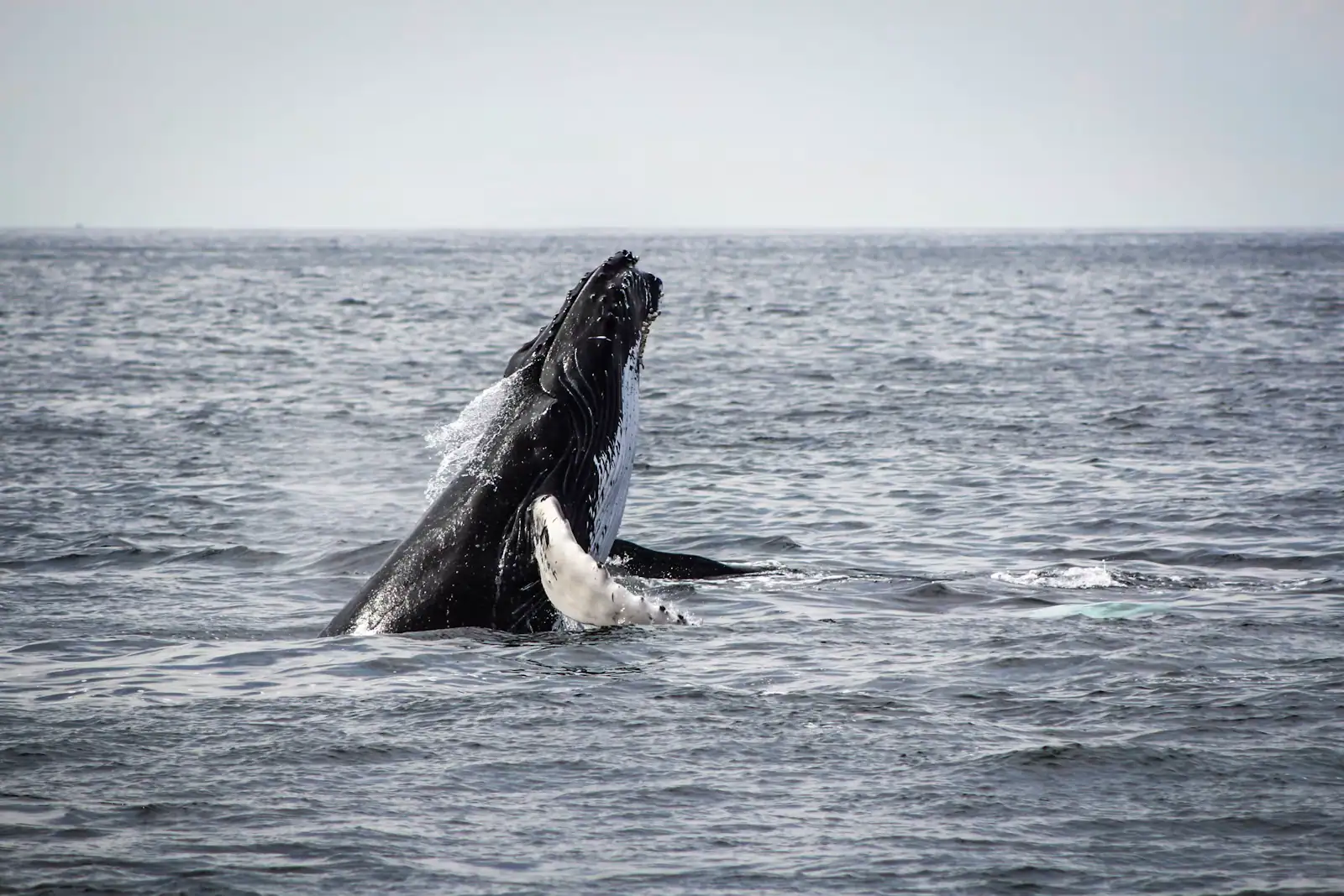
The season that brings the swell brings the whales. Koholā spend the northern summer feeding off Alaska and cross down to calve and breed in warm water. The heaviest concentration sits in the shallows between Maui, Molokaʻi and Lānaʻi, but the animals work the whole chain and this coast gets them every winter. What the North Shore does not have is a whale-watch fleet of any size. What it has is elevation — headlands that drop straight into deep water — which makes the best seat here a free one.
The calendar
First sightings arrive in November and stay thin. December builds. January to March is the core of it, February usually busiest. April tails off, and May is stragglers only.
That is the same window as the winter swell, and the two interact more than anyone tells you. A big north swell fills the whole field of view with white water and makes spotting close to hopeless. The flat mornings between swells are when the blows stand out.
Where to stand
Kaʻena Point at the western tip, the Kuilima headland at Turtle Bay, Lāʻie Point on the windward side and the high ground above Waimea all give long sightlines over deep water.
Find the blow before you look for the animal: a low bushy column that holds two or three seconds. Binoculars beat a long lens here, because you are searching a wide arc rather than framing anything. Go early, before the trades put white caps across the water and hide every spout.
From a board, a kayak, or a drone bag
This is where the law gets personal on this coast, because most people here end up in the water rather than on a charter.
The distance is 100 yards and it is not a boat rule. NOAA's approach regulation names swimmers, standup paddleboards, kayaks, outrigger canoes, vessels and drones in a single breath: none of them may come inside 100 yards of a humpback on or in the water. Operate an aircraft and the separation becomes 1,000 feet. It applies all year rather than only in season, everywhere from the shorebreak to 200 nautical miles offshore, and enforcement runs through NOAA's Office of Law Enforcement, the Coast Guard and the state's conservation officers.
Paddlers are the ones who get caught, and rarely on purpose. A board is slow to reverse, sits low, and a whale closes a gap faster than you can open it. If one surfaces near you, stop, hold still, let it pick the distance. The regulation asks you not to approach; it does not ask you to flee something that approached you.
The drone is the other trap, and it travels in hand luggage. No altitude turns a drone above a whale into legal sightseeing. Several places along this coast keep them out of the air whatever is in the water, too: the Natural Area Reserve at Kaʻena Point and the state seabird sanctuary at Goat Island both prohibit them outright, and a drone dropped low over basking honu at Laniākea is a disturbance in its own right however careful the pilot feels.
Nothing out here is eating
Not one of these animals takes food in Hawaiian water. They run down the fat laid on in Alaska and go home lighter than they came. The breaching off Waimea, the pods shouldering each other along the reef line, the song: all of it is breeding, calving or communication.